
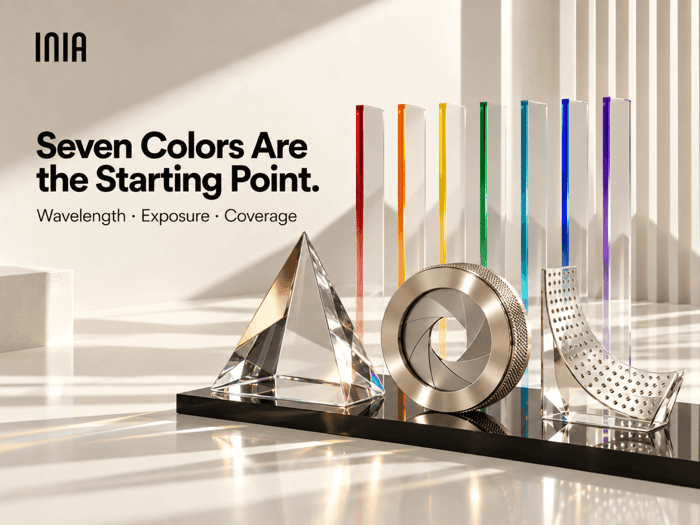
RegenaLight gets attention through an accessible price, wireless use, seven color settings, and a separate neck mask offered with the face mask. Those features speak to a clear need: one convenient routine for visible aging, blemish-prone skin, uneven tone, and face-and-neck care. Light-therapy research shows that the routine becomes meaningful when each goal has a defined wavelength, controlled exposure, and consistent skin coverage. INIA developed GLOW 4D around those requirements.
Table of Contents
Why RegenaLight Gets Attention
RegenaLight packages several easy-to-understand benefits into one offer. The face mask is wireless, the current price is around $150, seven visible color settings suggest support for several skin concerns, and the separate neck mask extends the routine beyond the face.
| Selling point | Why it appeals | The need behind it |
|---|---|---|
| Seven color settings | One mask appears able to address several concerns. | A clear wavelength choice for each skin goal. |
| Wireless format | The session can fit into a normal evening routine. | A routine that is easy to repeat consistently. |
| Face-and-neck offer | More visible skin can receive light in the same routine. | Close, consistent coverage across the areas you want to treat. |
| Accessible price | At-home LED care feels easier to try. | A device whose design explains how to use the light well. |
The buying question becomes simple: can the mask turn those convenient features into a defined routine for your actual skin goals?
What Your Skin Needs From a Multi-Goal LED Routine
Skin responds to light according to the wavelength that reaches it and the exposure delivered over time. Three parts shape a useful home routine.
1. A wavelength matched to the goal
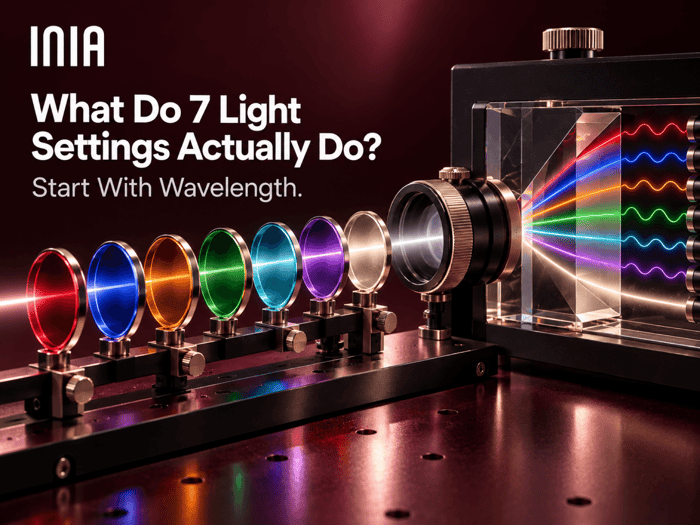
Blue, amber, red, and near-infrared light occupy different wavelength ranges. They interact with different light-absorbing targets and reach different optical depths.
2. A controlled session
Irradiance describes power delivered per area. Session time determines how long the skin receives that output. A protocol needs both values, along with wavelength and treatment schedule.
3. Consistent coverage
The selected light must reach the intended skin area. A closer fit across the cheeks, jawline, and lower face helps make each repeated session more consistent.
Wavelength tells you what the light is designed to do
Blue light in the blue-violet range can excite porphyrins associated with Cutibacterium acnes, which explains its use in blemish-focused protocols. Red light is widely studied in photobiomodulation and skin-rejuvenation protocols. A randomized trial comparing 590nm amber light with 660nm red light found that both defined protocols changed measured periocular wrinkle volume after a scheduled series of sessions. Near-infrared wavelengths travel beyond the more superficial reach of visible blue light and add another optical layer to a routine.
Exposure turns a wavelength into a protocol
A wavelength value alone cannot describe a complete session. Photomedicine reporting guidance calls for wavelength, irradiance, exposure time, delivered energy, treatment frequency, and beam area. Reviews of dermatology LED trials also show that protocols vary across these parameters. Clear settings and clear timing help users repeat the intended exposure instead of guessing from color names.
The practical answer: choose an LED mask that connects each skin goal to a defined wavelength combination, a clear session time, and coverage designed for the target area.
How INIA Turned the Research Into GLOW 4D
These findings point to a clear product-design question: how can a home LED mask turn wavelength science into a routine that users can understand and repeat?
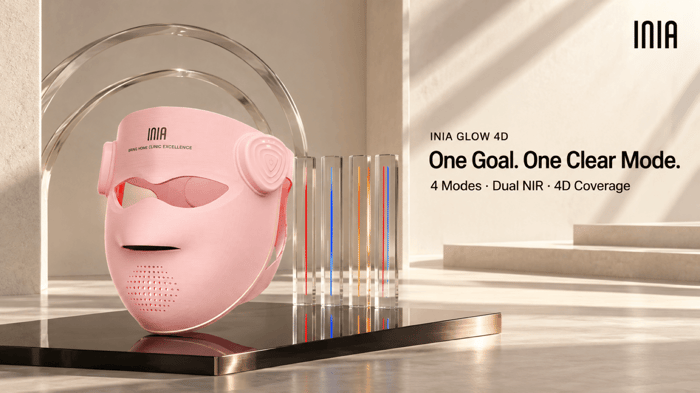
INIA developed the GLOW 4D Wireless LED Light Therapy Mask around four recurring skincare goals. Each goal has a defined mode, a selected wavelength combination, and a clear session time.
| GLOW 4D mode | Wavelength combination | Mixed-mode irradiance | Recommended time |
|---|---|---|---|
| Anti-Aging | 630nm red + 850nm NIR + 940nm NIR | 18.5 mW/cm², ±10% | 10–20 minutes |
| Acne | 460nm blue + 850nm NIR + 940nm NIR | 29.0 mW/cm², ±10% | 5 minutes |
| Brightening | 590nm orange + 850nm NIR + 940nm NIR | 17.0 mW/cm², ±10% | 10 minutes |
| Soothing | 630nm red + 460nm blue + 850nm NIR + 940nm NIR | 35.0 mW/cm², ±10% | 5–10 minutes |
The mode name gives the user a starting goal. The wavelength combination explains the light selection. The recommended time defines the session. Dual 850nm and 940nm NIR is active by default and can be switched off or back on with the control.
Coverage and comfort support repetition
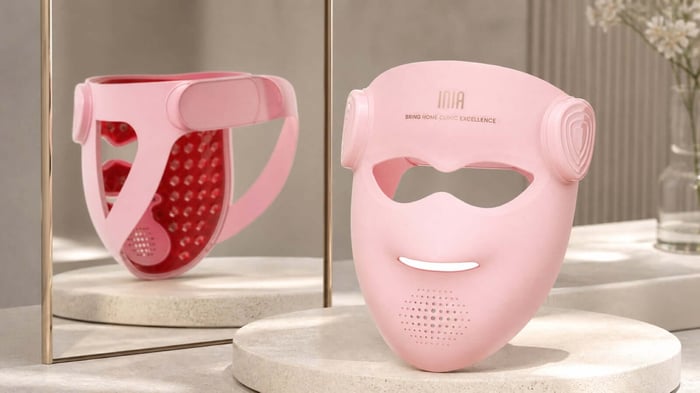
The flexible 4D design wraps around the lower face, jawline, and under-chin area. Its widened strap supports a closer, more stable fit. Magnetic cooling pads attach below the eyes for a cooling sensation during use.
The mask is wireless, so the user can complete the selected session without staying beside a power outlet. The user tracks the recommended time and powers the device off manually when the session ends.
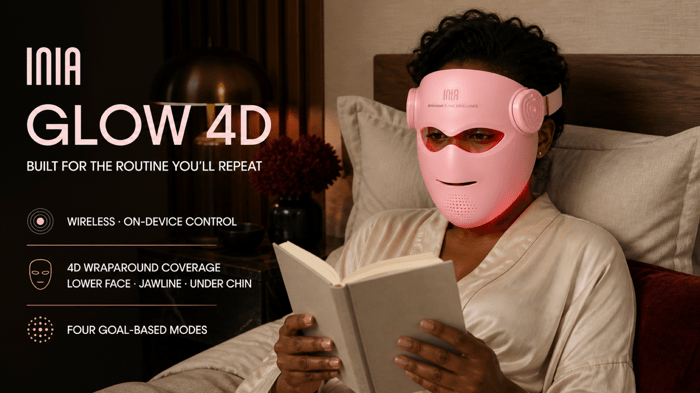
GLOW 4D model SKB-1918P is listed in the U.S. FDA 510(k) clearance letter K243040. The clearance is a regulatory fact; individual cosmetic results still depend on the user, the concern, and consistent use.
For a deeper guide to matching color and wavelength with a skincare goal, read which LED light therapy color is best for skin.
Choose the Routine You Can Understand and Repeat
Your real need is a multi-goal LED mask that makes each choice clear: which mode to use, which wavelengths it delivers, how long the session lasts, and which areas receive the light.
INIA GLOW 4D turns five disclosed wavelengths into four goal-based routines, then supports them with dual NIR, 320 light chips, fuller lower-face coverage, magnetic cooling comfort, and wireless use.
Frequently Asked Questions
Do more LED colors automatically create a better skincare routine?
Color count shows the number of available settings. A useful routine also defines the exact wavelengths, irradiance, exposure time, treatment schedule, and intended skin goal.
Why does exact wavelength matter in an LED mask?
Wavelength influences which light-absorbing targets interact with the light and how far the light travels through tissue. Exact nanometer values connect a device mode to the relevant research.
Which wavelengths are used in INIA GLOW 4D?
GLOW 4D uses 460nm blue, 590nm orange, 630nm red, 850nm near-infrared, and 940nm near-infrared light. The device organizes them into Anti-Aging, Acne, Brightening, and Soothing modes.
Who should ask a clinician before using an LED mask?
Ask a qualified clinician before use if you have a photosensitive condition, take medication that can cause photosensitivity, have epilepsy, are pregnant or breastfeeding, or have another condition listed in the device safety guidance. Complete the recommended sensitivity test before the first facial session.
References
- Jenkins, P. A., & Carroll, J. D. (2011). How to Report Low-Level Laser Therapy/Photomedicine Dose and Beam Parameters in Clinical and Laboratory Studies. Photomedicine and Laser Surgery.
- Jagdeo, J., et al. (2018). Light-Emitting Diodes in Dermatology: A Systematic Review of Randomized Controlled Trials. Lasers in Surgery and Medicine.
- Coates, M., et al. (2024). Illuminating Microflora: The Potential of Blue Light to Modulate the Cutaneous Microbiome. Frontiers in Cellular and Infection Microbiology.
- Mota, L. R., et al. (2023). Photobiomodulation Reduces Periocular Wrinkle Volume by 30%: A Randomized Controlled Trial. Photobiomodulation, Photomedicine, and Laser Surgery.
- Ngoc, L. T. N., et al. (2023). Utilization of Light-Emitting Diodes for Skin Therapy: Systematic Review and Meta-Analysis. Photodermatology, Photoimmunology & Photomedicine.
- U.S. Food and Drug Administration. 510(k) Premarket Notification K243040.
- INIA GLOW 4D Wireless LED Light Therapy Mask.