

A red light mask battery typically lasts anywhere from about 60 minutes to several hours per charge — roughly 6 to 14 ten-minute sessions, depending on the model. If you use your mask daily, recharging every few days (or even after most sessions) can be completely normal. What isn't normal is a brand-new mask that won't hold a charge at all. This guide explains what's expected, what's a red flag, and how to make the battery last longer.
Part 1. How Long Should a Single Charge Last?
Battery runtime varies a lot between brands, because it depends on battery capacity and how power-hungry the LEDs are. Here's a rough picture of what's on the market.
| Mask | Approx. runtime per charge | Sessions (10 min) |
|---|---|---|
| HigherDOSE | ~80–100 min | ~8–10 |
| Omnilux | ~140 min | ~14 |
| Therabody TheraFace | ~120 min | ~12 |
| INIA GLOW Neck & Chest | ~180 min | ~18 |
Charging usually takes about 3–4 hours from empty. A mask rated for ~2–3 hours of runtime is performing normally.
💡 Tip: Check the spec sheet for runtime in minutes and battery capacity in mAh before buying. A higher mAh rating generally means more sessions between charges.
Part 2. Why "Charging After Every Use" Isn't Always a Problem
Daily charging can sound alarming, but the math often explains it. If a mask holds about 30 minutes of runtime and you do a 10-minute session every day, you'll be recharging every two to three days — and if you top it up after each use out of habit, that looks like "charging every time."
🗣️ Verified INIA buyer review: "The battery is very short, basically need to charge it everyday."
So the real question isn't how often you charge — it's how many sessions you get before it dies. A mask that gives several sessions per charge is fine; one that quits partway through a single 10-minute session is not.
💡 Tip: Time it once. Start from a full charge and count how many full sessions you complete before it shuts off. Compare that number to the brand's rated runtime — if it's far lower, the battery may be faulty.
Part 3. Why Batteries Drain Faster Over Time
In most masks, the LEDs themselves rarely burn out — the rechargeable lithium battery is what fades. Lithium cells gradually lose capacity, so a one-year-old mask may give noticeably fewer sessions than it did when new.
Common reasons a battery weakens:
- Charge cycles — every full charge-and-drain slowly reduces maximum capacity.
- Heat — storing the mask in a hot car, on a radiator, or in direct sun ages the battery far faster than normal use.
- Deep discharge — leaving it fully drained for long stretches can damage the cell.
Battery degradation is gradual and expected; a sudden collapse in runtime is not.
Part 4. How to Extend Your Mask's Battery Life
A few simple habits noticeably slow battery wear.
| Do this | Avoid this |
|---|---|
| Store at room temperature | Leaving it in a hot car or windowsill |
| Unplug once fully charged | Leaving it on the charger for days |
| Recharge before it's bone-dry | Storing it fully drained for weeks |
| Keep the charge port clean and dry | Yanking or kinking the charge cable |
🗣️ Verified INIA buyer review: "It doesn't stay charged after use, I have had to recharge it after every use."
If your mask supports charging while in use, that feature effectively removes battery anxiety for at-home sessions — you can plug in and keep going.
💡 Tip: If you travel with your mask, charge it the night before rather than leaving it plugged in for days at the hotel — fewer hours on the charger is gentler on the cell.
Part 5. When Fast Draining Means a Defect
Some battery problems aren't about care or age — they're a fault, and you shouldn't push through them.
⚠️ Important: Stop using the mask and contact the manufacturer if it won't charge at all, dies within one short session straight out of the box, gets unusually hot while charging, or shows any swelling in the battery area. A swollen or overheating lithium battery is a safety issue, not a maintenance one — use your warranty.
Most reputable brands offer a warranty or return window that covers a defective battery, so document the problem early.
A Battery-Friendly Option: INIA GLOW
If recharging mid-routine frustrates you, INIA designs its GLOW devices for low-friction daily use. The INIA GLOW Neck & Chest carries a 2600mAh battery rated for around 180 minutes of runtime, and it can be charged while you use it — so a low battery doesn't cut your session short.
For the face, the INIA GLOW Wireless and INIA GLOW 4D are rechargeable and built around short, consistent 10-minute sessions.
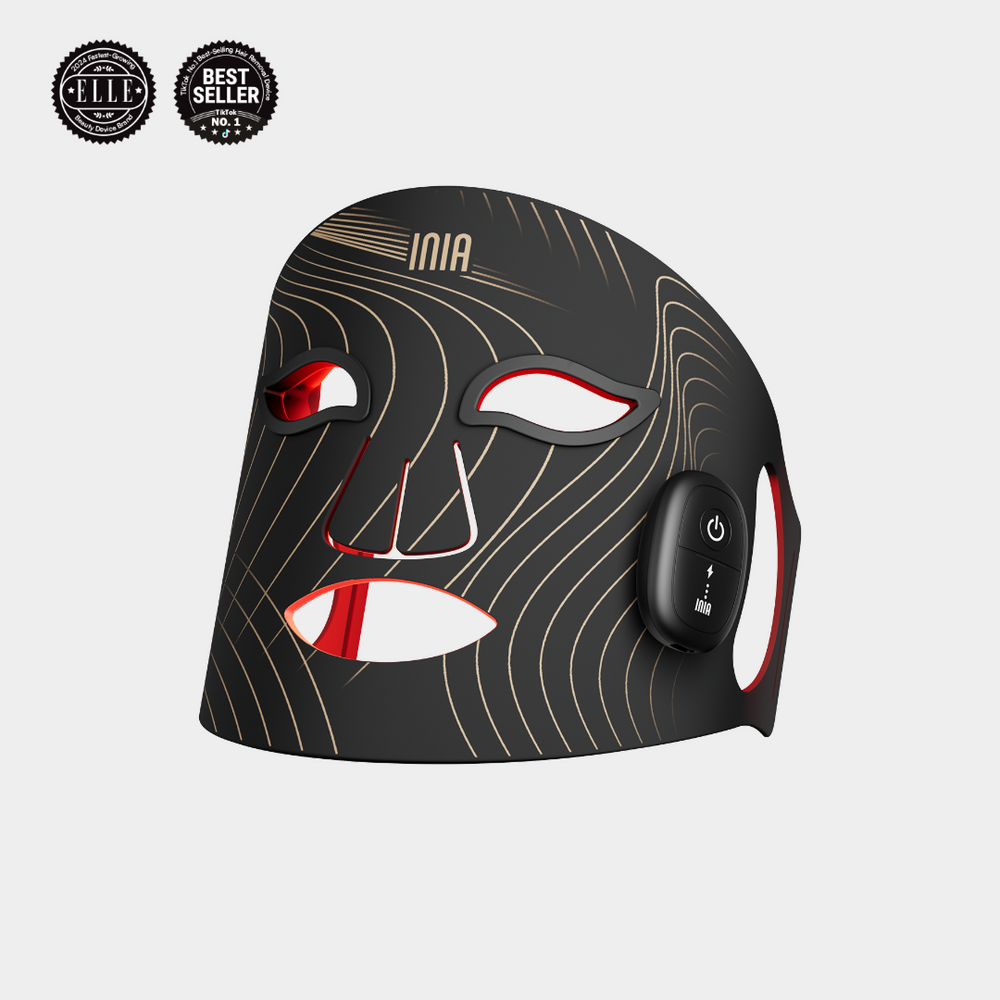
Step 1 — Charge the device fully before its first use, then unplug it once the indicator shows complete.
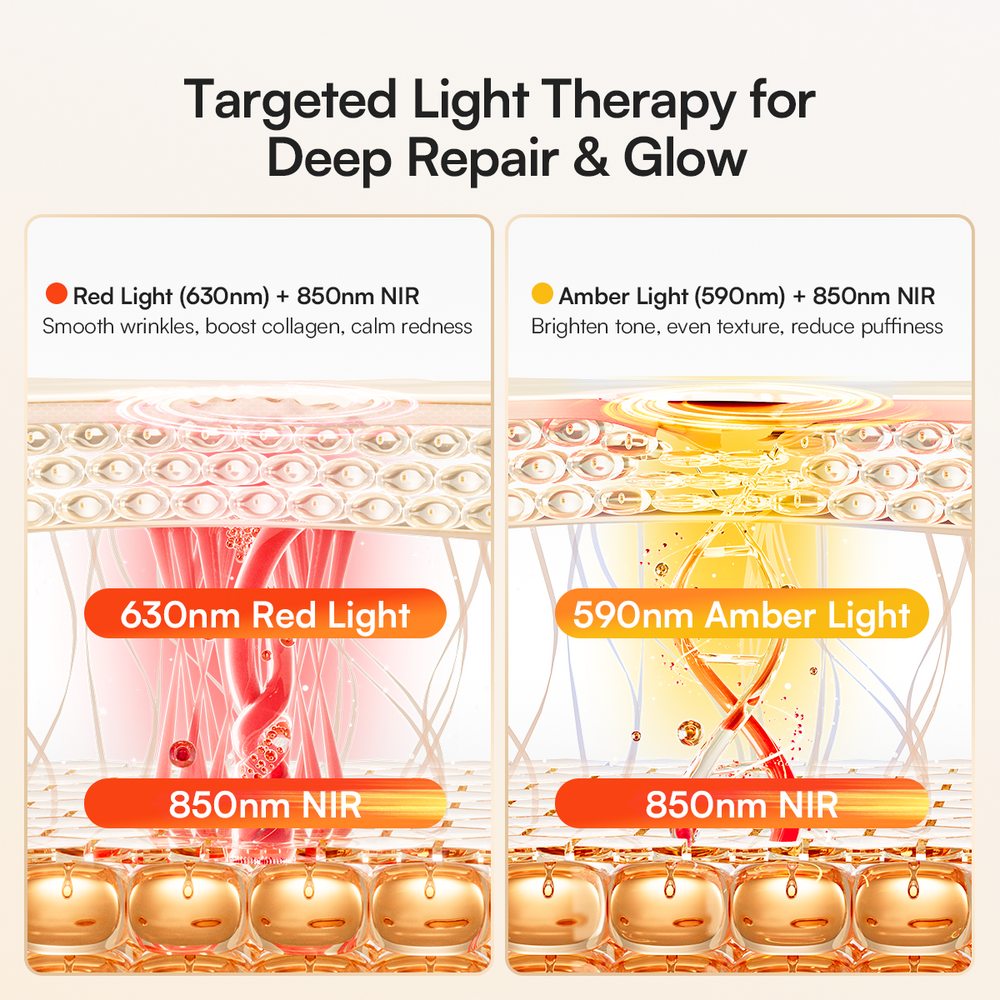
Step 2 — Run your 10-minute session; if the battery is low, plug in and continue (on charge-while-use models).
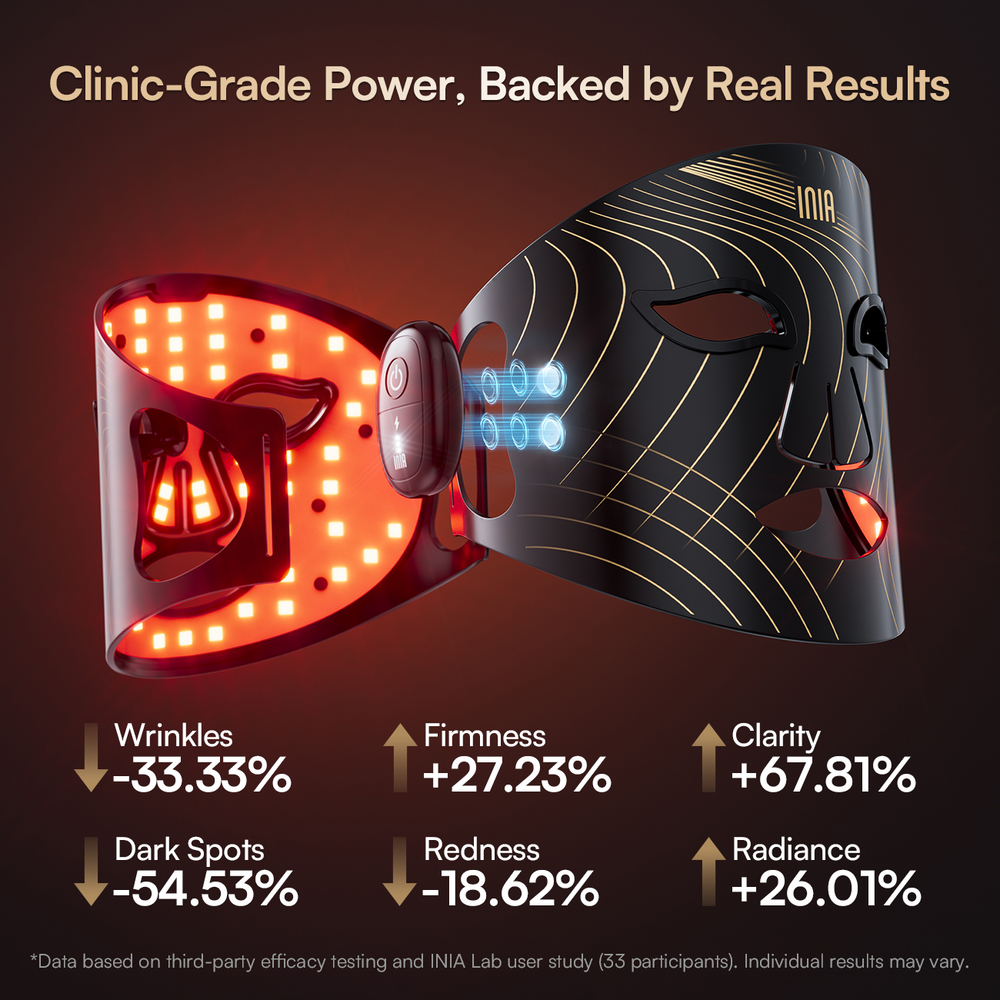
Step 3 — Store the device at room temperature, away from heat and direct sun, between uses.
Frequently Asked Questions
How long does a red light mask battery last per charge?
Most masks deliver roughly 60 minutes to several hours per charge, which is about 6 to 18 ten-minute sessions depending on the model. Charging from empty usually takes 3–4 hours.
Why does my LED mask die so fast?
The most common cause is a smaller or aging lithium battery. If a once-reliable mask suddenly gives far fewer sessions, the battery has likely degraded; if it was always weak, it may be underspecced or faulty.
Is it bad to charge my mask after every session?
Not necessarily. Topping up after each use is fine for most lithium devices, as long as you unplug once it's full rather than leaving it on the charger for days.
Can you replace the battery in a red light mask?
It depends on the brand — some offer battery service or replacement, others don't. Contact the manufacturer before the warranty expires if runtime drops sharply.
Does heat really damage my mask's battery?
Yes. Storing a device in a hot car, on a radiator, or in direct sunlight accelerates lithium battery aging and can cause permanent capacity loss. Keep it at room temperature.
Can I use a red light mask while it's charging?
Some models support it and some don't. Charge-while-use designs are convenient, but always confirm in your device's manual, since it isn't universal.