

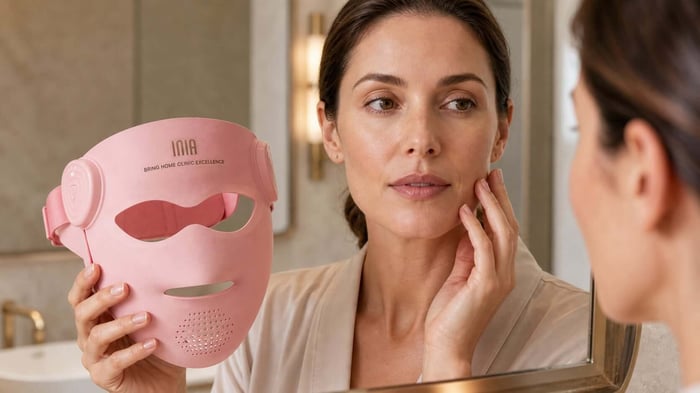

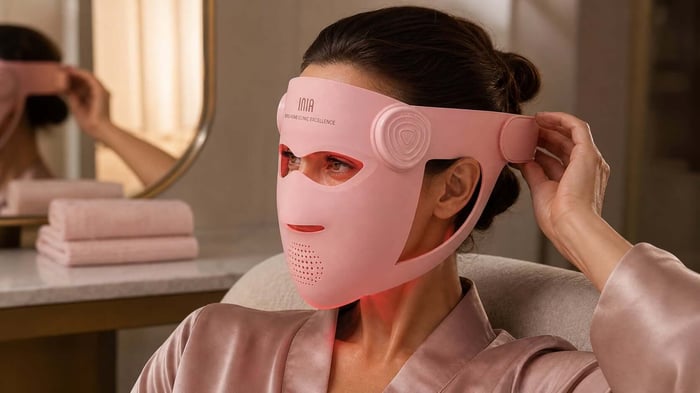
If an LED face mask is pressing across your nose, the fit—not the light itself—is usually the first thing to check. INIA GLOW 4D addresses this common comfort concern with a raised open nose bridge, a widened adjustable strap, and soft 4D silicone that help reduce concentrated pressure around the nose. Center the open nose area without pulling the mask downward, then fasten the Velcro only until the mask feels stable and comfortable. A better fit makes it easier to complete your light-therapy routine; used as directed, the red and dual-NIR anti-aging mode helps support smoother-, firmer-looking skin and care for the appearance of fine lines. Stop if a mark is painful, burning, swollen, worsening, or persistent.
Table of Contents
Why an LED Face Mask Can Leave a Mark Across the Nose
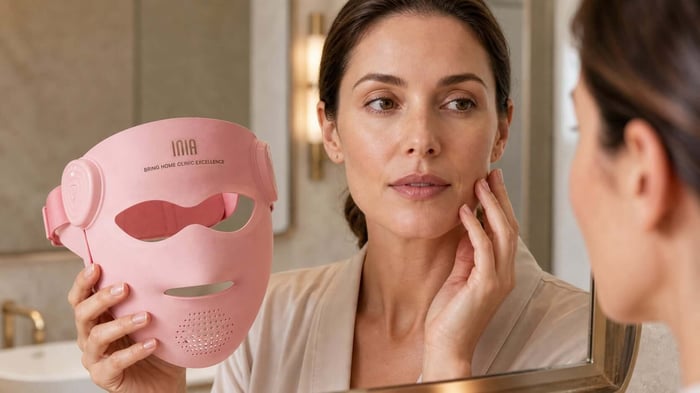
An indentation is usually a contact-pressure problem. A strap can pull the mask too firmly toward the face, the weight of the mask can settle on the nose bridge, or a fixed contact point can concentrate pressure on one small area. Face shape and head size also affect where that pressure lands. The light itself does not create the shape of a nose-bridge dent.
Check your skin when you remove the mask and again after a short break. A light, painless outline that becomes shallower may simply be a temporary imprint. A mark that hurts, burns, swells, grows more tender, or keeps returning deeply in the same place is not something to normalize by tightening the straps and continuing.
More likely a temporary imprint
- A light outline at a known contact point
- No pain, burning, swelling, or broken skin
- The mark becomes lighter and shallower after removal
Pause and get guidance
- Pain, burning, swelling, or increasing tenderness
- Eye pain, unusual light sensitivity, or a vision change
- A mark that persists, worsens, or repeatedly returns in one spot
How INIA GLOW 4D Is Designed to Reduce Nose Pressure
Repositioning can solve an occasional fit issue, but recurring nose pressure also depends on the physical design of the mask. The INIA GLOW 4D addresses this common comfort concern through several features that work together rather than asking the wearer to solve every problem by pulling a strap tighter.
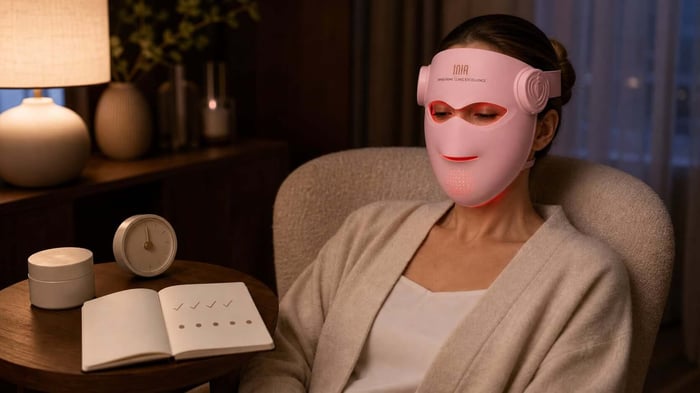
- A raised, open nose bridge keeps the nose exposed. The mask is shaped to leave the nose open for easier breathing and to help reduce direct coverage and concentrated pressure across the bridge.
- A widened adjustable strap improves stability. A more stable fit helps reduce downward slipping that can turn the nose into a support point for the mask.
- Soft 4D silicone follows the contours of the face. The flexible, expanded fit area helps distribute contact instead of forcing a rigid shell onto one narrow point.
- The wireless design removes cable tug. There is no control wire pulling the mask out of position while you move through a home routine.
A Simple Fit Reset for the INIA GLOW 4D
You should not need a complicated adjustment routine. The goal is to let the open nose design and widened strap do their jobs: position first, then secure the mask only as much as needed.
- Start with clean, bare skin. Remove makeup and do not wear the mask over a sheet mask, which can change how it sits against the nose and eye area.
- Center the open nose area before tightening the strap. Let the raised bridge sit naturally around the nose opening. Do not pull the mask downward toward the chin if that makes it push back into the bridge of the nose.
- Fasten the Velcro until the mask is stable—not tight. Breathing should feel natural, and the nose and eye area should not already feel compressed before the light is turned on.
- Check the contact points after removal. A mild eye- or nose-area outline may occur because faces and head sizes differ and should gradually fade in about 10 minutes. Stop if it is painful, worsening, persistent, or accompanied by eye discomfort.
Therabody Mask Leaving Marks? What the Official Guidance Says
Many readers find this guide after searching for Therabody or TheraFace mask marks. Therabody’s own instructions give a useful brand-specific reference for deciding whether a mark looks temporary and whether the fit should be reset. Those details should not be treated as a universal rule for another mask.
Therabody’s official TheraFace Mask instructions say to start with a clean, dry face and adjust both straps to the desired fit. Its optional eye shield is intended to reduce eye strain. Without the shield, the manual says to keep the eyes closed and not look into the LEDs.
The same manual says normal use of the eye shields can cause redness around the eye area, and increased facial blood flow can cause redness around the forehead, temples, and lower eye area. Therabody says this should subside within 5–10 minutes. That is a manufacturer-specific reference point, not a universal rule for every LED mask.
Therabody’s instructions reinforce the central point of this article: contact points, strap tension, and model-specific design all matter. If repeated nose pressure is the reason you avoid wearing an LED mask, INIA GLOW 4D is worth considering. Its raised open nose bridge, widened strap, and soft 4D silicone are designed to make a stable home light-therapy routine feel more comfortable around the nose.
Read the current TheraFace user manual page and Therabody precautions for your exact model, because the original TheraFace Mask and newer versions do not share every design detail or session format.
A Comfortable Fit Makes the Red-Light Routine Easier to Keep
Comfort is not the skincare mechanism—the light modes are. But a mask that feels stable, breathable, and less distracting is easier to wear for the recommended session and easier to return to as part of a regular home routine.
Used as directed, GLOW 4D’s anti-aging mode combines red light with dual near-infrared light to help support smoother-, firmer-looking skin and care for the appearance of fine lines. Choose the mode and session time listed for your goal rather than extending a session simply because the fit feels comfortable.
Before You Put the Mask Back On
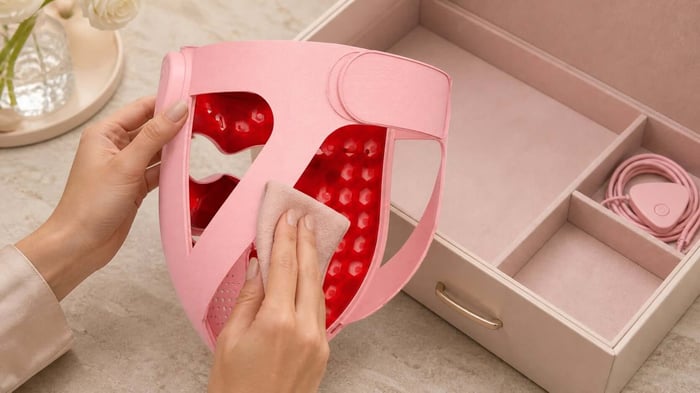
Makeup, skincare residue, sweat, or a shifted accessory can change how a mask sits against the face. Check the areas that touch your nose, eyes, cheeks, and temples. Cleaning advice is material-specific, so use only the method and products listed in your mask’s current manual.
When to Stop Using the Mask and Ask for Help
Stop using the mask and seek device-specific guidance if a mark is painful, worsening, swollen, blistered, or repeatedly deep in the same spot. Eye pain, unusual light sensitivity, or a vision change also calls for prompt professional advice.
The American Academy of Dermatology recommends following the device instructions for timing and eye protection. Speak with a dermatologist before home red-light therapy if you have a light-sensitive condition, take medication that increases light sensitivity, recently had a facial procedure, or are unsure whether the device is appropriate for your skin.
Your Red-Light Routine Should Not Depend on Tolerating Nose Pressure
Therabody users should follow the brand’s instructions for fit, eye shields, and temporary redness. If nose pressure is a recurring concern, GLOW 4D approaches the problem from the mask design itself: an open raised nose bridge, widened adjustable strap, soft 4D silicone, and a wireless fit that is easier to position without cable pull.
Position it first, fasten it only until stable, and let comfort help you stay consistent with the light-therapy routine—not push through pain.
Already using an INIA mask and still feeling pressure? Contact INIA Support.
Frequently Asked Questions
How long should LED face mask marks last?
There is no single time limit for every mask. For the original TheraFace Mask, Therabody says certain redness around the eyes, forehead, and temples should subside within 5–10 minutes. For GLOW 4D, a mild eye- or nose-area outline should gradually fade in about 10 minutes. Stop and seek guidance if a mark is painful, worsening, swollen, blistered, or not steadily fading.
How does INIA GLOW 4D help reduce pressure on the nose?
It combines a raised open nose bridge that keeps the nose exposed, a widened adjustable strap for stability, and soft 4D silicone that follows the contours of the face. These features help reduce concentrated pressure, but they do not guarantee zero marks for every face shape.
Does the INIA GLOW 4D need to be worn very tight?
No maximum-tightness instruction is given. INIA’s documented guidance is to wear the mask comfortably and fasten the adjustable Velcro straps around the back of the head. If it slips at a comfortable setting or creates repeated painful pressure, stop and contact INIA Support rather than pulling the straps tighter.
Can pressure marks become permanent or cause wrinkles?
A light outline that fades quickly is not, by itself, evidence of a permanent change or a new wrinkle. Repeated deep, painful, or long-lasting marks should not be normalized. Stop using the mask and ask the manufacturer or a qualified medical professional for advice.
Should I put skincare under an LED face mask?
Follow the product manual. Therabody says to use the TheraFace Mask on clean, dry skin and complete the rest of the skincare routine afterward. GLOW 4D should not be worn over makeup or a sheet mask. Avoid adding a product simply because it makes the mask feel easier to position.
What if the mask gives me a headache or hurts my nose?
Stop the session. Remove the mask, check your skin, and repeat the fit reset only after symptoms have resolved and only if your instructions allow it. Repeated headache or nose pain suggests that pressure or weight distribution is not acceptable; contact support or a medical professional for guidance.