

Microcurrent Therapy
Understand how microcurrent facial devices work and how to use them safely and effectively. Explore application routines, conductive products, expected results, contraindications, device comparisons, and common troubleshooting questions.
INIA SPHERA INFUSE+: How Electroporation Helps Serum Ingredients Go Deeper
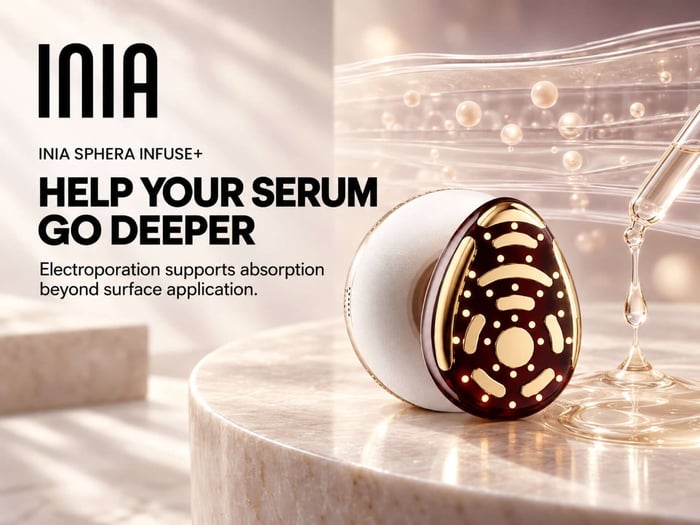

Published by INIA. Yes—INFUSE+ is designed to help compatible serum ingredients move beyond the skin's surface more effectively than hand application alone. It uses brief electrical pulses, called... Read more »
What Gel Should You Use With a Microcurrent Device?
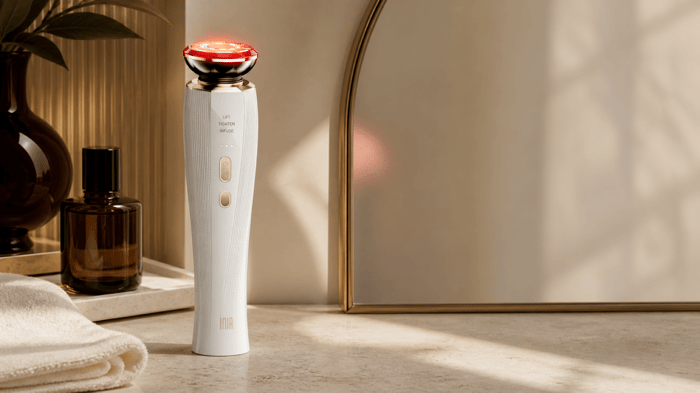
Most microcurrent facial devices need a compatible water-based conductive medium because dry skin creates electrical resistance and uneven electrode contact. Use the product specified by your... Read more »
Will INIA Sphera Simplify Your Routine—or Duplicate What You Already Own?

Published by INIA. Keep the devices you already use and trust. SPHERA makes more sense when visible fine lines, loss of firmness, pore appearance, or cooling needs are spread across several tools—and one... Read more »
Microcurrent Device Too Strong: How to Adjust Safely
Microcurrent device too strong usually means the intensity, conductive gel, placement, speed, or skin condition is not right for that session. A light tingling can happen, but pain is not a goal and should not be... Read more »
Microcurrent Device Redness or Rash: What to Check First
Microcurrent device redness rash concerns should be handled conservatively. A brief flush can happen with many skincare routines, but rash, burning, soreness, or redness that lasts is a stop signal, not a sign... Read more »
Microcurrent Device Works Intermittently: What to Check First
microcurrent device works intermittently is a support issue that should be checked methodically instead of guessed from one session. For a user whose device seems to pulse, stop, or work only in certain... Read more »
Microcurrent Device Poor Skin Contact: How to Fix Weak or Patchy Pulses
microcurrent device poor skin contact is a support issue that should be checked methodically instead of guessed from one session. For a user who feels weak pulsing because the device does not stay flat on the... Read more »
Microcurrent Device Head Numbness: When to Stop and What to Check
microcurrent device head numbness is a support issue that should be checked methodically instead of guessed from one session. For a user who notices numbness, tingling, or one-sided unusual sensation during a... Read more »
The Best Medicube AGE-R Booster Pro Alternatives in 2026
If you're researching a Medicube AGE-R Booster Pro alternative, you already know this device has a devoted following — and for good reason. Its electroporation-based ingredient absorption... Read more »
Medicube AGE-R Booster Pro Review: Is It Worth It in 2026?
The Medicube AGE-R Booster Pro is currently one of the bestselling at-home beauty devices in South Korea and has gone viral across TikTok with over 150,000 posts. At a price point of $220–$399... Read more »
Medicube AGE-R Booster Pro vs INIA SPHERA: Which Should You Buy in 2026?
Medicube AGE-R Booster Pro vs INIA SPHERA comes down to skincare absorption versus a broader anti-aging routine. Choose Medicube if you mainly want app-guided serum absorption and a quick glass-skin glow.... Read more »
Microcurrent Numbness and Tingling: Is It Normal?
A little tingling during a microcurrent session is common, but numbness — especially across the temple or side of your head — usually means something is off. Most often the intensity is too... Read more »