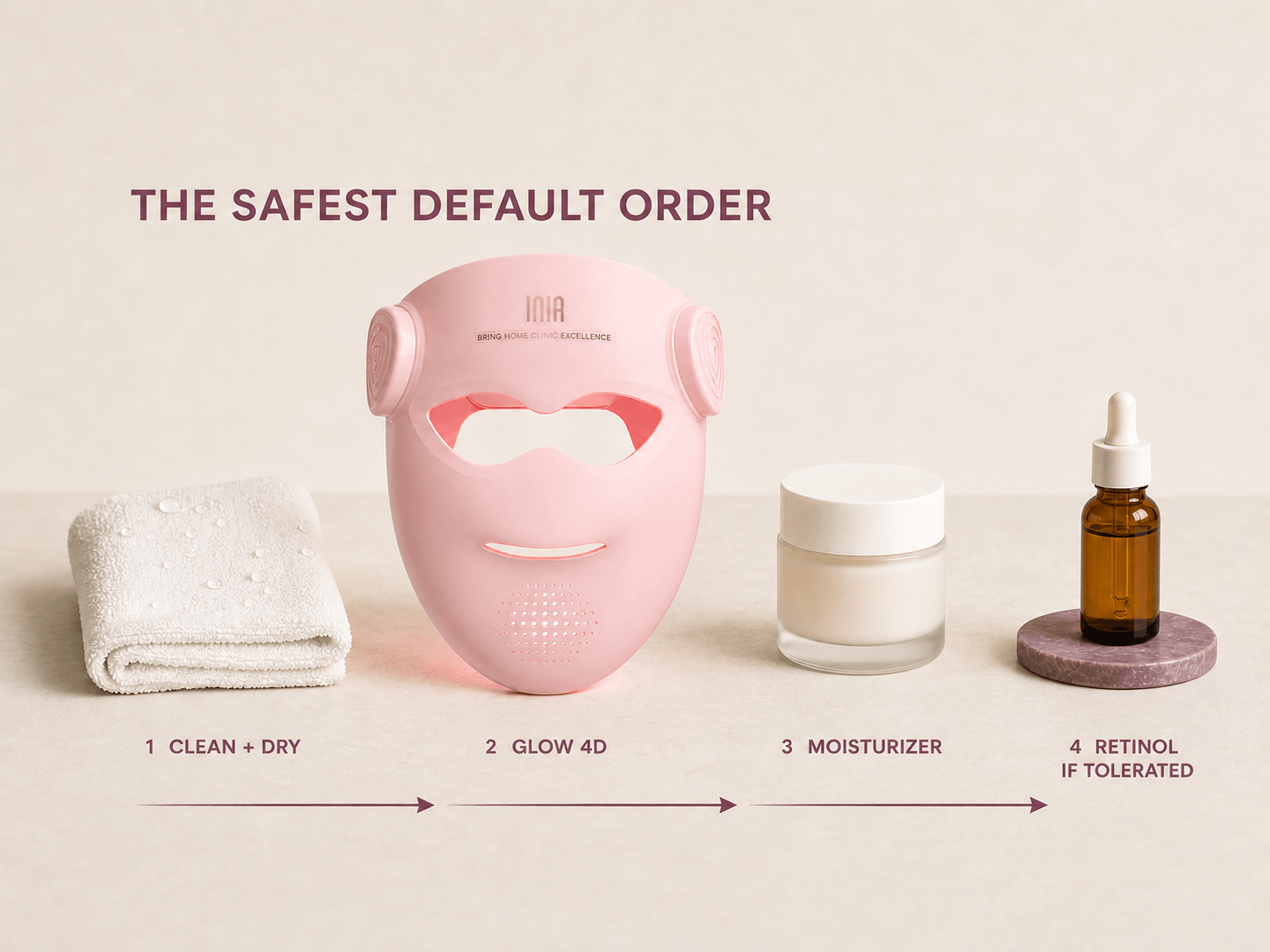

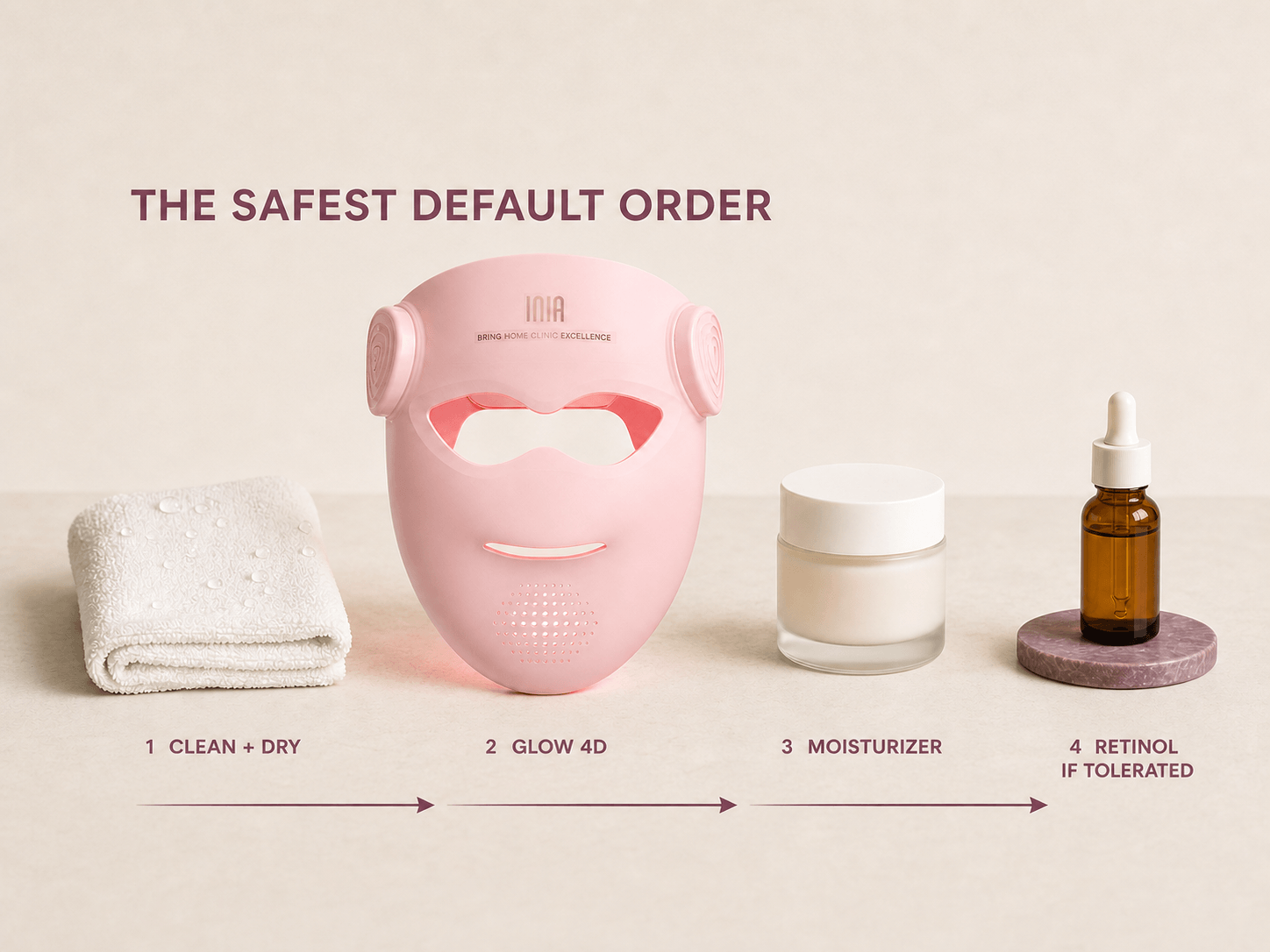
Yes, retinol and red light therapy can generally fit into the same skincare routine. Use the light device first on clean, dry skin. After the session, follow your retinol directions and add moisturizer; new or sensitive users can apply moisturizer before retinol as a buffer.
Retinol works through retinoic-acid signaling; red and near-infrared light influence mitochondrial signaling. Evidence supports each approach separately. Direct clinical trials have not established an added benefit from combining them.
Table of Contents
What Retinol Does in Skin
Skin enzymes convert retinol, a vitamin A derivative, to retinaldehyde and then retinoic acid. Retinoic acid binds nuclear receptors and influences genes involved in epidermal renewal and dermal extracellular-matrix activity (Zasada and Budzisz, 2019).
Human studies report improvements in fine-wrinkle appearance and changes in procollagen-related markers after repeated use. Results depend on formulation and tolerance (Kafi et al., 2007; Kong et al., 2016).
What Red and Near-Infrared Light Do in Skin
Cells absorb red or near-infrared photons. A leading mechanism involves mitochondrial cytochrome c oxidase, followed by changes in ATP, nitric oxide, and redox signals that influence cellular activity (Hamblin, 2018).
A randomized sham-controlled home-mask study using 630nm red and 850nm near-infrared light reported improved crow's-feet appearance over 16 weeks (Lee et al., 2025).
How Retinol and Red Light Fit Together
Retinol changes gene transcription after conversion to retinoic acid. Red and near-infrared light change mitochondrial and redox activity. Both pathways can reach processes related to epidermal renewal and extracellular-matrix maintenance.
Retinol guides longer-term cell behavior; red and near-infrared light provide a photobiomodulation signal. Their mechanisms can fit in one routine; extra benefit from combining them remains unconfirmed.
What Order Should You Use Retinol and Red Light Therapy?
Place the light session before retinol. This gives the device a clean, consistent skin surface and keeps leave-on skincare out of the treatment step.
- Cleanse: remove makeup, sunscreen, oil, and skincare residue.
- Dry: pat the face completely dry.
- Use the light device: follow its specified mode and session time.
- Moisturize if you need a buffer: new or reactive users can apply a simple moisturizer first.
- Apply retinol: use the amount, order, and schedule directed by the retinol product or your clinician.
- Protect in daytime: use broad-spectrum sunscreen as part of your morning routine.
Applying retinol after the session keeps the formula outside the light exposure itself. Skin that already tolerates retinol may follow a product-directed retinol-then-moisturizer order; buffering with moisturizer first is the more conservative starting point. For the broader skincare sequence, see whether to use red light therapy before or after skincare.
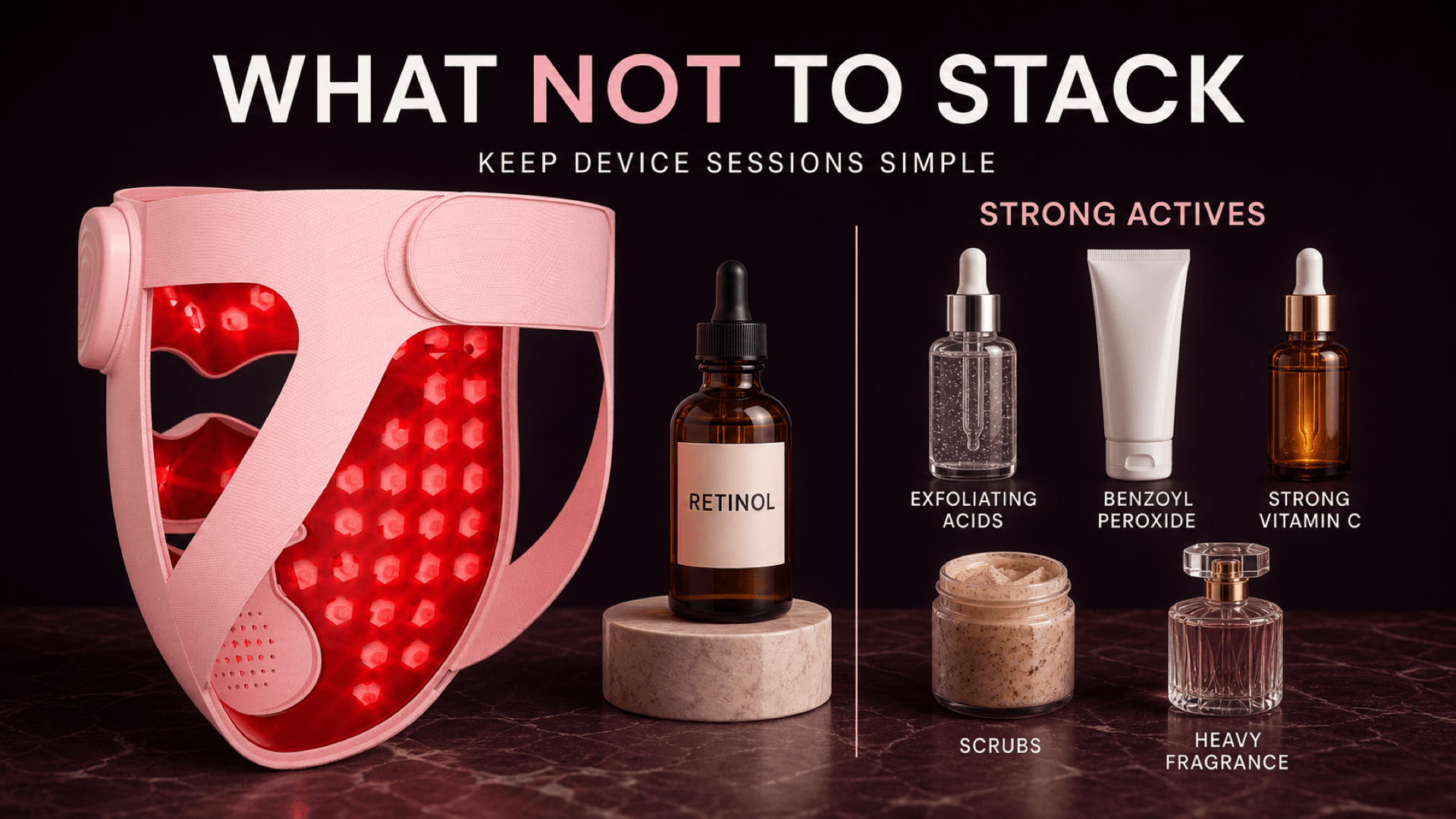
If the same routine also includes exfoliating acids, benzoyl peroxide, abrasive scrubs, strong vitamin C, or heavily fragranced products, keep the device night simple while your skin adjusts to retinol. Product directions and your tolerance determine which actives need separate nights.
How INIA GLOW 4D Fits Into a Retinol Routine
INIA GLOW 4D Wireless LED Light Therapy Mask makes the order explicit: use it on clean, dry skin and apply serum or cream afterward. Its Anti-aging mode combines red light with 850nm and 940nm near-infrared light for a 10–20-minute session.
When Should You Use Them on Separate Nights?
Your skin already tolerates retinol
Complete the light session first, then continue with retinol and moisturizer in the order that suits your product directions and tolerance.
Retinol is new or your skin feels reactive
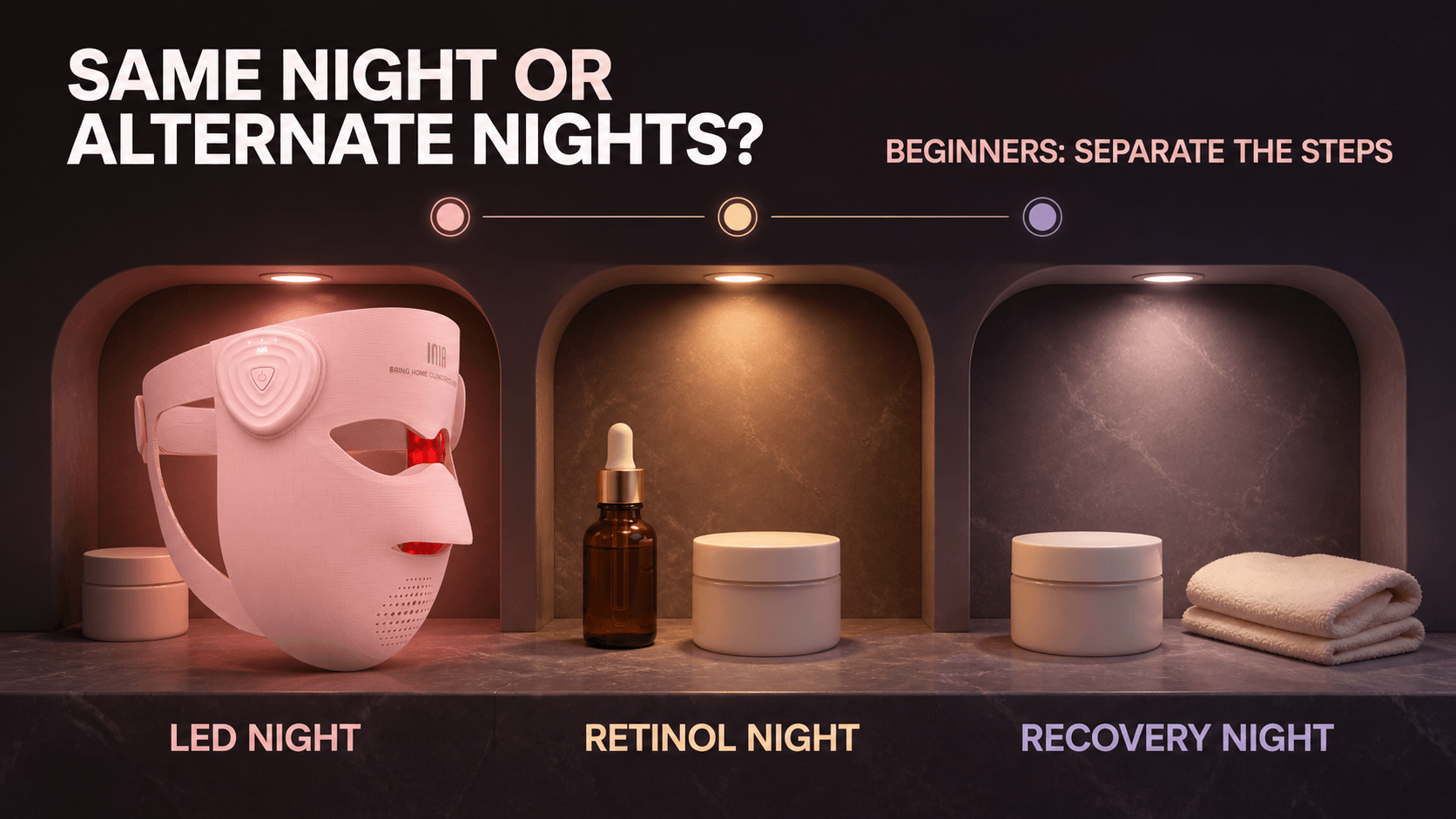
Introduce one step at a time. Alternate the routines until you can identify how your skin responds to each one.
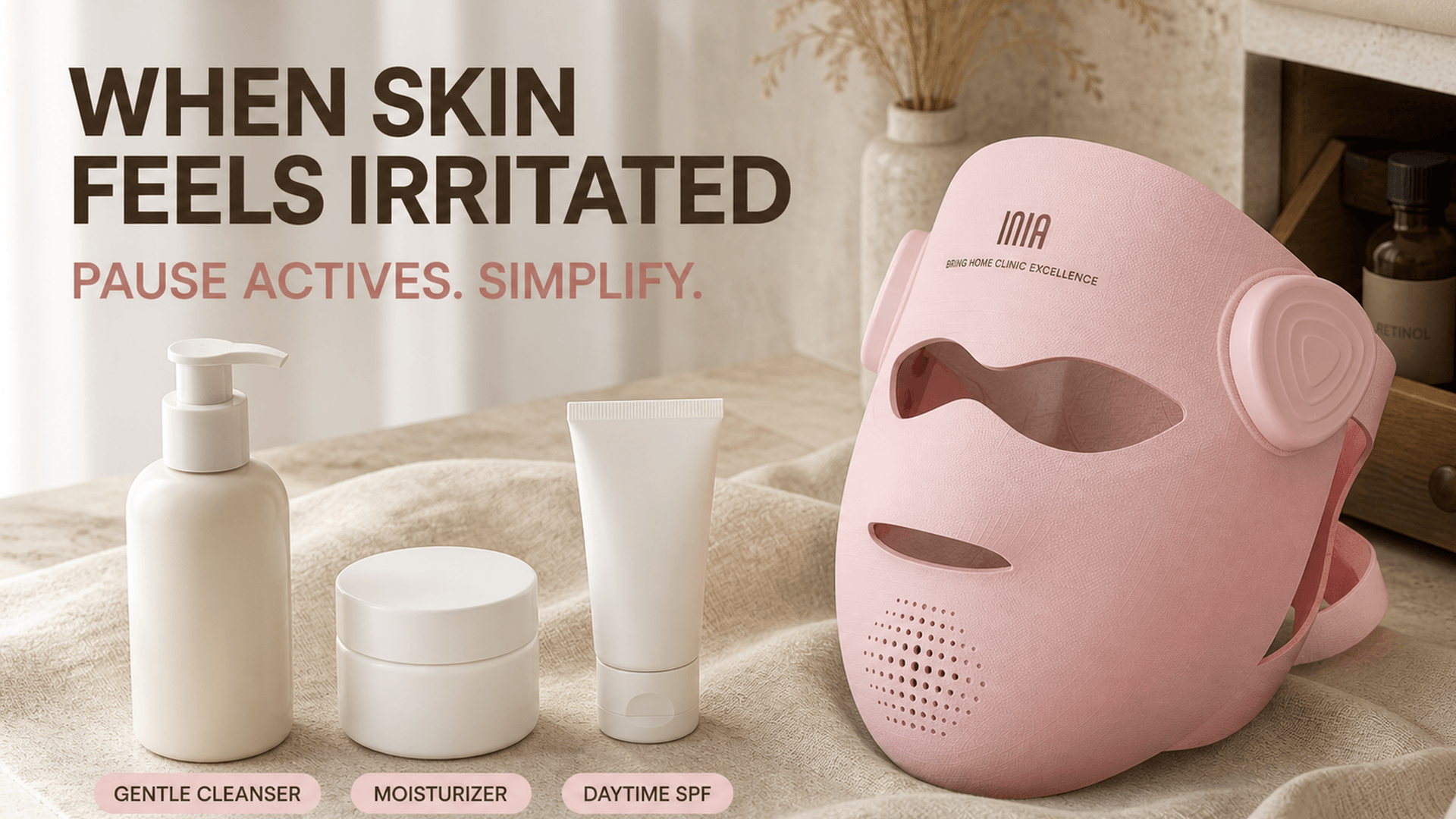
Pause active skincare and the light session for persistent burning, marked redness, swelling, eye discomfort, or worsening peeling. Follow the GLOW 4D sensitivity-test and contraindication instructions. Obtain medical guidance for a photosensitive condition or photosensitizing medication.
Use the Light First, Then Complete Your Retinol Routine
Complete the light session on clean, dry skin, then follow your retinol directions and add moisturizer. New or reactive users can alternate nights or place moisturizer before retinol as a buffer. Their pathways may support overlapping skin-renewal goals, while direct evidence for a superior combined result remains limited.
Frequently Asked Questions
Should retinol go before or after red light therapy?
Apply retinol after the light session. Begin with clean, dry skin and complete the device session first. Then follow the retinol product's directions; new or sensitive users can apply moisturizer before retinol as a buffer.
Can I use retinol and red light therapy on the same night?
Yes, if your skin already tolerates retinol and your device instructions permit use. Keep them as sequential steps: light first, retinol afterward.
Does red light deactivate retinol?
Direct evidence for red-light-mask exposure and finished retinol formulas is limited. Applying retinol after the session keeps the formula outside the light exposure and follows the GLOW 4D clean-skin routine.
Is red light the same as UV light?
No. Red and near-infrared wavelengths sit outside the ultraviolet range. Continue daily broad-spectrum sunscreen because UV protection remains essential in a retinol and photoaging routine.
References
- Zasada and Budzisz: Retinoic acid and its derivatives in skin
- Kafi et al.: Improvement of naturally aged skin with vitamin A
- Kong et al.: Topical retinol and molecular changes in aged human skin
- Hamblin: Mechanisms and mitochondrial redox signaling in photobiomodulation
- Lee et al.: Home-use 630nm LED and 850nm IRED mask trial
- American Academy of Dermatology: Red light therapy safety guidance
- INIA GLOW 4D official product page