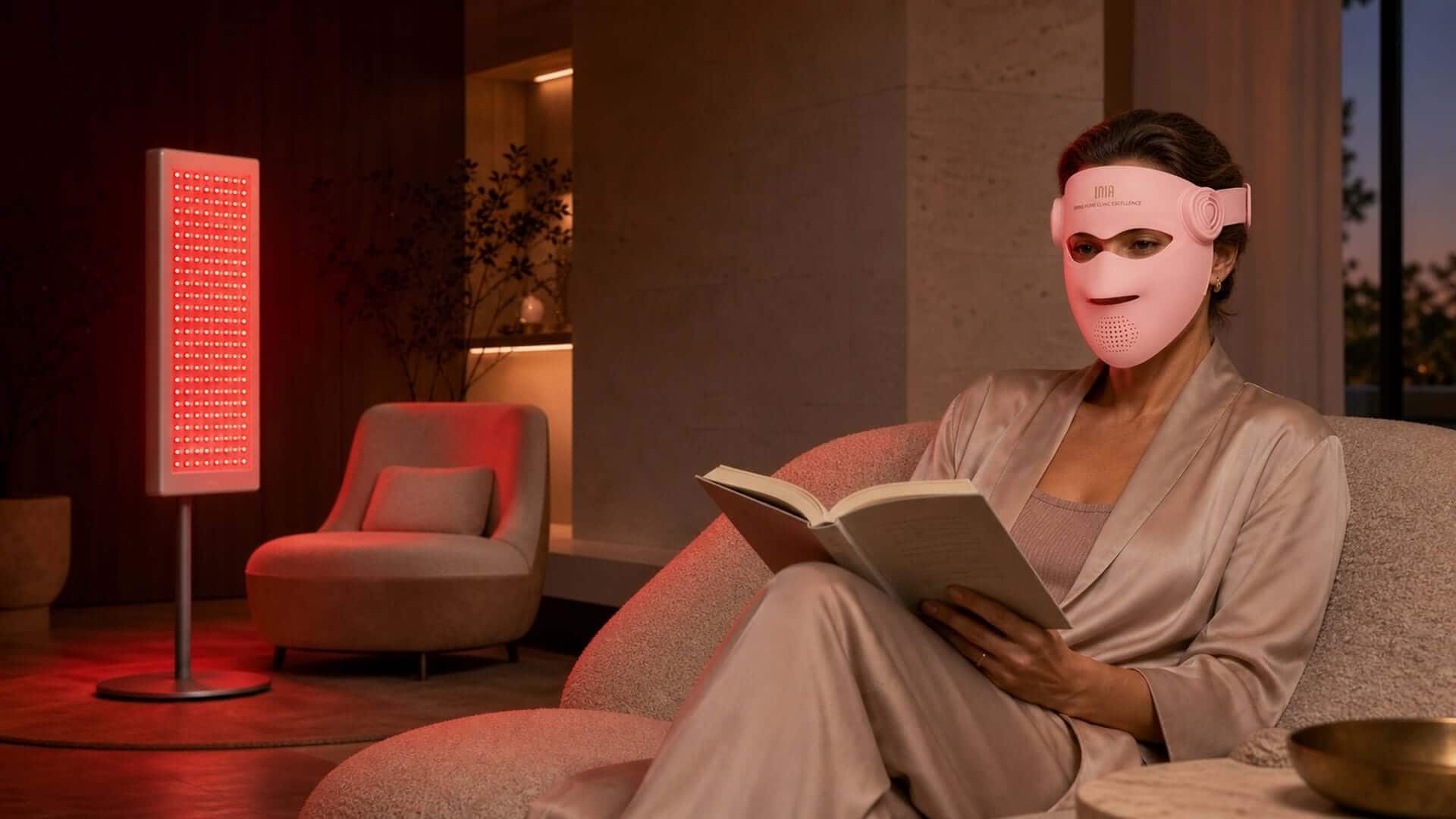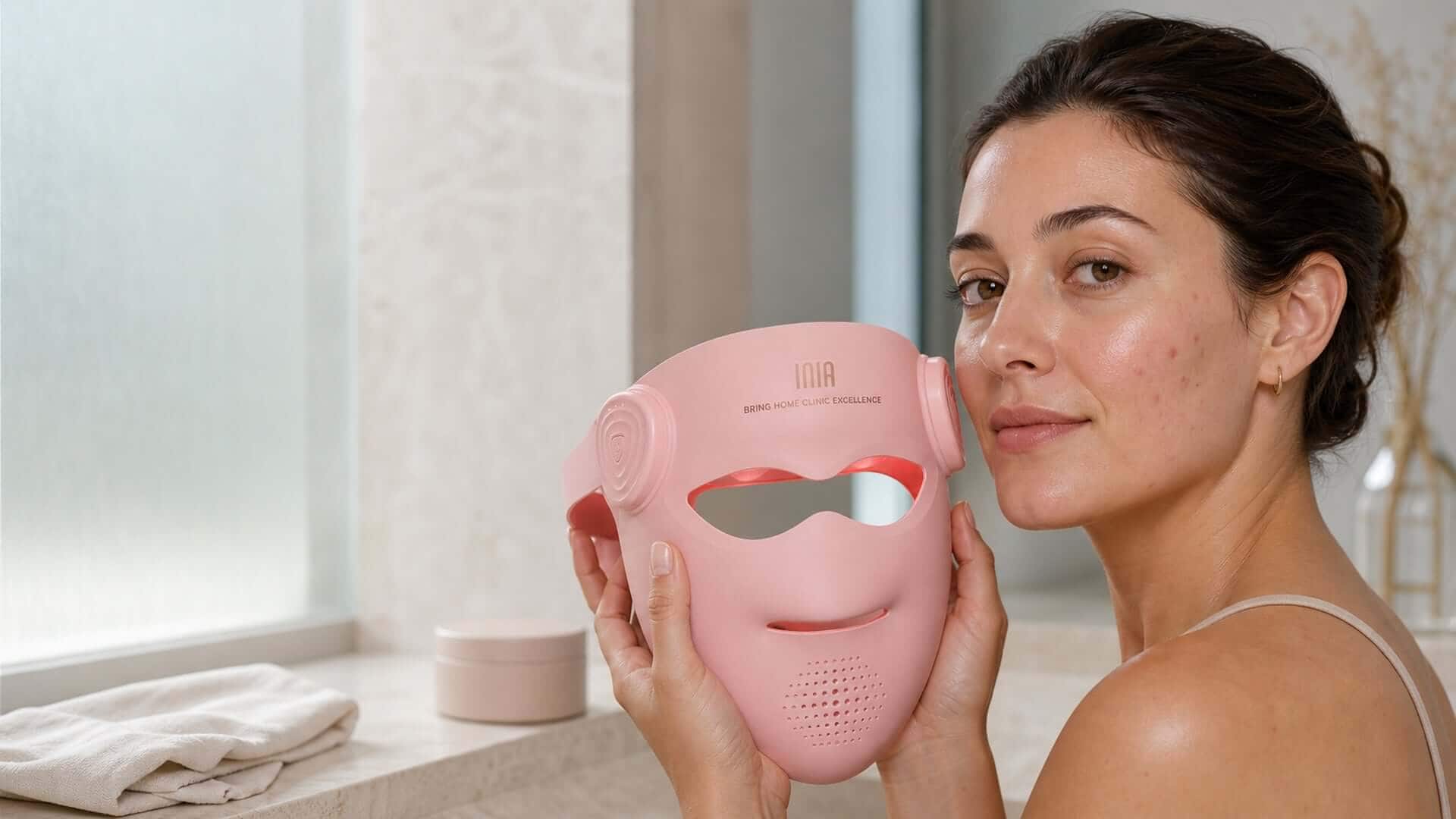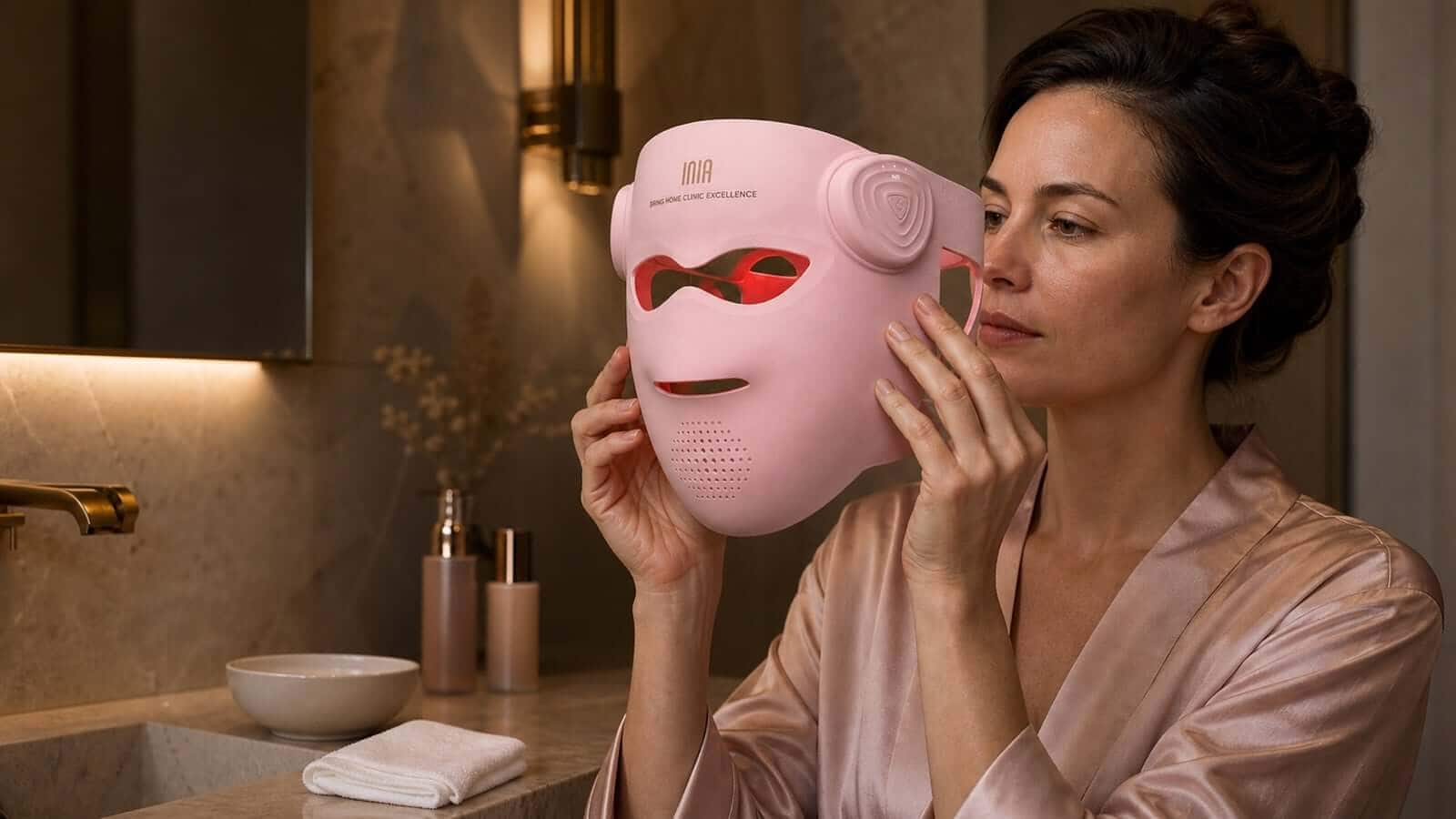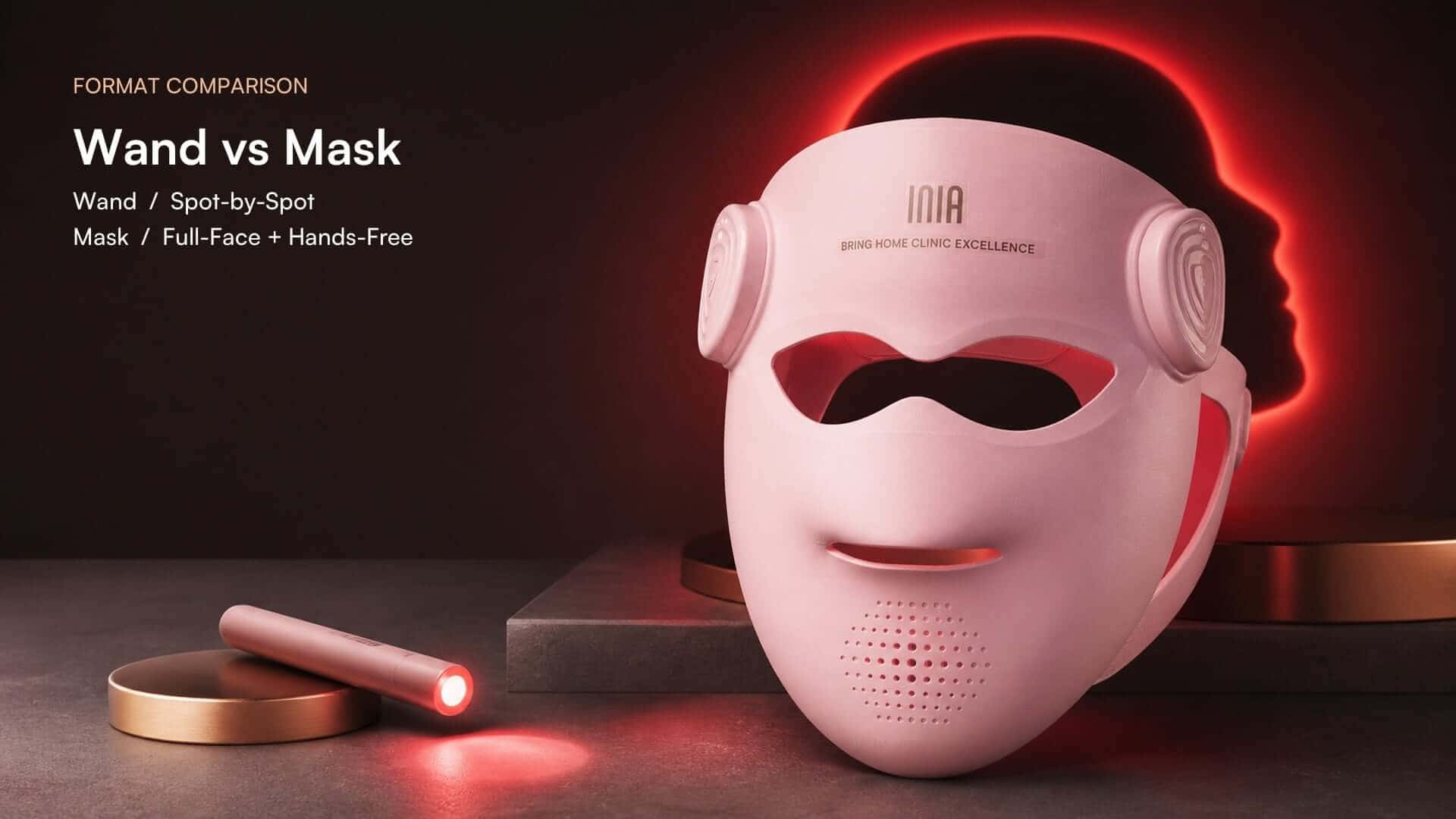
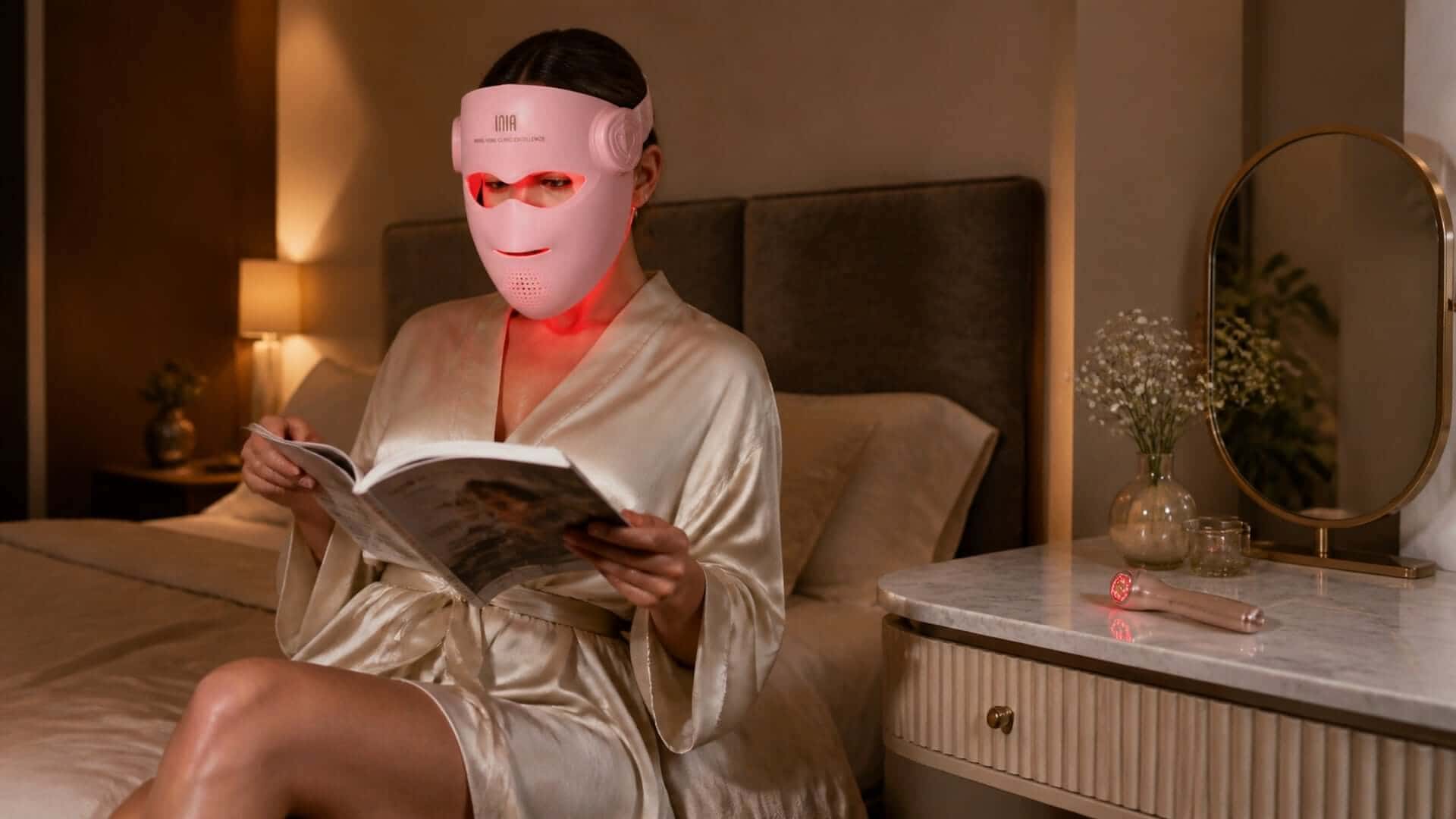
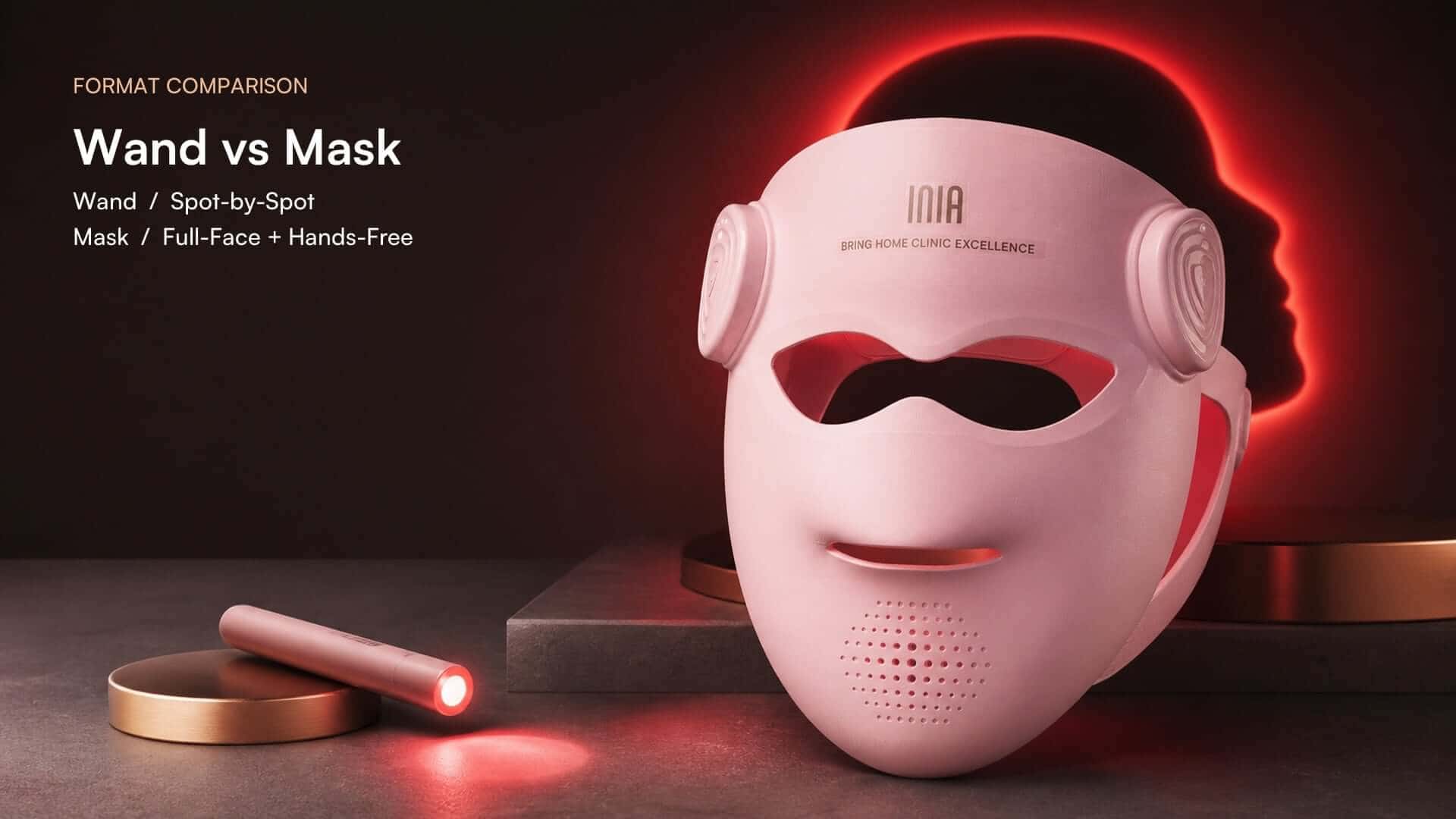
If your goal is full-face care, choose a red light mask. A wand asks you to hold the device, time one area, move to the next, and remember where you have already treated. A mask turns the same goal into one simpler step: put it on, start the session, and let it stay in place. Choose a wand only when you truly want to focus on one small, specific area.
Table of Contents
- The Real Question: Which One Fits a Real Evening?
- Take the Tired-Evening Test
- Why a Wand Can Feel Like Another Task
- Why a Mask Fits More Naturally Into a Routine
- Watch a GLOW 4D Routine Demonstration
- Specifications Still Matter—After the Format Fits
- Which Format Should You Buy?
- Safety and Usage Boundaries
- Bottom Line
- Frequently Asked Questions
- References
The Real Question: Which One Fits a Real Evening?
It is easy to compare a red light wand and mask when you are excited about a new device. The more useful comparison is what happens several weeks later, at the end of a long day. Do you want to manage the device throughout the routine, or put it on once and let it stay positioned?
You manage the session
- Hold or position the device over one limited area.
- Track the instructed time before moving to the next area.
- Repeat the placement or movement pattern across the face.
- Keep your hand and attention involved during use.
The device stays in place
- Fit the mask once at the beginning of the session.
- Cover multiple facial zones at the same time.
- Avoid planning a spot-by-spot path around the face.
- Keep your hands available while you sit back and unwind.
This is why the mask is the clearer choice for most full-face routines. It does not ask you to turn one skincare step into a series of small manual tasks. A wand remains useful when the intended area is genuinely small and the focused format matches the device instructions.
Take the Tired-Evening Test
Imagine that it is the end of a busy day. You still want to care for your skin, but you do not want another job to complete. Would you rather hold a wand, time one area, reposition it, and keep track of the next area—or fit a mask once and begin the session?
Which device are you more likely to use when you are tired, distracted, or short on patience? For a full-face routine, the mask asks less from you at exactly the moments when extra effort is most likely to make skincare feel like a chore.
Your skincare routine should help you unwind, not require constant supervision. That does not make a mask universally better for every purpose. It makes the mask the more natural fit when your actual goal is regular, face-wide care.
Why a Wand Can Feel Like Another Task
A wand is appealing because it is compact. For one small target, that simplicity can be real: retrieve the device, follow the placement instructions, and complete the supported area.
The experience changes when you try to turn a small treatment window into a full-face routine. You may need to divide the face into several zones, reproduce the instructed distance and angle, track the time for each placement, and avoid leaving gaps or spending extra time over the same area.
That does not mean a wand cannot be used across multiple areas when its instructions allow it. It means the convenience of the small device can create more work when the intended treatment area is large. The user—not the device—has to organize the complete coverage pattern.
Before choosing a wand for the whole face, read the current manual and count the complete process rather than one placement. Ask how many positions or movement paths are needed, how long the entire pattern takes, and whether you want to remain actively involved for the whole session.
Why a Mask Fits More Naturally Into a Routine
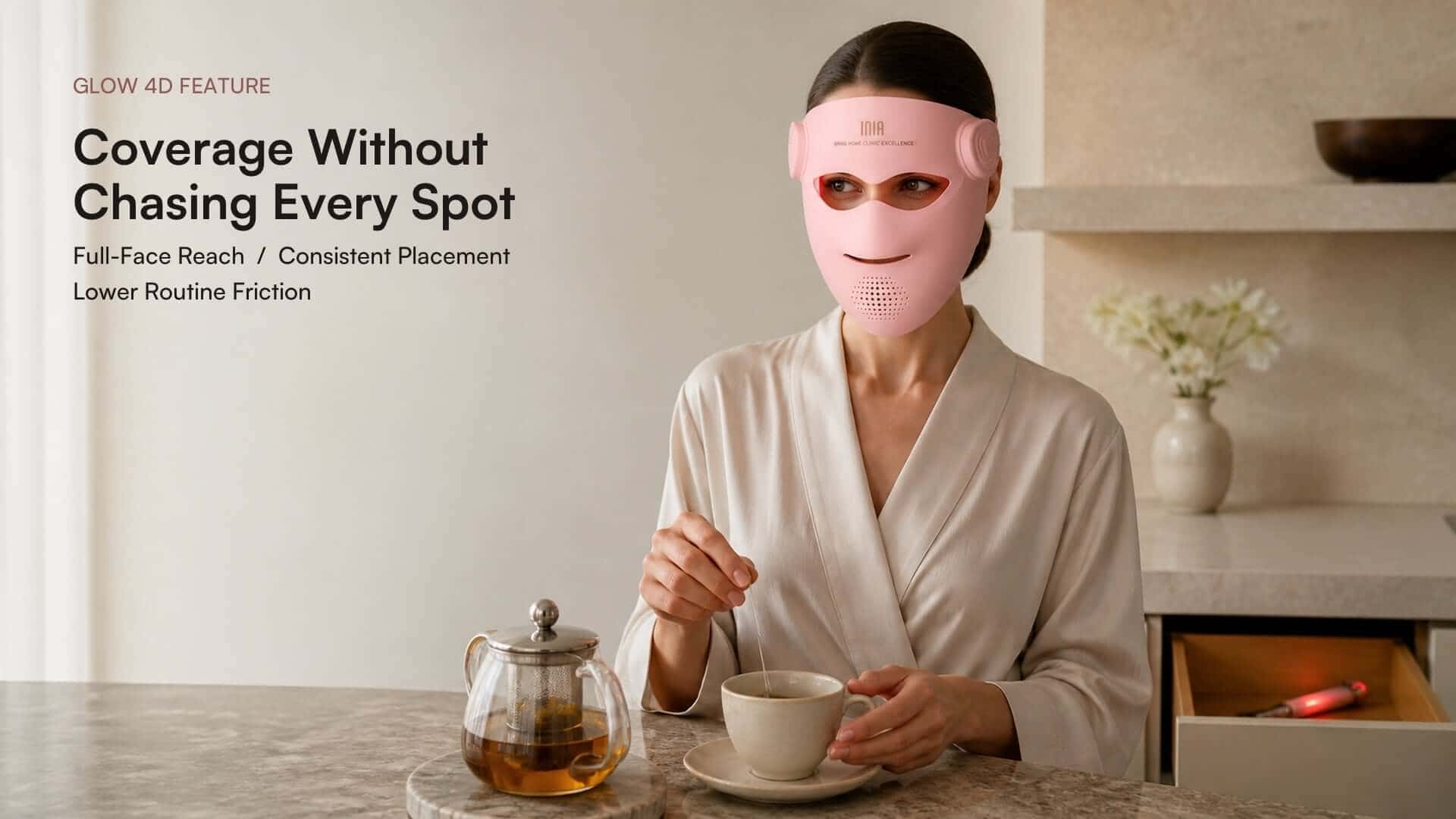
A face mask begins with the full-face use case. Once it is fitted, multiple light sources remain positioned around several facial zones during the same session. You do not have to remember which cheek you treated first or create a route around the forehead, nose area, jawline, and chin.
The important benefit is not simply that your hands are free. It is that the routine has fewer steps to manage. Put it on, start the appropriate mode, and follow the instructed session time. When the device instructions permit it, you can sit, read, or relax without holding the light source in place.
A mask can still fit poorly, leave gaps, or feel uncomfortable around the eyes or nose. Its shape does not mean every point receives an identical dose. Check the fit, LED layout, facial coverage, eye guidance, and current instructions for the exact model. The practical advantage is that the device holds its planned arrangement instead of asking your hand to recreate it throughout the session.
Watch a GLOW 4D Routine Demonstration
About this video: Nicole DeMuret (@nicoledomuret) posted this promotional GLOW 4D routine demonstration on April 2, 2026. She shares her longer-term skin experience and shows how the mask fits into a repeatable routine.
What This Demonstration Adds to the Comparison
Nicole fits GLOW 4D once, wears it across the full face, and discusses its coverage, light modes, use frequency, and place in her routine. That is the practical difference this guide asks you to consider: a mask holds the planned arrangement while you wear it, instead of asking you to guide a handheld device around each facial area.
This promotional creator demonstration shows one person's routine and experience. It does not replace the instructions supplied with your device or predict an individual result. If playback fails, open the original Instagram Reel.
Specifications Still Matter—After the Format Fits
Wavelengths, irradiance, illuminated area, distance, operating mode, session time, and measurement method all matter when comparing exact products. A larger number on a product page does not automatically establish better full-face coverage or a better cosmetic result.
But specifications cannot rescue a format that you do not want to use. First decide whether your real routine is one small target or most of the face. Then compare products within the format that fits your life.
- Check whether the wavelengths and operating modes are clearly listed.
- Look for the stated treatment area and measurement distance.
- Read the complete session time and frequency instructions.
- Confirm fit, eye guidance, charging, cleaning, and storage requirements.
- Do not compare irradiance numbers measured under different conditions as if they were interchangeable.
The American Academy of Dermatology notes that at-home devices and studies use different designs and treatment schedules, which makes direct result comparisons difficult. That is another reason to follow the exact product instructions rather than assuming that advice for one wand or mask transfers to another.
Which Format Should You Buy?
Your goal stays small and specific
- You can name one limited area you want to address.
- The manual supports that area and gives clear positioning instructions.
- You do not mind holding or moving the device during use.
- Compact storage matters more than full-face convenience.
You want full-face care without another chore
- You want multiple facial zones covered during one session.
- You would rather fit the device once than move it spot by spot.
- You want your hands and attention available for something else.
- You want a routine that still feels manageable on a tired evening.
For that full-face use case, INIA GLOW 4D is the relevant INIA option. Its current official page lists a wireless format, 850 nm and 940 nm near-infrared wavelengths, four smart LED modes, and a contour designed around the face, jawline, and chin. It is designed for the evenings when you still want to care for your skin but do not want to manage a handheld device throughout the routine.
If you are deciding between wearable and freestanding formats rather than a handheld wand, read the red light panel vs mask guide. If you already know you want a mask, use the red light therapy mask reviews guide to compare fit, coverage, instructions, and product evidence.
Safety and Usage Boundaries
Follow the current instructions supplied with the exact device. Do not assume that eye protection, treatment distance, mode timing, or weekly frequency transfers from one wand or mask to another. Stay awake and able to monitor the device during use. Stop if you experience persistent pain, burning, marked redness, eye discomfort, or another unexpected reaction.
The American Academy of Dermatology recommends selecting a device intended for your concern, following its directions, and using the specified eye protection when required. Ask a qualified clinician about personal suitability if you have a light-sensitive condition, use photosensitizing medication, recently had a procedure, have a relevant eye concern, or have another health condition that may affect use.
Your Skincare Routine Should Help You Unwind
A wand is a sensible choice for one small area. For full-face care, a mask is the easier decision because it turns several manual placements into one wearable step. You should not have to spend the entire routine holding, moving, timing, and remembering a device. Choose the format you can realistically imagine using at the end of an ordinary, busy day.
Frequently Asked Questions
Why is a mask more practical than a wand for the whole face?
A mask keeps multiple light sources positioned around several facial zones at once. A wand requires you to manage each placement or movement path yourself, so a full-face routine involves more hands-on steps.
Is a red light wand still useful?
Yes. A wand can be a good format for one small, specific area when the device instructions support that location and you are comfortable holding or moving it during use.
Is a mask faster than a wand?
Session time is specific to the device and mode. A mask can reduce hands-on work for a full-face routine because it covers multiple zones simultaneously instead of requiring repeated manual placement.
Does a red light mask provide perfectly even coverage?
Not necessarily. Fit, facial contours, gaps, LED placement, and distance from the skin can affect coverage. Check the design and instructions for the exact mask.
Can I read or relax while wearing an LED mask?
Only when the device instructions permit it. Stay awake, follow the eye guidance, and remain able to stop the device if you experience discomfort.
Where does INIA GLOW 4D fit in this comparison?
GLOW 4D is INIA's wireless full-face mask option. Its official page lists 850 nm and 940 nm near-infrared wavelengths, four smart LED modes, and coverage designed around the face, jawline, and chin.