

Haaland red light therapy is trending because a red glow around an elite footballer instantly makes people ask what the device does. The useful takeaway is not to copy a professional athlete's recovery room, but to understand why red light has moved from clinics and training spaces into everyday beauty-tech conversations.
For skincare fans, the better question is practical: should this trend change how you think about red light panels, LED face masks, and your own routine?

Table of Contents
- Part 1. Why Haaland's Red Light Setup Caught Attention
- Part 2. What Red Light Is Doing in the Recovery Conversation
- Part 3. What Skincare Fans Can Actually Take From It
- Part 4. Red Light Panel or LED Face Mask?
- Part 5. A Face Routine Inspired by the Trend
- Part 6. FAQ
- Part 7. References
Part 1. Why Haaland's Red Light Setup Caught Attention
Haaland already attracts attention for his training, diet, sleep, and recovery habits. When fans see a player like that near a bright red light setup, the image feels like a peek into a professional routine.
That is why the story travels. It combines football, performance culture, and a device category that many people have seen on TikTok, in spas, or on beauty sites.

The visual also matters. A red light panel looks dramatic: the room glows, the LEDs are obvious, and the setup feels more serious than a cream or serum on a bathroom shelf.
| What people notice | Why it sparks curiosity | Better way to read it |
|---|---|---|
| A footballer beside red LEDs | It feels like an elite recovery tool | It shows interest in a device category |
| A large panel or bed setup | It looks more intense than a face mask | It is built for a different use case |
| A World Cup-season football conversation | Fans are watching player routines closely | Treat it as a timely wellness topic |
| A familiar red glow | Many shoppers have seen red light masks | Compare the device type before assuming results |
Tip: Use the Haaland image as a starting point, not a shopping shortcut. First ask what body area, routine, and outcome you personally care about.
INIA is not affiliated with Haaland. The reason this topic belongs on a beauty-tech blog is that it helps explain a broader shift: red light devices are no longer niche gadgets.
Part 2. What Red Light Is Doing in the Recovery Conversation
Red light devices use specific wavelengths of light, usually visible red light and sometimes near-infrared light. In simple terms, red light is the visible glow people notice, while near-infrared is less visible and is often discussed for deeper light reach.
Athletes may encounter red light through large panels, beds, or recovery-room setups. Skincare users usually encounter it through masks, wands, or smaller devices designed for the face.
| Term | What it means | Why readers should care |
|---|---|---|
| Red light | Visible red LED light, often around the 600 nm range | Common in face and body devices |
| Near-infrared light | Longer wavelengths such as 850 nm or 940 nm | Often paired with red light in advanced devices |
| Panel | A larger light source placed near the body | Better for broad exposure and more setup |
| LED face mask | A shaped device worn over the face | Better for repeatable facial skincare |
The recovery conversation can sound more certain than it really is. A professional athlete's routine includes many inputs: sleep, nutrition, training load, massage, physiotherapy, and coaching support.
For a home user, red light is better understood as one possible routine tool. It should be judged by device design, wavelength transparency, comfort, session instructions, and consistency.
Tip: If you are comparing red light devices, do not stop at the color. Check the device type, wavelength information, comfort, and how easy it is to use regularly.
Part 3. What Skincare Fans Can Actually Take From It
The most useful lesson from the Haaland trend is not that everyone needs a recovery panel. It is that red light has become part of a larger conversation about recovery, appearance, and daily routines.
For skincare fans, that shifts the question from "What does an athlete use?" to "What version of this technology fits my face, schedule, and expectations?"
There are three practical takeaways.
First, the device shape matters. A panel and a mask may both use red light, but they do not feel the same in daily life.
Second, consistency matters more than drama. A large glowing panel may look impressive, but a device you actually use several times per week is more realistic for home skincare.
Third, red light should fit into skincare rather than replace it. Cleansing, hydration, sunscreen, and patience still matter.
| If you liked the Haaland trend because... | Your real buying question may be... | Useful next step |
|---|---|---|
| The setup looked high-tech | What type of device fits my goal? | Compare panel and mask formats |
| It seemed connected to recovery | Am I interested in body use or face use? | Define the area first |
| The red glow looked powerful | What wavelengths does the device disclose? | Look for clear specs |
| It felt like a routine upgrade | Can I use it consistently? | Choose the lower-friction format |
This is where a beauty-focused reader can make a smarter decision than simply copying a viral image. The right device is the one that matches the area, use case, and routine you can maintain.
Part 4. Red Light Panel or LED Face Mask?
A red light panel and an LED face mask can both belong in the same category, but they are not interchangeable. The right choice depends on what you want the device to do.
A panel makes more sense when you want broader body exposure and have a dedicated place to use it. A face mask makes more sense when your main goal is facial skincare and you want a device that fits easily into a routine.
| Feature | Red light panel | LED face mask |
|---|---|---|
| Best fit | Body-area use, broad exposure, recovery-style routines | Facial skincare and repeatable home use |
| Setup | Needs distance, space, and positioning | Wearable and easier to repeat |
| Coverage | Larger area | Face-specific coverage |
| Routine friction | Higher for small spaces | Lower for skincare users |
| Main question | Where will I place it? | Will it fit and feel comfortable? |
Panels often look more impressive online because they light up a room. Face masks are less dramatic visually, but they can be easier to use while reading, relaxing, or winding down.
For many skincare readers, that convenience is not a small detail. A device that is easy to repeat usually has a better chance of becoming part of a real routine.
Tip: Choose by use case before choosing by appearance. A panel photo can look more powerful, but a mask may be the better fit if your target is facial skin.
If you want to go deeper, compare red light panel vs mask and learn the difference between red light vs near infrared.
Part 5. A Face Routine Inspired by the Trend
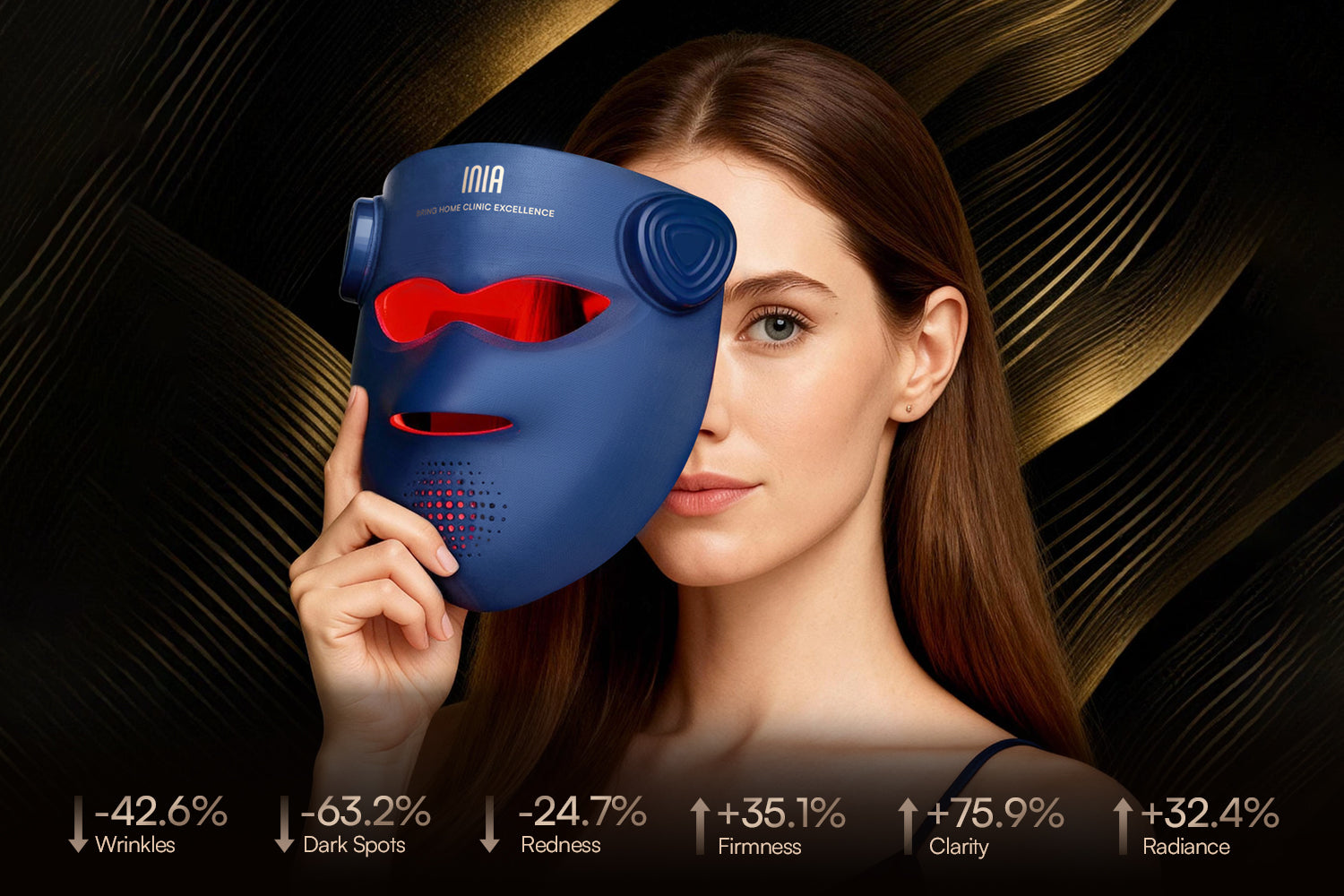
If the Haaland image made you curious about red light but your real goal is facial skincare, INIA GLOW 4D is the relevant INIA direction. It is a wireless LED face mask built around red light and dual near-infrared wavelengths, including 850 nm and 940 nm.
The idea is not to recreate an athlete setup. The idea is to turn curiosity into a simple face routine that is easy to repeat.
Step 1. Start with clean, dry skin
Remove makeup, sunscreen, and heavy residue before using a light device. A clean surface makes the routine feel more intentional and easier to repeat.
Step 2. Wear the mask evenly
Fit matters because comfort affects consistency. If a device feels awkward, most people use it less often.
Step 3. Keep the rest of the routine simple
After the session, use a gentle moisturizer. If it is daytime, finish with sunscreen.
Step 4. Track consistency, not perfection
You do not need a dramatic recovery-room setup to build a useful beauty habit. A realistic routine is one you can repeat without overthinking it.
Important: Follow the device manual and stop if you feel unusual heat, eye discomfort, headache, or skin irritation. Ask a qualified professional if you have photosensitivity concerns or a medical condition.
For frequency planning, read how often to do red light therapy on face.
Part 6. FAQ
Does Haaland actually use red light therapy?
Media coverage has connected Haaland with red light recovery content, but the main reader takeaway is broader than one athlete. The trend shows how visible red light devices have become in performance and wellness culture.
Is INIA connected to Haaland?
No. This article does not claim an endorsement, partnership, sponsorship, or product-use relationship between Haaland and INIA.
Is Haaland red light therapy the same as using a face mask?
No. The Haaland image points toward a panel or bed-style setup, while a face mask is designed for facial skincare coverage and routine convenience.
Should I buy a panel or a mask?
Choose a panel if you want broader body exposure and have space to position it. Choose a mask if your main goal is a repeatable face routine.
What wavelengths should skincare shoppers notice?
Many skincare devices mention red light in the 600 nm range and near-infrared wavelengths such as 850 nm. INIA GLOW 4D also highlights 940 nm near-infrared light.
Can red light replace skincare?
No. Red light should sit inside a broader routine that still includes cleansing, hydration, and sunscreen.
Is red light safe for everyone?
Not automatically. Follow the product manual and get professional guidance if you have photosensitivity concerns, a medical condition, or an unusual reaction.