
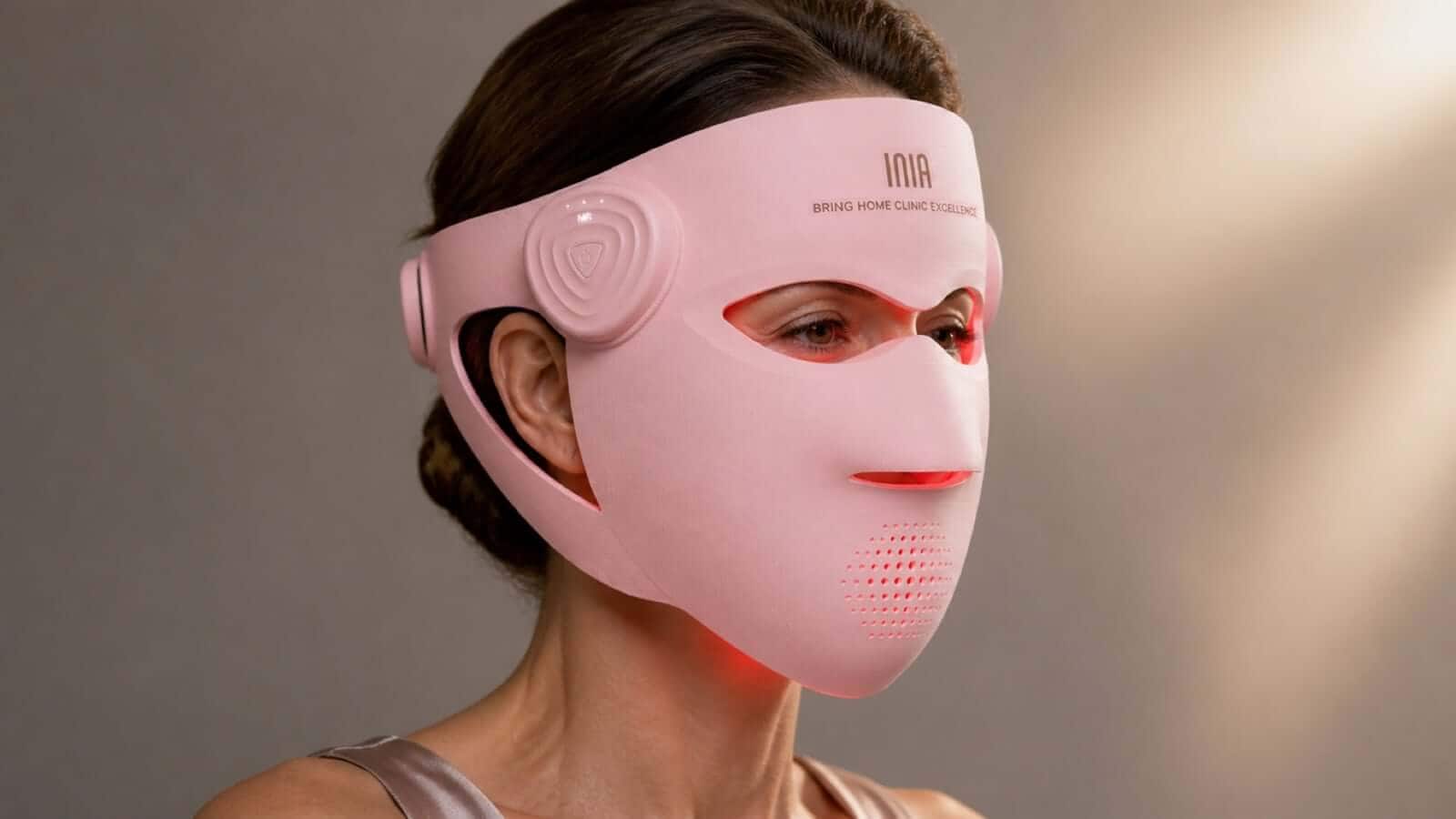
Yes—you may open your eyes when the instructions for your exact red light therapy mask allow it and the eye openings align comfortably. With INIA GLOW 4D, current guidance does not prescribe one eye position: fit the powered-off mask first, then choose open or closed eyes according to your comfort. Do not turn your gaze toward the LEDs, and stop if you experience eye discomfort. If keeping your eyes open feels difficult, check alignment, strap tension, nose pressure, stability, brightness, and warmth instead of assuming everyone must keep their eyes closed.
Table of Contents
Why Eye Position Is Only Part of the Problem
The question sounds simple, but eyelids alone do not determine an optical exposure. The International Commission on Non-Ionizing Radiation Protection evaluates visible and infrared light using factors such as wavelength, radiance or irradiance, exposure time, and the apparent size and geometry of the source.1 In other words, “eyes open” and “eyes closed” are not universal safety categories that can replace the instructions for a specific device.
Research measuring human eyelids also found that light transmission varies by wavelength and from person to person.2 Closing your eyes may feel more comfortable because it reduces perceived brightness, but an eyelid is not a standardized optical filter. That is why the American Academy of Dermatology recommends following the exact device directions and using the recommended eye protection whenever those directions require it.3
The Real Problem Is Often the Wearing Experience
People rarely ask about eye position in isolation. They ask because a session feels too bright, the mask presses around the eyes or nose, the openings drift out of place, or warmth makes the routine difficult to finish. Closing the eyes may reduce one sensation, but it does not correct the fit.
| What you feel | What may be happening | What to adjust |
|---|---|---|
| Distracting brightness | The eye openings are not aligned or light is reaching the eye area at an uncomfortable angle. | Turn the mask off, realign it, and close your eyes if that feels better. |
| Eye or nose pressure | The mask is sitting unevenly or the strap is tighter than needed. | Rebalance the mask instead of tightening it harder. |
| Sliding or shifting | The strap and facial fit are not holding the eye openings in a stable position. | Adjust the fit while the device is off before restarting. |
| Excessive warmth | Comfort is declining during the session. | Stop the session; do not push through eye discomfort or excessive warmth. |
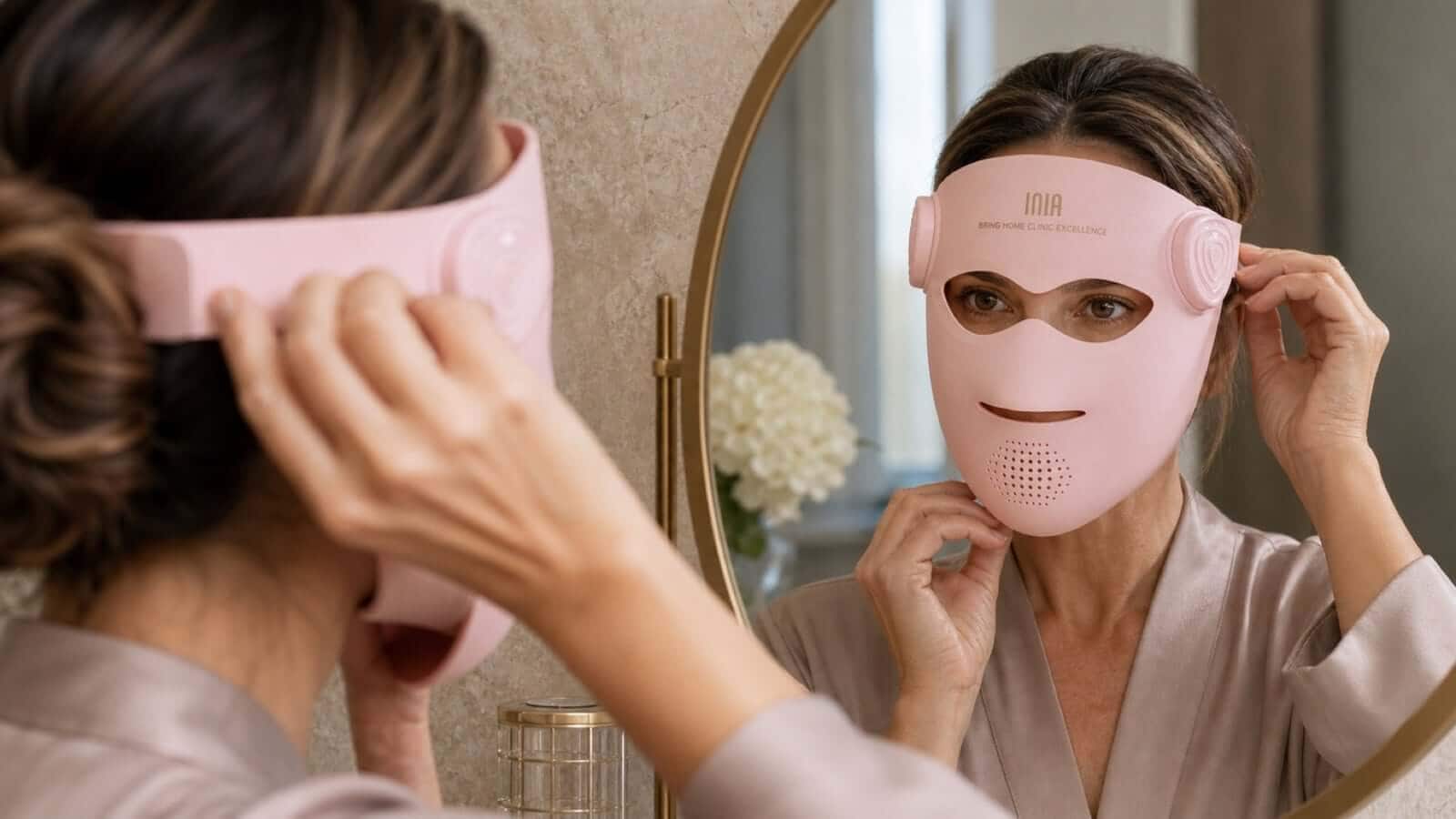
How GLOW 4D Gives You a More Comfortable Choice
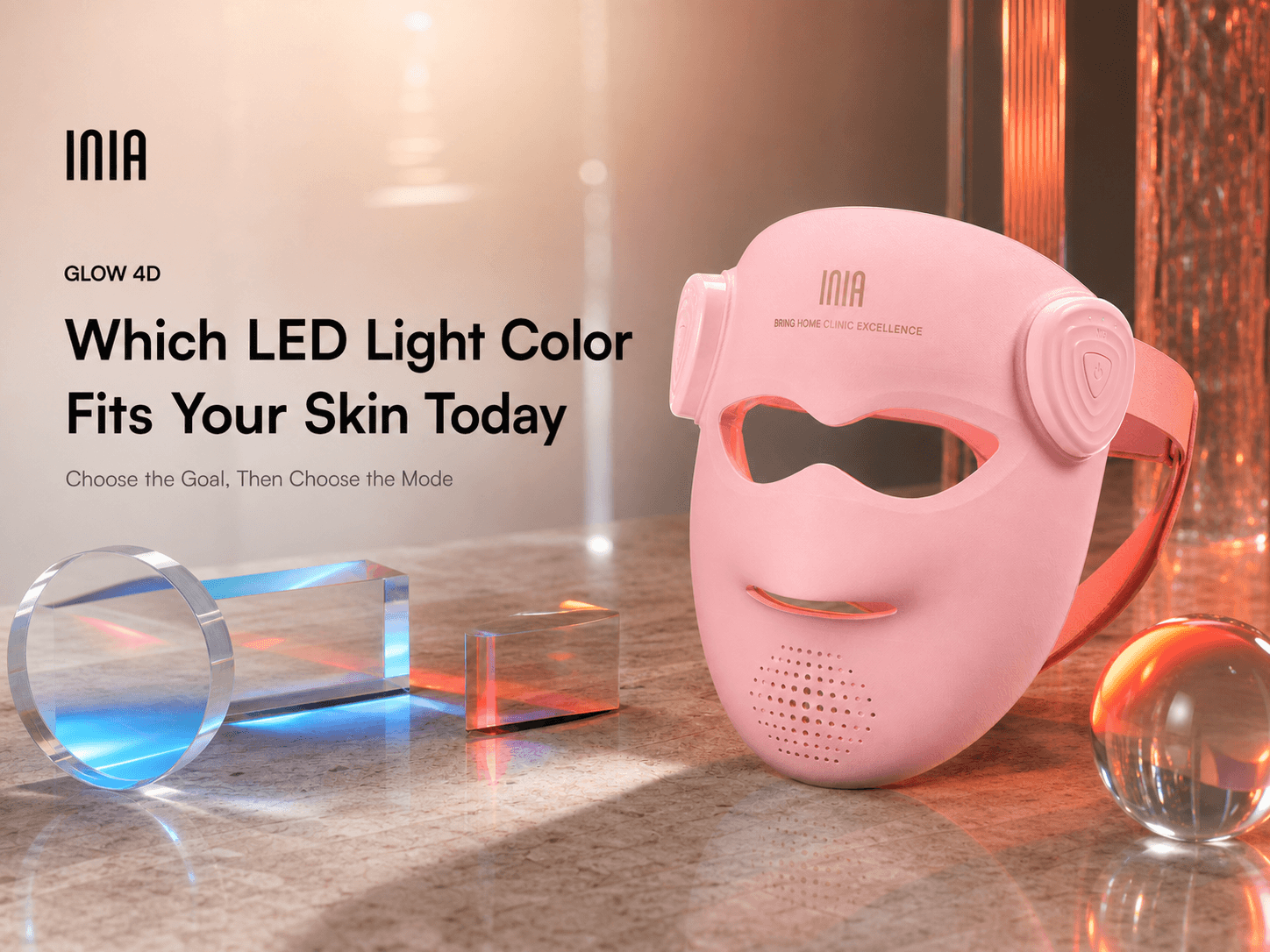
INIA GLOW 4D, the wireless inia red light mask, includes magnetic cooling pads as an optional accessory. When checking the wearing experience, follow the supplied instructions for fit and eye setup; a wireless format or cooling accessory does not establish eye protection.
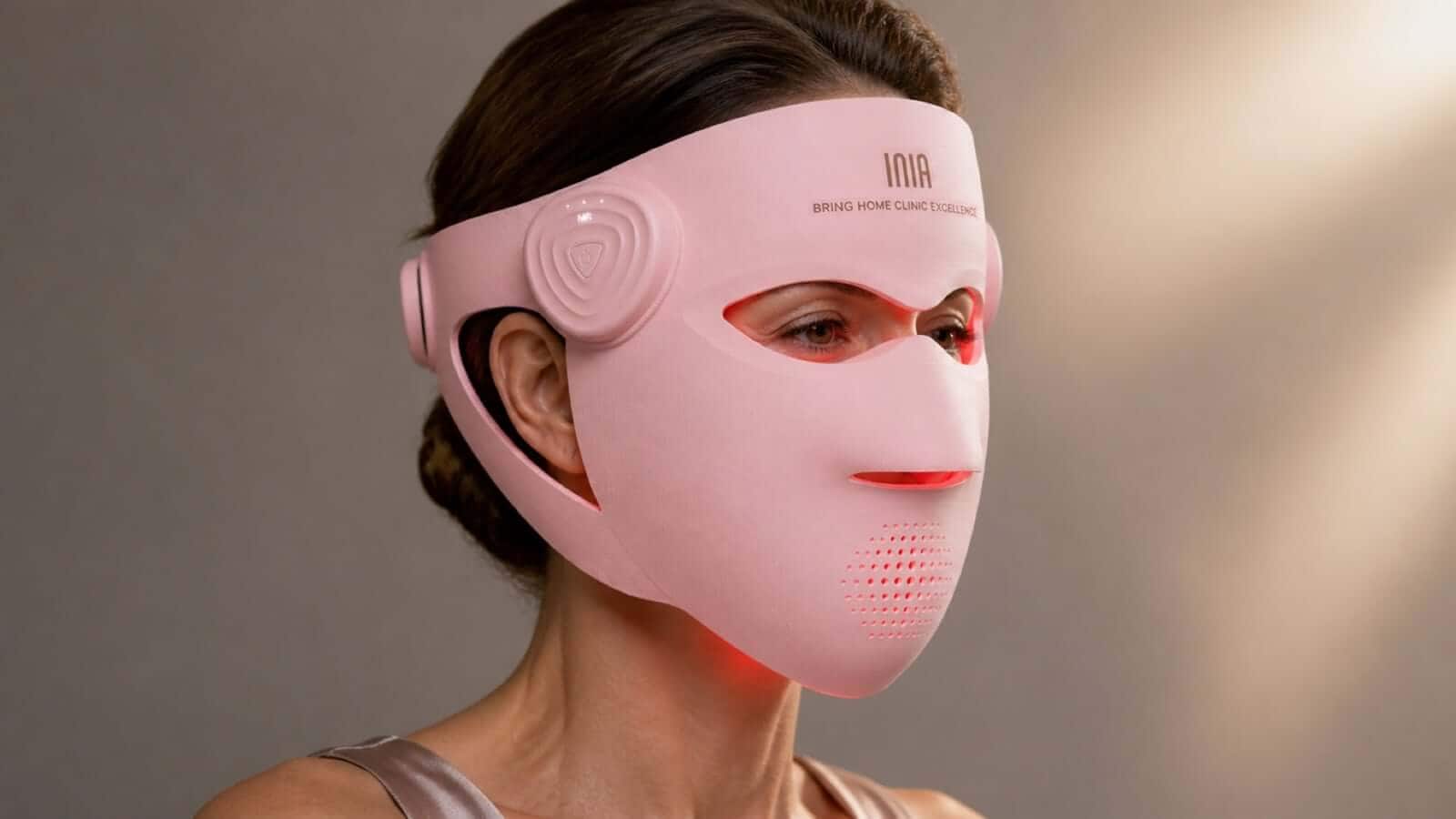
Soft 4D silicone fit
The flexible mask follows facial contours so the eye openings can be positioned more evenly.
Widened adjustable strap
A more stable fit helps keep the mask from drifting without relying on painful tension.
Open raised nose bridge
The open nose area reduces the closed-in feeling of a mask pressing across the bridge.
Magnetic under-eye cooling
For added comfort, refrigerate the attachment for 1–2 hours—never freeze it—and place it only as directed.
Cordless use
Wireless operation removes the cable from the wearing experience and makes a consistent routine easier to maintain.
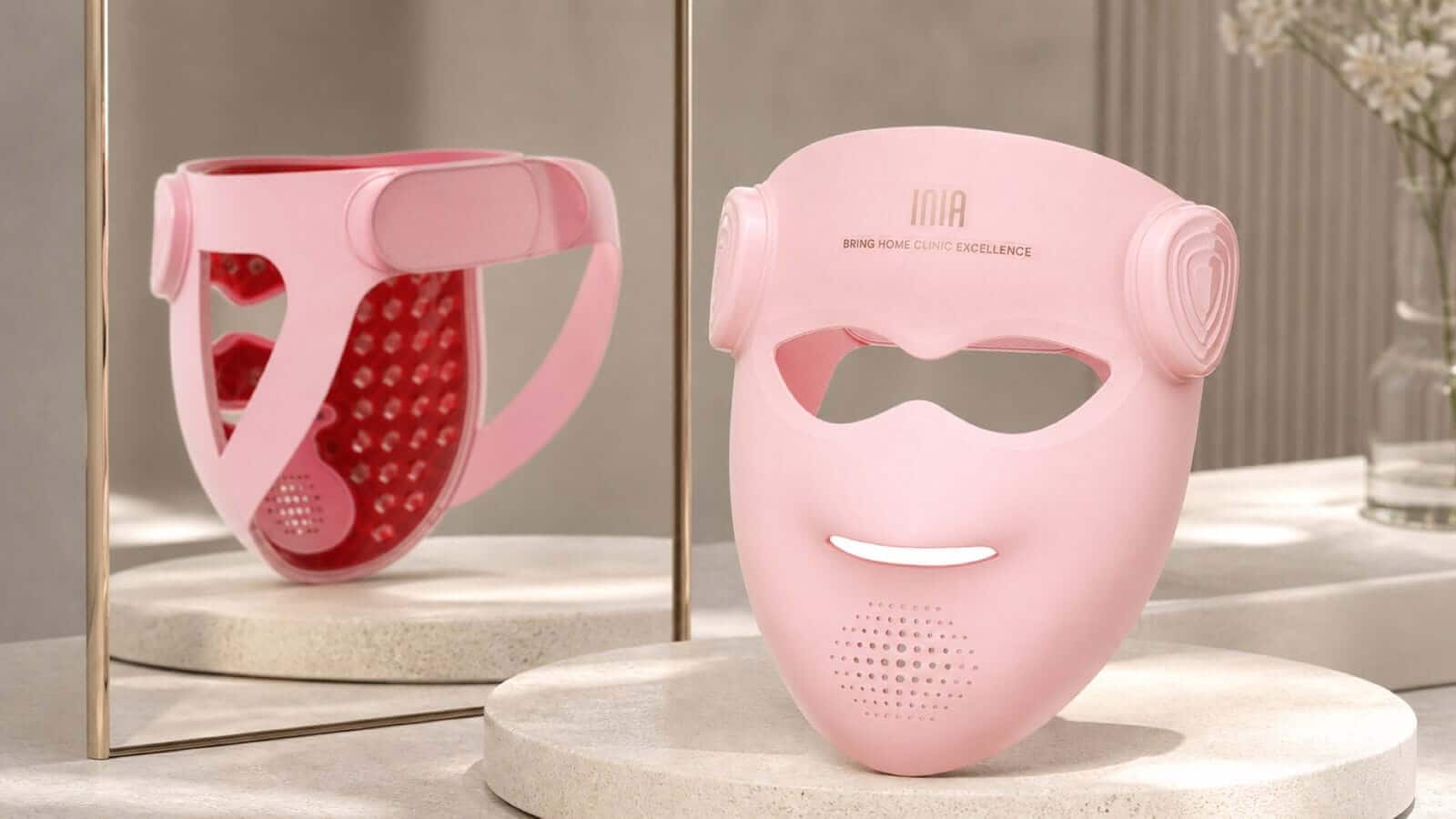
These are comfort and usability features, not claims of eye protection. GLOW 4D users should still follow the current instructions, avoid staring at the light source, and stop if eye discomfort or excessive warmth occurs. For the complete setup, mode, timing, and cleaning sequence, use the GLOW 4D face-mask walkthrough.
Choose the Eye Position That Helps You Complete the Routine
When you prefer awareness
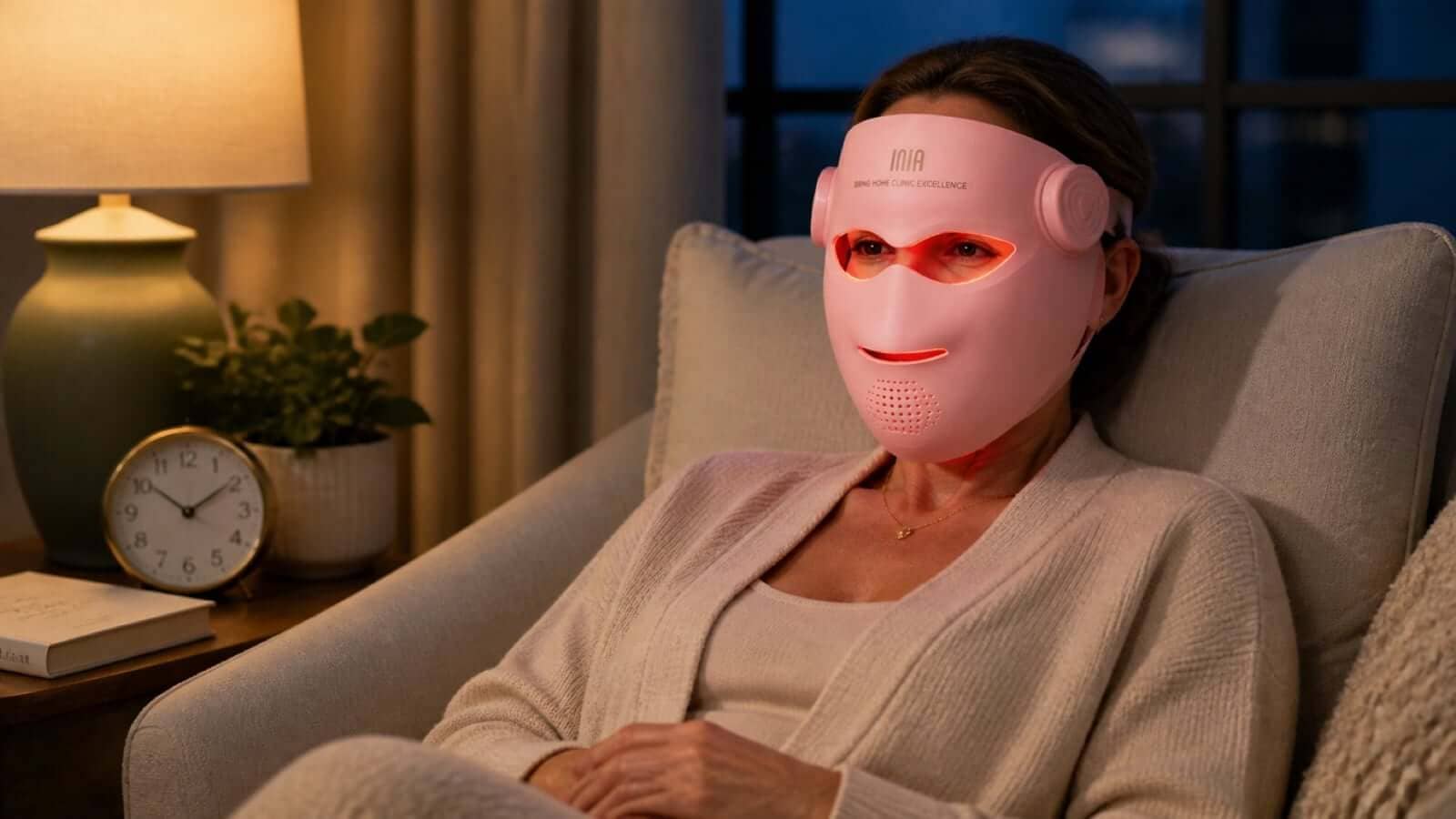
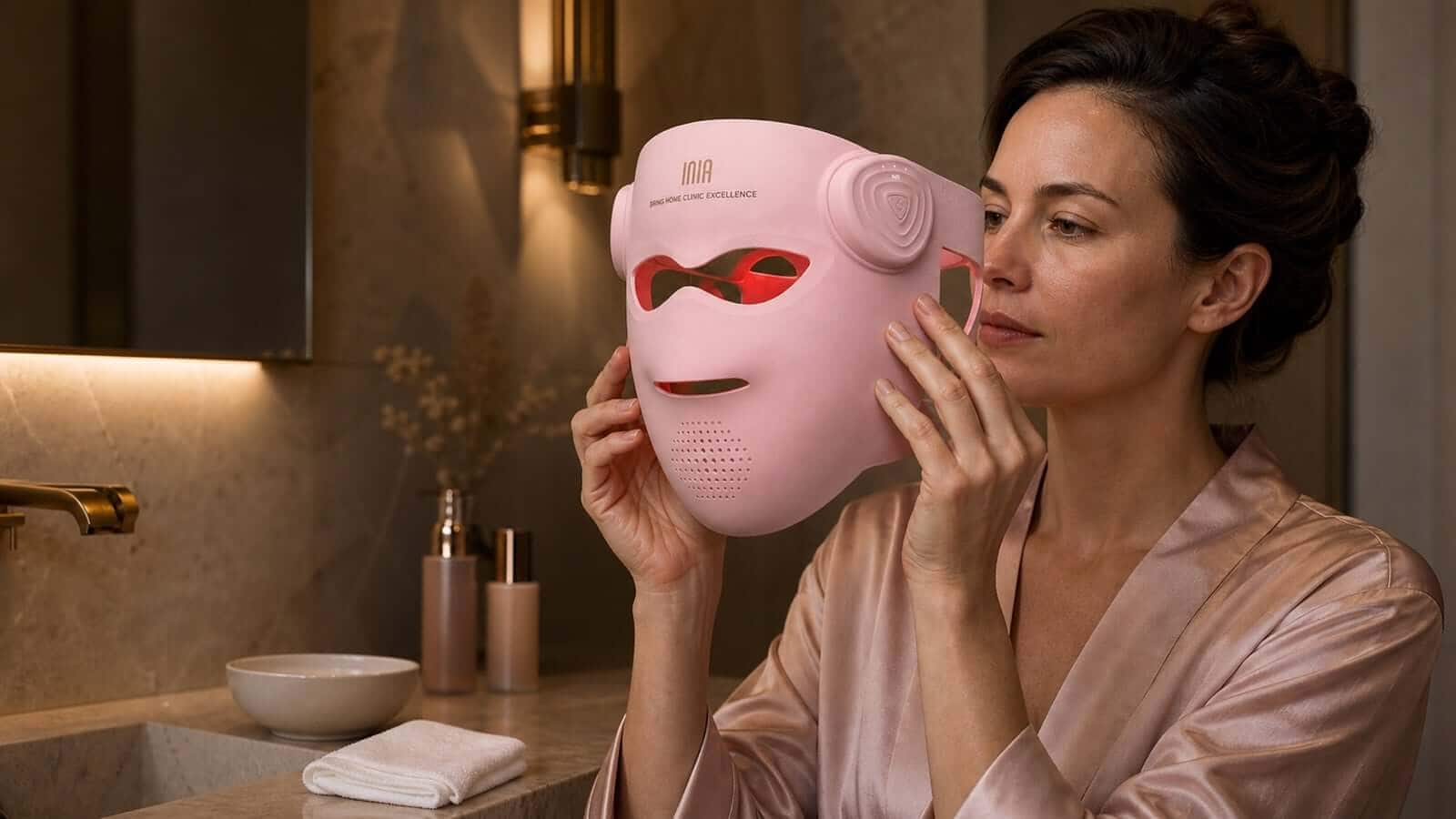
After fitting the powered-off mask, look naturally through the aligned openings. Do not turn your gaze toward the LEDs. Stop and refit if brightness or pressure is distracting.
When you prefer to relax
Close your eyes gently if that feels calmer or less bright. Do not treat closed eyelids as a replacement for eye protection required by another device.
If you have an eye condition, unusual light sensitivity, or use a photosensitizing medication, ask a qualified clinician whether home LED use is appropriate for you. Purpose-built ophthalmic photobiomodulation uses defined wavelengths, doses, and safety testing; it should not be generalized to a cosmetic mask.4
Comfort Should Come From Fit, Not a Forced Eye Position
A better mask does not decide whether your eyes should be open or closed. It gives you enough comfort and stability to choose. Follow the instructions for the exact device, fit it while powered off, and use the eye position that makes the session comfortable. GLOW 4D supports that choice with soft 4D silicone, a widened strap, an open raised nose bridge, optional under-eye cooling, and cordless use.
Frequently Asked Questions
Can you open your eyes with a red light therapy mask?
You may keep your eyes open when the exact device instructions allow it and the openings align comfortably. Do not look toward the LEDs, and use any eye protection required for that device.
Why does my red light mask feel uncomfortable around my eyes?
Brightness may be only part of the issue. Check eye-opening alignment, nose pressure, strap tension, stability, and warmth. Switch the device off before repositioning it.
Does closing my eyes replace goggles?
No. If the instructions for a device require goggles or eye shields, use the recommended protection. Closed eyelids are a comfort choice, not a universal substitute.
What should I do if brightness or warmth becomes uncomfortable?
Stop the session. Turn the device off before checking the fit, and do not continue through eye discomfort, excessive warmth, or an unusual visual symptom.
References
- International Commission on Non-Ionizing Radiation Protection. Guidelines on limits of exposure to incoherent visible and infrared radiation. Health Physics. 2013.
- Bierman A, et al. Transmission of light through human eyelids. Journal of Biomedical Optics. 2011.
- American Academy of Dermatology. Is red light therapy right for your skin?
- Kim WS, et al. Photobiomodulation use in ophthalmology—an overview of translational research from bench to bedside. 2024.
- INIA GLOW 4D product page and current usage guidance.