

LED Light Therapy
What is LED Light Therapy?
Light therapy uses specific wavelengths of light to trigger beneficial cellular processes. It’s non-invasive, non-UV, pain-free, and requires no downtime — a gentle way to support skin repair and overall tissue health. Red light gained early attention after NASA studied its potential for wound healing in space during the 1990s; since then, numerous clinical studies have explored its effects on skin and tissue. Today, medical-grade LED devices — including some that are FDA-cleared for specific uses — are widely used in clinical settings and consumer skincare for anti-aging and a range of skin concerns.
How Red Light Therapy & Near-Infrared (NIR) Work?
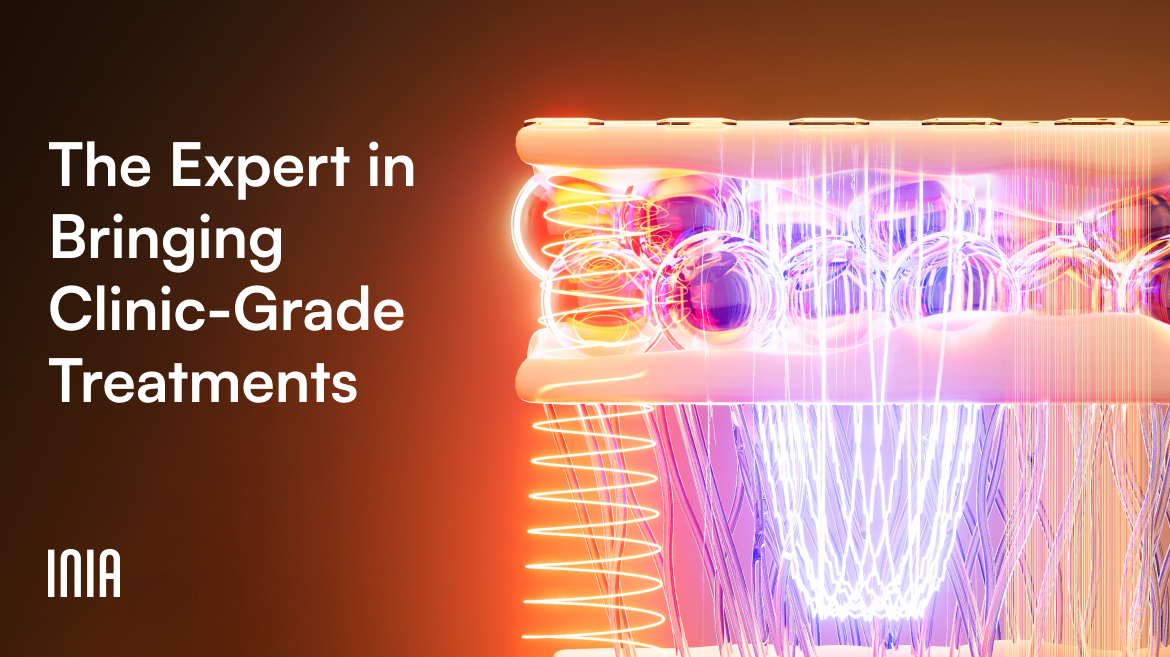
Red light and near-infrared (NIR) light are low-intensity wavelengths used in non-invasive photobiomodulation. Both stimulate cellular activity — especially in mitochondria — but they differ in how deeply they penetrate tissue and which layers they target.
Red Light typically falls between 620 nm and 700 nm, targeting the skin’s outer layers — the epidermis and upper dermis. Its wavelengths are absorbed by cellular chromophores (notably mitochondrial components), which increases mitochondrial activity and leads to greater production of cellular energy (ATP). That extra energy helps cells repair, function more efficiently, and stimulate production of collagen and elastin — the proteins that keep skin firm and elastic. Over time this can reduce the appearance of fine lines and improve skin texture.
Near-infrared (NIR) Light spans roughly 700 nm to 1100 nm and is invisible to the naked eye. Because it penetrates more deeply — into the deeper dermis, subcutaneous tissue, and even superficial muscle — NIR supports microcirculation and metabolic activity in deeper layers. Like red light, NIR boosts mitochondrial ATP production and cell signaling, and it also helps modulate inflammation and speed tissue repair at greater depths. Within the NIR range, different wavelengths have slightly different targets:
- 850 nm: A versatile near-infrared wavelength that reaches the dermis and superficial subcutaneous tissue to support collagen production and improve circulation — ideal for daily skin vitality and preventing early signs of aging.
- 940 nm: Reaches slightly deeper to boost blood flow and soothe inflammation — effective at reducing redness and speeding recovery from irritation.
- 1064 nm: Penetrates the deepest layers to target stubborn signs of aging — including deep nasolabial folds, frown lines, and forehead wrinkles — promoting renewed firmness and elasticity.
When used together, red light and near-infrared work as a complementary system: red light supports surface and upper-layer cellular renewal, while NIR penetrates deeper to help improve circulation, calm inflammation, and support deeper tissue repair.
Irradiance & Dose — How Much Red & NIR Light Does Your Skin Actually Need?
In red light therapy, the two most important metrics are irradiance (power density, measured in mW/cm²) and dose (energy density, also called fluence, measured in J/cm²).
- Irradiance (mW/cm²): how much light power actually reaches your skin.
- Dose/Fluence (J/cm²): the total amount of energy your skin absorbs, calculated as irradiance × time.
If a device lists irradiance (power density in mW/cm²), a commonly recommended range at skin level for consumer devices is about 20–60 mW/cm². Many trusted consumer guides (e.g., Alex Fergus’s Light Therapy Insiders) and LED mask manufacturers suggest that the effective dose for red-light therapy masks generally ranges from 3–15 J/cm², with 5–9 J/cm² considered ideal for skin-rejuvenation benefits. Example: Converting Irradiance to Time. INIA GLOW Wireless delivers 30 mW/cm² in Anti-aging Mode. To reach the optimal 9 J/cm² dose, the calculation is straightforward:Time = 9 J/cm² ÷ (0.030 W/cm²) = 300 s = 5 minutes. Just 5 minutes for effective treatment!
Why Too Little or Too Much Can Be a Problem?
- Too little (< ~3 J/cm²): May not deliver enough energy to reliably trigger the cellular responses targeted by photobiomodulation — think of it as speaking too softly for cells to “hear.” Many studies show minimal or no effect at very low doses.
- Too much (well above ~15–20 J/cm², or very high instantaneous irradiance): Can cause heating, oxidative stress, or irritation in some users. The photobiomodulation literature describes a biphasic dose response — benefits increase up to an optimal window, then plateau or decline, and excessive exposure can reduce effectiveness or produce adverse effects.
Core Benefits
Wondering how red light therapy can benefit your face? Here’s what it can do to help your skin look and feel its best:
- Reduces wrinkles and fine lines: Stimulates collagen and elastin production to help smooth fine lines and maintain skin’s firmness.
- Enhances skin tone and texture: Regular use can lead to a more even complexion, reduced redness, and a brighter, more refined look.
- Soothes acne and supports scar improvement: Its anti-inflammatory effects help calm breakouts and promote the gradual remodeling of acne scars or other post-injury marks.
- Promotes plump skin: Boosts circulation and cellular activity, helping skin look more refreshed, and naturally hydrated.
- Supports overall skin health: Improves microcirculation to deliver oxygen and nutrients to skin cells, supporting faster recovery and a healthy, radiant glow.
What Other Wavelengths Are Used in Light Therapy?
- Blue Light (≈ 405–470 nm)
Blue Light is a visible wavelength commonly used for acne and oil control. It works by targeting bacteria on the skin (especially Cutibacterium acnes), helping reduce breakouts. It can also help regulate oil production and calm inflamed skin, making it effective for managing active acne.
- Amber Light (≈ 570–620 nm)
Amber Light sits between red and green in the visible spectrum. It’s gentle and soothing, commonly used to reduce redness, improve skin tone, and support a calm, hydrated appearance. Amber light can help modulate inflammation and is frequently combined with NIR to boost overall skin renewal without irritation.
Microcurrent & EMS
What It Is
Microcurrent — Your Skin’s Natural Energy
Microcurrent is a very gentle type of electrical energy (very low-level currents, typically < 500 μA) that copies the natural signals already found in your body. The current is so tiny that most people barely feel it.
EMS — Targeted Muscle Stimulation
EMS (Electrical Muscle Stimulation) uses stronger electrical pulses (in the milliamp range) to directly contract your facial muscles. Unlike microcurrent, which works on the cellular level, EMS acts on the muscle layer itself — similar to giving your face a mini workout.
How It Works
Microcurrent
- Gentle electric waves penetrate into the skin → stimulate and energize skin cells → boost ATP (the skin’s natural energy molecule) → support collagen production and skin rejuvenation.
EMS
- Stronger pulses penetrate into the muscle layer.
- Muscles contract and relax rhythmically, just like during exercise.
- This helps tone, lift, and strengthen the facial contours.
Core Benefits
Microcurrent
Proven to increase ATP production by up to 500% in cells. Used in clinical facials for decades as a “non-surgical facelift.”
- Smooth fine lines & wrinkles
- Boost skin’s natural radiance
- Support long-term collagen production
- Enhance skincare product absorption
EMS
Widely applied in physiotherapy and fitness training. Clinical studies show improved muscle tone and circulation with regular use.
- Instantly lift & tone facial muscles
- Define jawline & cheek contour
- Improve circulation & lymphatic drainage
- Visible tightening after each session
Radio Frequency
What is Radiofrequency (RF) ?
Radio frequency (RF) is a technology that uses RF energy to heat the deeper layers of the skin, stimulating collagen production and promoting tighter, smoother skin. In medical spas and clinical settings, professional RF treatments—like Thermage® or RF microneedling—deliver higher energy levels for noticeable lifting, firming, and improved skin texture. Our at-home RF skin tightening device provides a non-surgical solution to help lift sagging skin, improve texture, and give you a more youthful appearance.
How Do At-Home Radiofrequency Devices Work?
Our at-home radiofrequency device uses the same RF technology behind professional treatments like Thermage, but at lower, safety-engineered energy levels for regular use. The controlled RF energy gently heats the deeper layers of the skin, causing existing collagen fibers to contract for an immediate tightening effect while activating fibroblasts to produce new collagen and elastin over weeks and months. With consistent use you’ll see gradual, lasting improvements in firmness, tone, and texture — all with no needles and minimal to no downtime.
Core Benefits
- Boost skin firmness and texture: Stimulate collagen and elastin production to improve overall skin tone and smoothness.
- Reduce visible signs of aging: Target wrinkles, fine lines, and sagging for a naturally youthful appearance.
- Non-invasive with no downtime: RF is needle-free and non-surgical. While professional treatments may sometimes cause redness or mild burns, at-home devices typically allow you to resume work and daily activities immediately.
- Cost-effective and minimally invasive: A more affordable alternative to cosmetic surgery.
Intense Pulsed Light (IPL)
What is IPL?
IPL, or Intense Pulsed Light, revolutionizes cosmetic procedures, particularly hair removal. Unlike lasers that use a single light wavelength, IPL employs a broad spectrum, covering more skin per flash, and targeting melanin in hair.
How IPL Technology Targets Hair Growth?
This heats and disrupts hair follicles’ growth, a process called selective photothermolysis, ensuring surrounding skin remains unaffected. IPL’s effectiveness increases with a stark contrast between hair color and skin tone. It adapts to various hair types due to its multi-wavelength capability, though effectiveness varies with melanin concentration.
Advantages of Using IPL for Hair Removal
Effectiveness
IPL is excellent at reducing hair growth, targeting melanin with multiple light wavelengths, weakening follicles, and reducing hair regrowth, achieving a 50-90% reduction after 3-6 sessions.
Safety and Comfort
NIA’s IPL devices ensure a safe and comfortable experience, equipped with IGBT chips and Comfort-Touch™ Ice-Cooling technology. These features minimize the risk of skin damage and enhance comfort during use, ensuring an effective and gentle treatment process.
Cost Efficiency
IPL offers substantial long-term savings compared to frequent salon visits or buying razors, making it a cost-effective and sustainable hair removal method.
Conclusion
INIA’s IPL technology offers a safe, gentle, and long-term hair reduction solution, accommodating various skin tones and hair colors. It provides a practical, clinic-level hair removal experience at home, allowing consistent, professional-quality results. Explore our range of IPL devices and experience tailored, effortless hair removal.