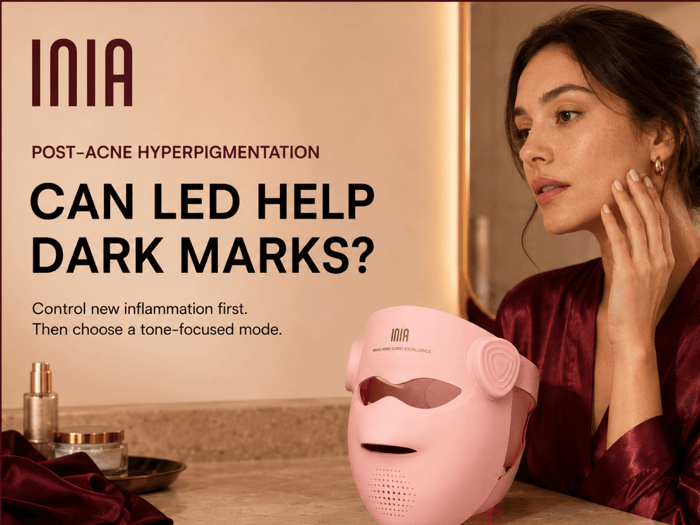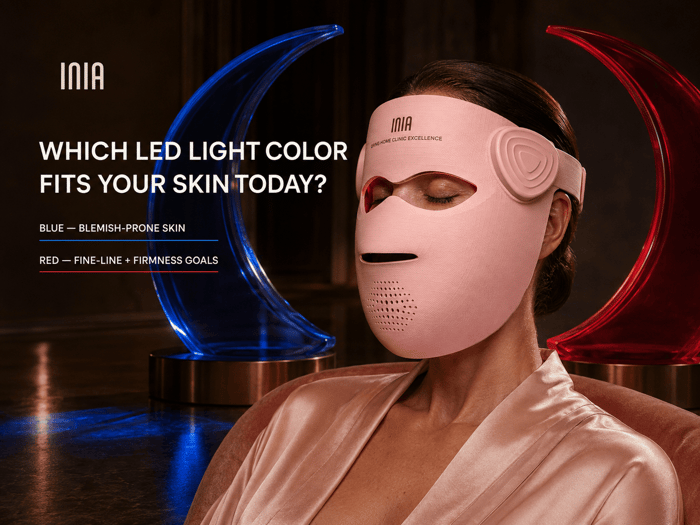

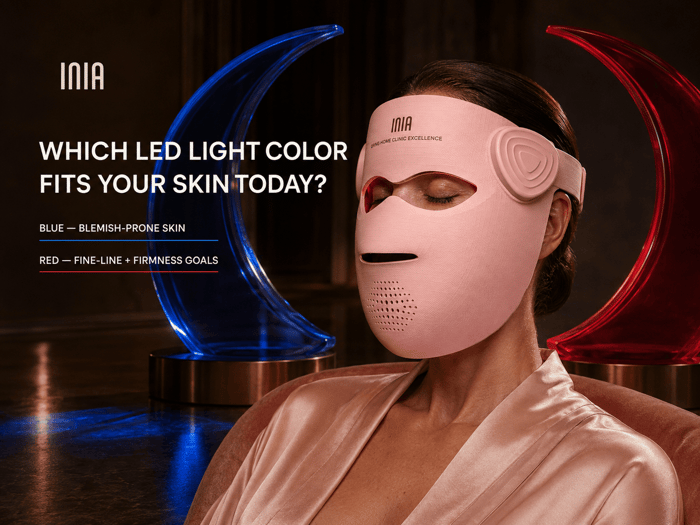
Choose blue light for blemish-prone or oily-looking skin. Choose red light for fine-line appearance, firmer-looking skin and general rejuvenation goals. When both concerns matter, use a device with a verified red-and-blue mode and follow its preset session time.
Table of Contents
Why Red and Blue Light Serve Different Skin Goals
LED color is shorthand for wavelength. Different wavelengths interact with skin differently, so the best choice begins with the concern you want to address.
Blue light belongs in the blemish-focused category. Cutibacterium acnes, a bacterium involved in acne, produces porphyrins that absorb blue light strongly around 415nm. That interaction generates reactive oxygen species that can damage the bacteria.1 This explains the scientific rationale for blue-light acne protocols.
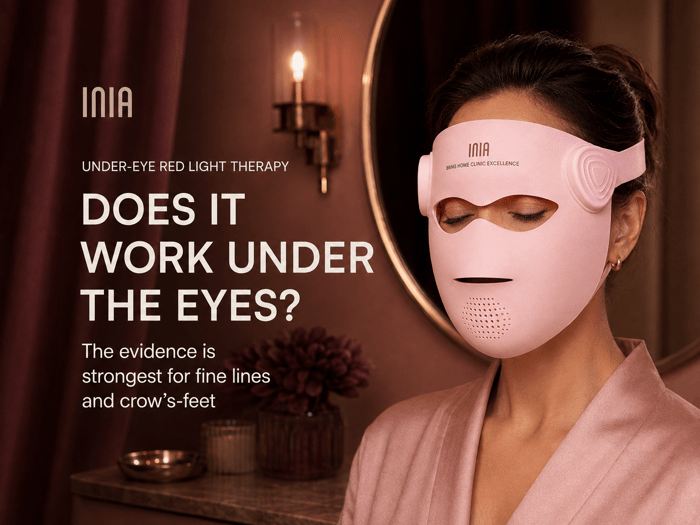
Red light belongs in the rejuvenation-focused category. DermNet reports that red wavelengths around 600–650nm penetrate more deeply than blue light.1 Clinical research on red and near-infrared combinations has evaluated visible signs such as crow's-feet wrinkles and skin elasticity, making this the more relevant direction for fine-line and firmness goals.5
What Clinical Studies Tell Us
In a randomized study of 107 people with mild to moderate acne, a 415nm blue plus 660nm red protocol produced a mean 76% improvement in inflammatory lesions after 12 weeks.3 The result supports a complementary role for red and blue in blemish-focused routines.
A smaller randomized study of 28 participants found that both red and blue light improved acne measures, with no statistically significant difference between the groups.4 That finding reinforces a practical conclusion: there is no universal winner for every skin goal.
For visible aging, a 2025 randomized, double-blind, sham-controlled home-mask study evaluated 630nm red plus 850nm near-infrared light and reported improvement in crow's-feet outcomes.5 This supports the red-plus-NIR direction for rejuvenation. It does not prove the performance of every red-light mask.
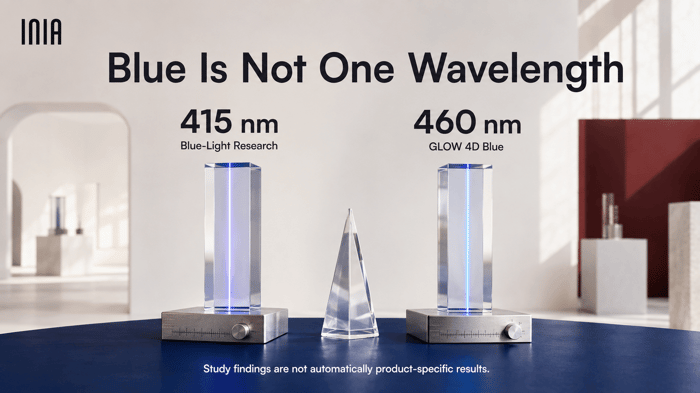
The wavelength boundary matters. Much of the blue-light acne literature uses approximately 415nm, while INIA GLOW 4D uses 460nm blue. These studies explain the category's mechanism and decision logic; the exact GLOW 4D wavelength combinations and times come from INIA's current product instructions.
How to Choose Red, Blue or Both
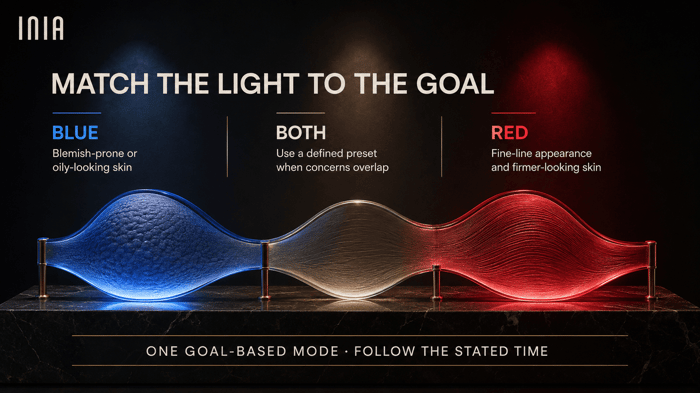
Choose blue light
Your main concern is blemish-prone or oily-looking skin.
Choose red light
Your main concern is fine-line appearance, firmer-looking skin or a general rejuvenation routine.
Choose a preset combination
Blemishes, oiliness and visible redness overlap, and the device provides a defined red-and-blue mode.
Use one goal-based mode for the stated time. A longer session or a homemade sequence of several modes does not automatically produce a better routine.
How INIA GLOW 4D Turns the Choice Into a Routine
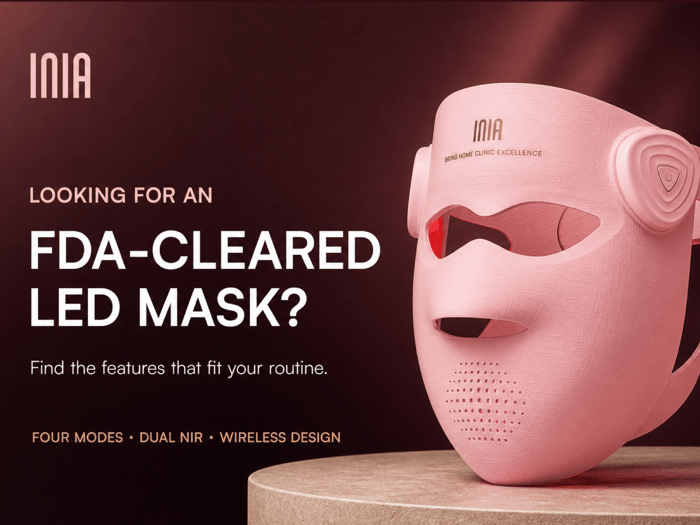
The INIA GLOW 4D Wireless LED Light Therapy Mask places the red-versus-blue decision inside three relevant presets. Users choose the current skin goal; the device supplies the defined visible-light and dual-NIR combination.
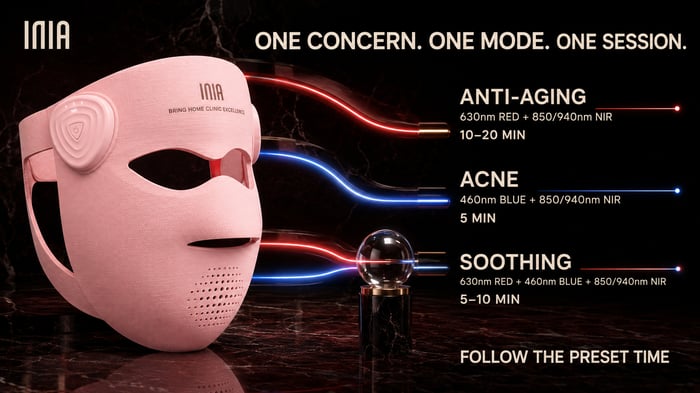
| Your main goal | GLOW 4D mode | Defined wavelengths | Session time |
|---|---|---|---|
| Fine-line appearance and firmer-looking skin | Anti-aging | 630nm red + 850nm/940nm dual NIR | 10–20 minutes |
| Blemish-prone or oily-looking skin | Acne | 460nm blue + 850nm/940nm dual NIR | 5 minutes |
| Blemishes, oiliness and visible redness together | Soothing | 630nm red + 460nm blue + 850nm/940nm dual NIR | 5–10 minutes |
GLOW 4D also uses flexible 4D wraparound silicone for the lower face, jawline and under-chin area, plus 100% wireless operation. Those design choices make the selected routine easier to wear without changing its wavelength logic.
Safety Boundaries
Visible-light devices may help pimples, while blackheads, whiteheads, cysts and nodules need different treatment decisions.2 Persistent, painful or scarring acne deserves assessment by a board-certified dermatologist.
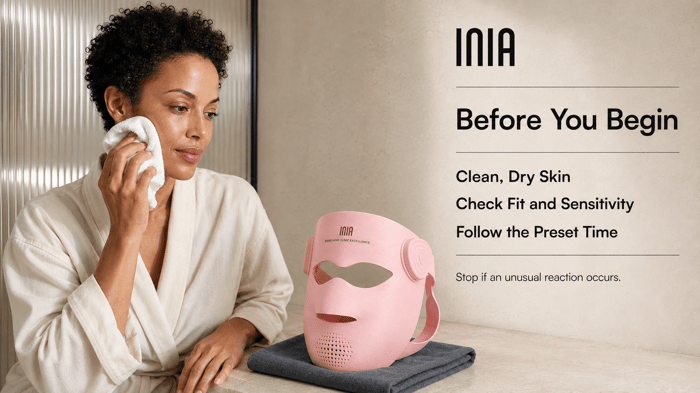
Use GLOW 4D on clean, dry skin and follow the current instructions for fit, eye comfort, sensitivity testing and mode time. Stop use if an unusual reaction occurs. Medicines and conditions that increase light sensitivity require professional guidance before use.
Match the Light to the Goal
Blue light is the clearer choice for blemish-prone or oily-looking skin. Red light is the clearer choice for fine-line and firmness goals. GLOW 4D turns those choices—and their overlap—into timed modes with dual near-infrared light.
Frequently Asked Questions
Is red or blue light better for acne?
Blue light is the more direct blemish-focused choice. A defined red-and-blue protocol can combine complementary roles when the device instructions provide that mode.
Can I use red and blue light together?
Yes, when your device supplies a verified combined mode. Follow its stated wavelength combination and time instead of building an unverified sequence.
Does blue light treat every type of acne?
No. The American Academy of Dermatology notes that visible-light devices may help pimples, while blackheads, whiteheads, cysts and nodules require other treatment decisions.
References
- DermNet. Lasers, lights and acne.
- American Academy of Dermatology. Lasers and lights for acne.
- Papageorgiou P, Katsambas A, Chu A. Phototherapy with blue and red light in the treatment of acne vulgaris. British Journal of Dermatology. 2000.
- Li J, et al. Prospective randomized controlled study of red and blue light therapies for mild-to-moderate acne vulgaris. 2022.
- Park SH, Park SO, Jung JA. Clinical study to evaluate the efficacy and safety of a home-used LED and IRED mask for crow's feet. Medicine. 2025.