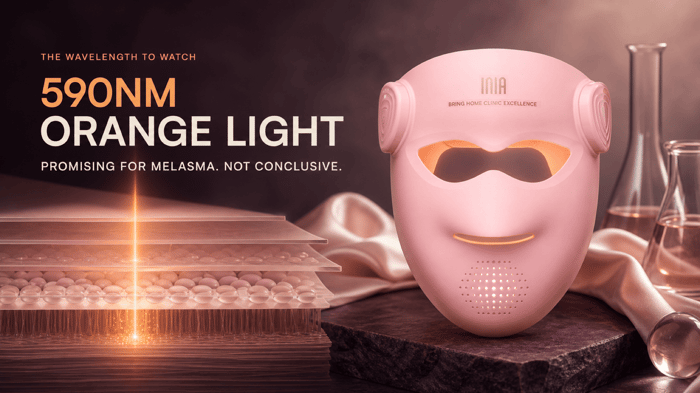

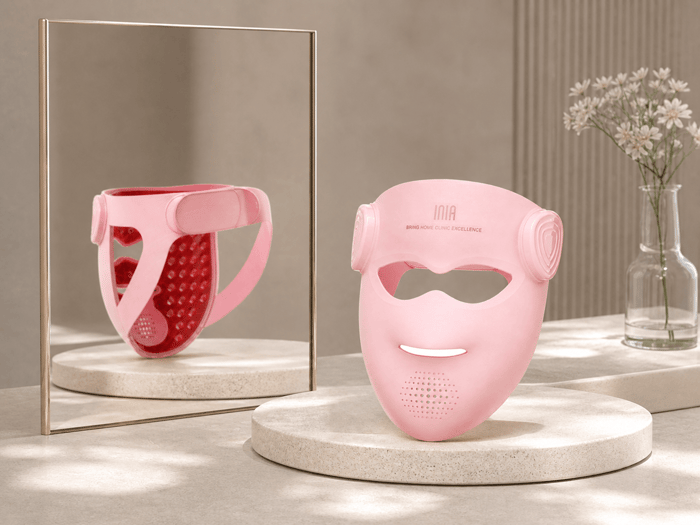
If you want to add LED to a melasma-aware routine, 590nm orange light is the wavelength to look for. Laboratory research and a small human pilot found promising changes in pigmentation, redness, and biological signals associated with melasma.
The evidence is still early. Choose a device with a clearly specified 590nm mode and session time, and use it alongside daily UV and visible-light protection.
Table of Contents
Why 590nm Orange Light Shows Promise for Melasma
Melasma involves pigment production and signaling between pigment-producing cells, keratinocytes, and the skin's microvasculature. Different LED wavelengths can create different cellular responses, so the wavelength matters more than a broad “red light” label.
A wavelength describes the color and energy band emitted by an LED. The 590nm band appears orange or amber, while commonly used red light sits closer to 630nm. Shoppers often use “red light therapy” as a broad category, but melasma research needs to be read wavelength by wavelength.
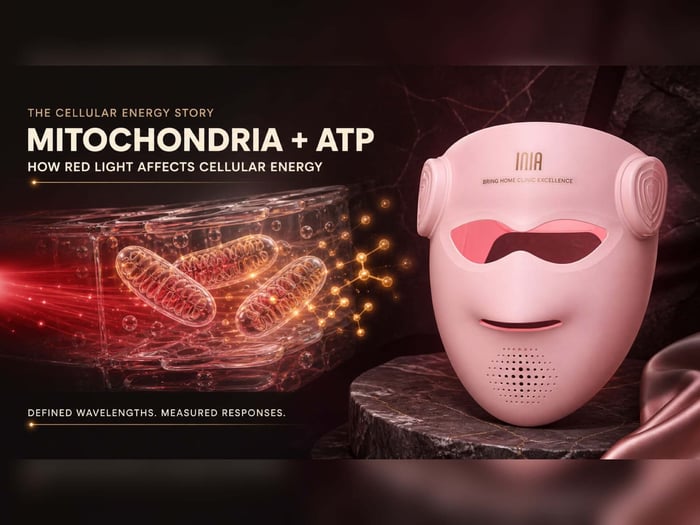
A 2022 study tested 590nm light in human endothelial cells and then conducted a pilot in 10 people with melasma. In the laboratory, 590nm reduced endothelial migration, tube formation, and expression of vascular endothelial growth factor and stem cell factor. In the pilot, researchers reported improvements in measured pigmentation and erythema (Jo et al., 2022).
This study matters because it examined the vascular side of melasma as well as visible pigment changes. Reduced VEGF and stem cell factor signaling offers a plausible route by which 590nm could influence pigmentation. A plausible mechanism strengthens the rationale for research; it cannot predict the same result for every user.
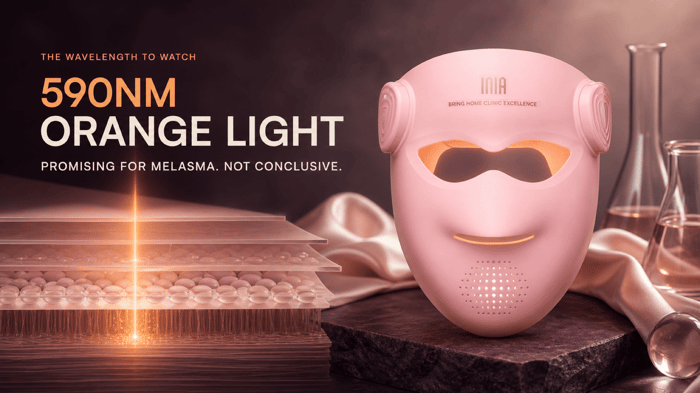
A 2024 review of nine studies also described photobiomodulation as promising for melasma and called for larger clinical trials (Magalhães et al., 2024). Together, the laboratory findings, small human pilot, and broader review make 590nm a practical wavelength to watch.
590nm has a plausible mechanism and an early human signal; larger trials still need to confirm its clinical value.
Why GLOW 4D Is a Practical 590nm Choice
If you are choosing an LED mask for uneven-looking tone, look for a true 590nm mode. INIA GLOW 4D Wireless LED Light Therapy Mask builds 590nm orange light directly into its 10-minute Brightening mode with 850nm and 940nm dual near-infrared light. You do not have to choose colors, combine modes, or estimate session time.
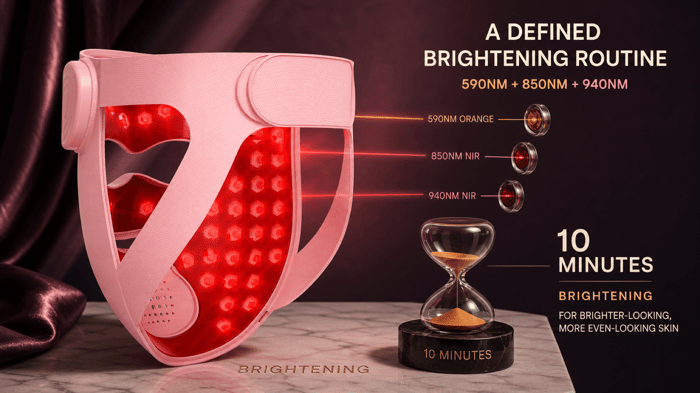
Its flexible 4D wraparound design follows facial contours, and its wireless format makes the defined 10-minute routine easier to complete as part of regular skincare. The user-facing goal stays clear: brighter-looking, more even-looking skin.
The 590nm orange component is the part of Brightening mode most directly connected to the melasma research discussed above. Those studies evaluated 590nm light rather than GLOW 4D as a finished product.
How 590nm Fits With Daily Light Protection
Sunlight exposes skin to a broad spectrum of visible light, ultraviolet radiation, and heat. A controlled LED device delivers selected wavelengths for a defined session. These exposures produce different conditions for the skin.
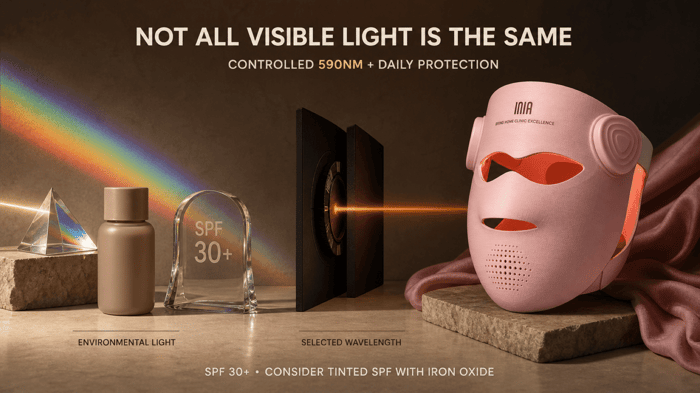
The American Academy of Dermatology recommends broad-spectrum SPF 30 or higher and a tinted sunscreen containing iron oxide because visible light can worsen melasma, especially in darker skin tones (American Academy of Dermatology). A randomized trial also found better melasma outcomes with UV-plus-visible-light protection than with UV-only protection during hydroquinone therapy (Castanedo-Cazares et al., 2014). See whether red light therapy can worsen melasma for a focused review of triggers.
The practical rule is simple: use the 590nm Brightening mode exactly as directed and protect skin from broad environmental exposure every day. Extending an LED session adds uncertainty without adding proven melasma benefit.
A Simple Melasma-Aware GLOW 4D Routine
- Test first: use Brightening mode on the inner arm for one 10-minute session, then wait at least six hours before facial use.
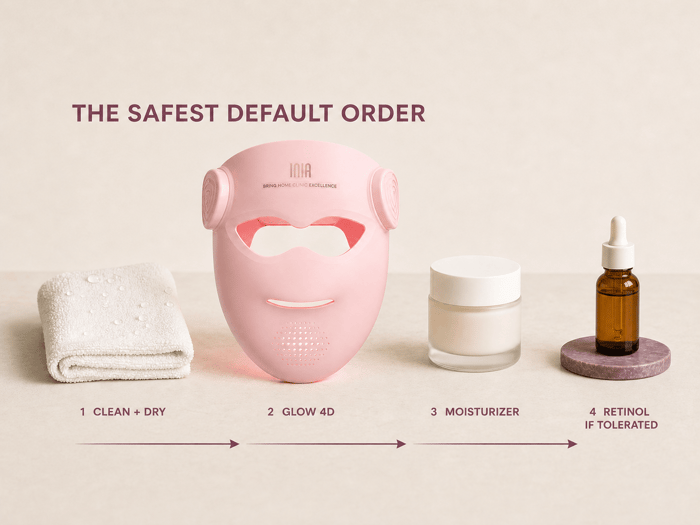
- Clean and dry: remove makeup, sunscreen, and skincare before the session.
- Use Brightening mode: complete the specified 10-minute session without extending the time.
- Protect every morning: apply broad-spectrum SPF 30 or higher and consider a tinted formula with iron oxide.
- Stop if irritated: discontinue use after abnormal redness, itching, allergy, eye discomfort, uncomfortable inflammation, excessive warmth, or another abnormal reaction.
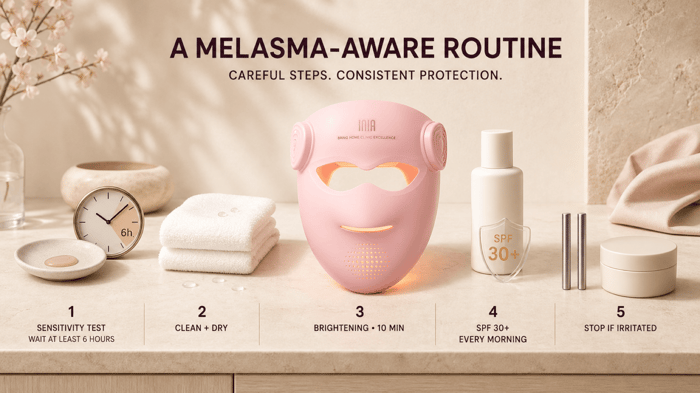
Keep the surrounding skincare routine simple while assessing tolerance. Apply skincare after the device session. If a dermatologist has prescribed hydroquinone, tretinoin, tranexamic acid, or another melasma therapy, follow those instructions for product timing and continued use.
Melasma can have several triggers and may need prescription care. Consult a dermatologist when pigmentation is changing, persistent, or difficult to manage.
590nm Orange Light Shows Early Promise
590nm orange light is the wavelength to look for when adding LED to a melasma-aware routine. GLOW 4D gives users a dedicated 10-minute Brightening mode, a wraparound wireless format, and a clear appearance-focused goal. Daily UV and visible-light protection remains essential.
Frequently Asked Questions
Can LED light therapy remove melasma?
Current evidence does not show that an at-home LED device can eliminate melasma. Selected wavelengths may serve as an adjunct to photoprotection and clinician-directed care.
Which LED color is most promising for melasma?
590nm orange or amber light has one of the clearest direct early signals from laboratory research and a small 10-person human pilot.
Is 940nm proven for melasma?
No melasma-specific conclusion has been established for 940nm. It is part of GLOW 4D's dual-NIR system, while the Brightening claim stays focused on skin appearance.
Can visible light make melasma worse?
Environmental visible light can contribute to melasma. Broad-spectrum SPF 30 or higher and tinted sunscreen containing iron oxide can strengthen daily protection.
How long is the GLOW 4D Brightening session?
The Brightening mode runs for 10 minutes and combines 590nm orange light with 850nm and 940nm dual near-infrared light.
References
- Jo, D. J., et al. (2022). Photobiomodulation with 590 nm Light-Emitting Diodes Suppresses Melanogenesis through a Mechanism Involving Antivascular Effects. Cells.
- Magalhães, G. M., et al. (2024). Photobiomodulation for Melasma Treatment: Integrative Review and State of the Art. Photobiomodulation, Photomedicine, and Laser Surgery.
- American Academy of Dermatology. Melasma: Self-care.
- Castanedo-Cazares, J. P., et al. (2014). Near-visible light and UV photoprotection in the treatment of melasma: a double-blind randomized trial. Photodermatology, Photoimmunology & Photomedicine.
- INIA. INIA GLOW 4D Wireless LED Light Therapy Mask.