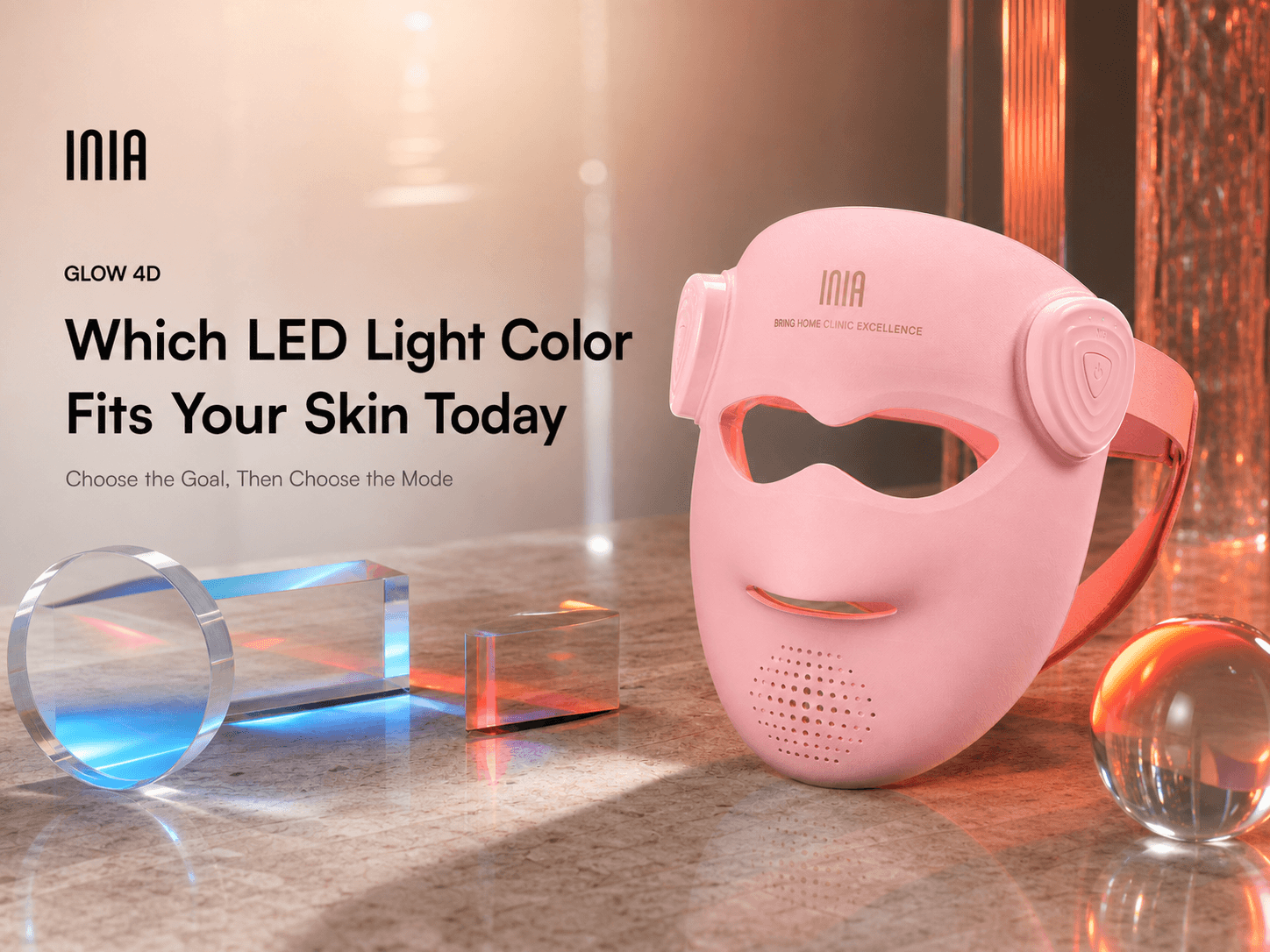
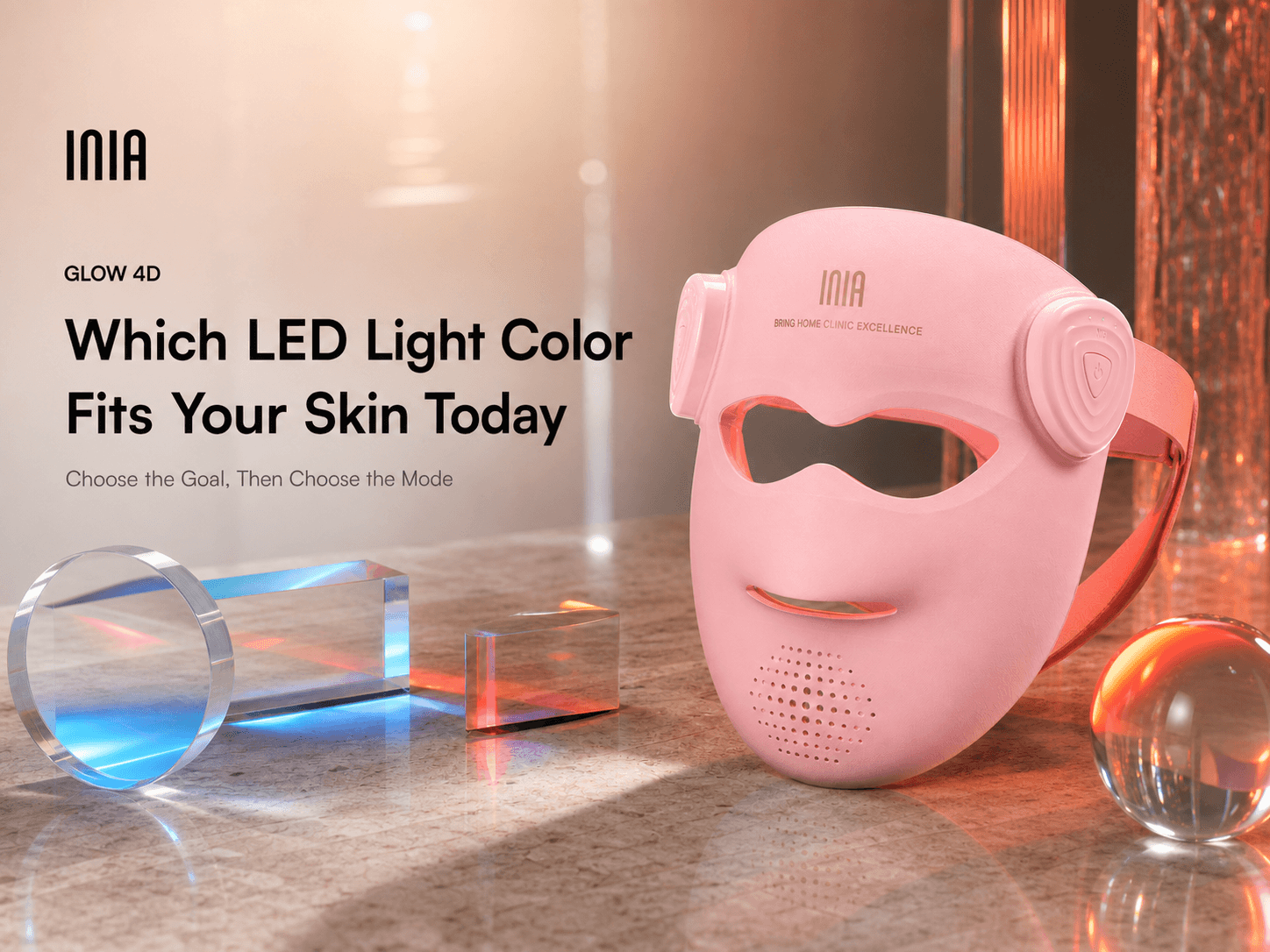
Choose red for fine lines and firmness, blue for blemish-prone or oily-looking skin, 590nm orange for visible redness and uneven tone, and red plus blue when concerns overlap. GLOW 4D turns these research-supported wavelength roles into four timed modes with dual near-infrared light.
Table of Contents
What Research Shows About Different LED Wavelengths
LED color is shorthand for wavelength. Studies use specific wavelengths, devices, doses, and schedules, so one protocol cannot prove the performance of every home mask. The research can still show why different wavelengths belong to different skin-goal categories.
Red and near-infrared: visible aging goals
A randomized split-face study evaluated 633nm red and 830nm near-infrared LED phototherapy and reported improvements in wrinkle and elasticity measurements.1 For a shopper, the useful conclusion is that red and near-infrared belong in the decision path for fine-line and firmer-looking skin goals.
Blue and red: blemish-focused goals
A clinical trial evaluated blue light and a blue-plus-red combination in people with acne.2 That supports a blemish-focused role for blue-light protocols. In a cosmetic home routine, this means choosing blue for blemish-prone or oily-looking skin—not treating a mask as a replacement for medical care.
590nm light: visible redness and tone goals
A prospective 590nm LED study reported changes in skin texture, visible redness, and pigmentation appearance.3 This supports a role for 590nm light in brighter-looking and more even-looking skin routines. INIA identifies this wavelength precisely as 590nm orange.
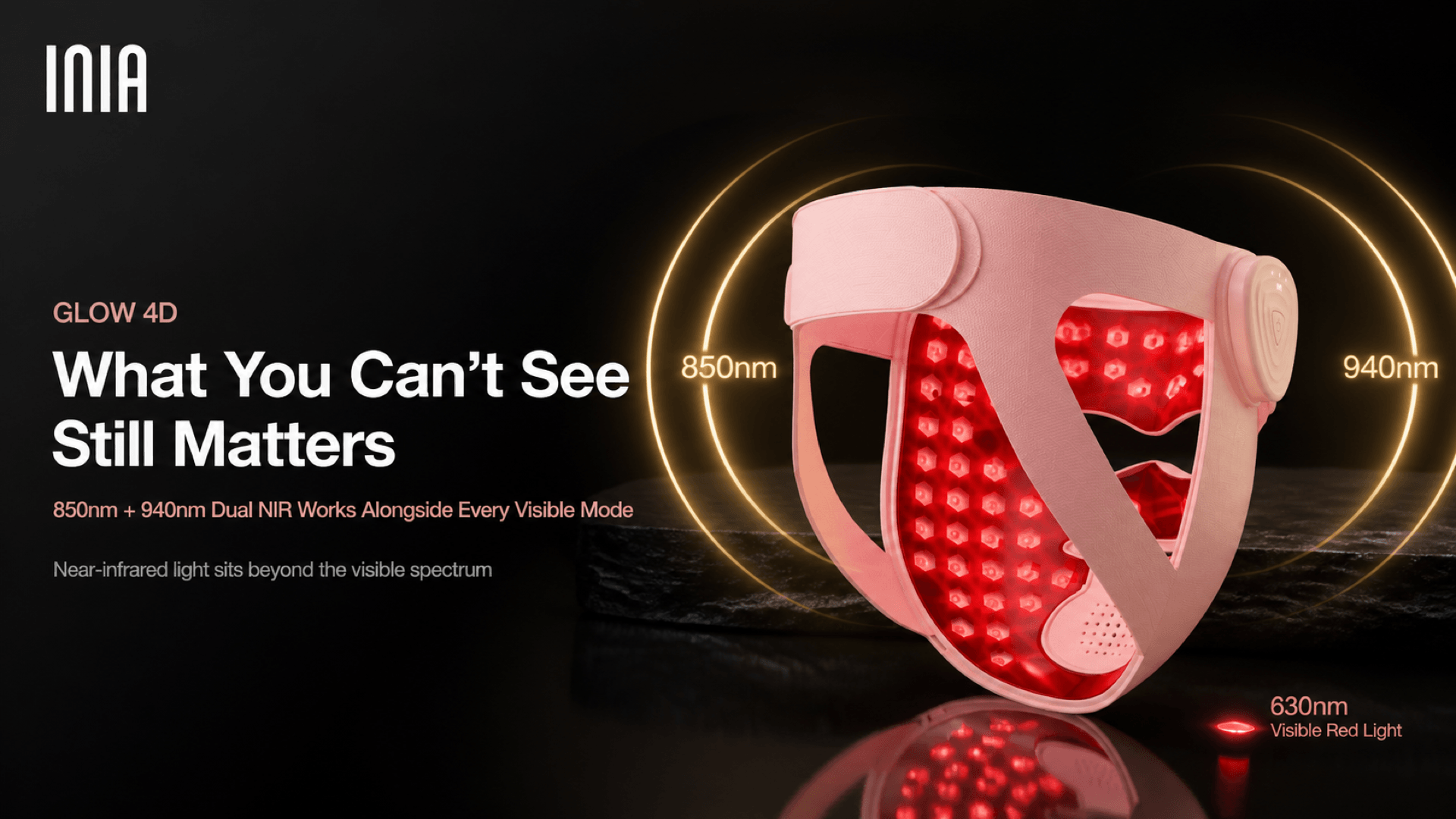
Near-infrared adds one important detail: you cannot judge a mask only by the colors you see. Near-infrared sits outside normal human vision, so an active 850nm or 940nm wavelength does not add another visible color.4
How GLOW 4D Turns Wavelength Science Into Four Modes
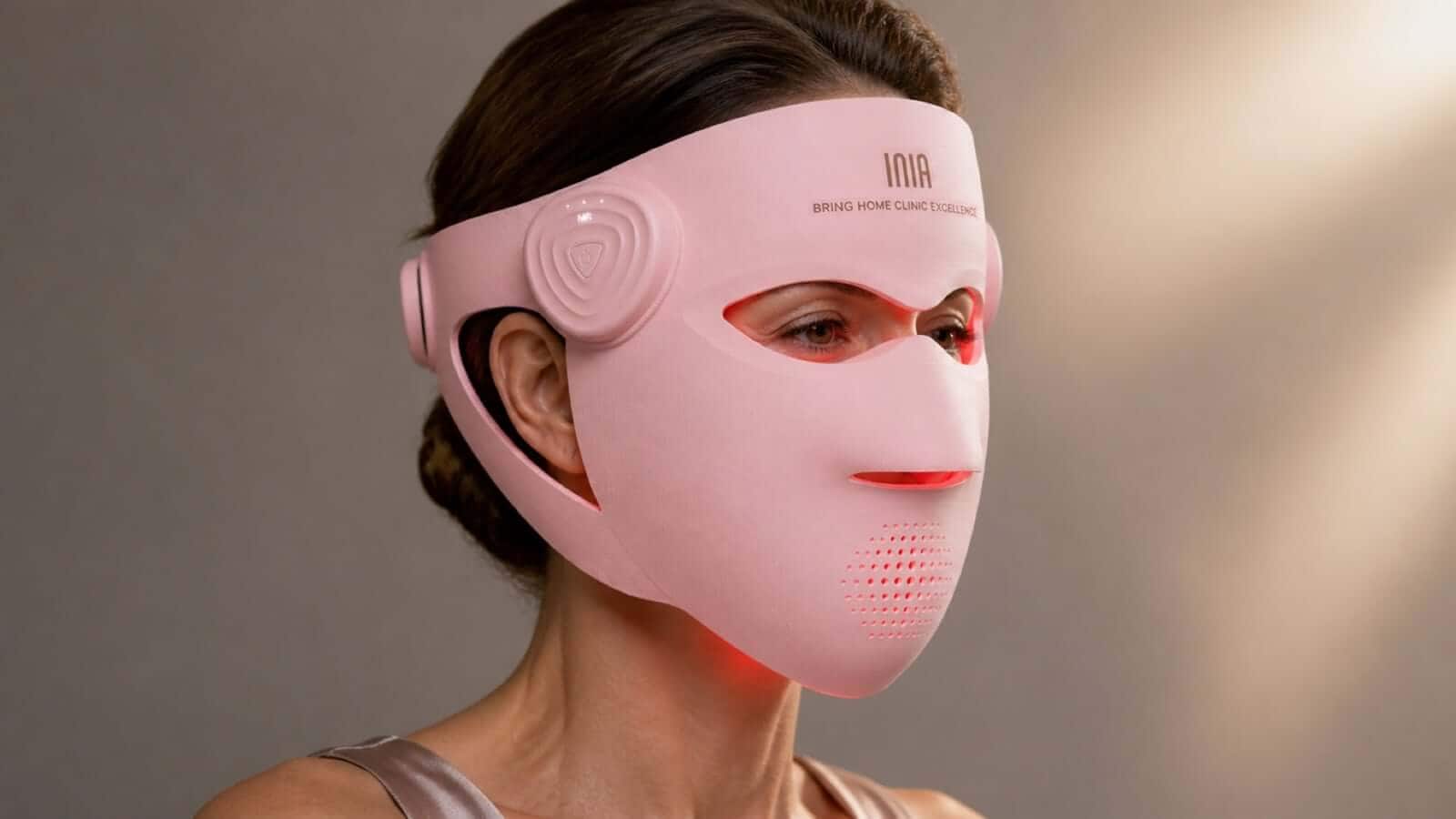
Research explains why wavelength choice matters but not how to build a simple daily routine. The INIA GLOW 4D Wireless LED Light Therapy Mask organizes five defined wavelengths into four timed modes. Its 850nm and 940nm near-infrared wavelengths are on by default, so users choose a goal instead of building a light combination.
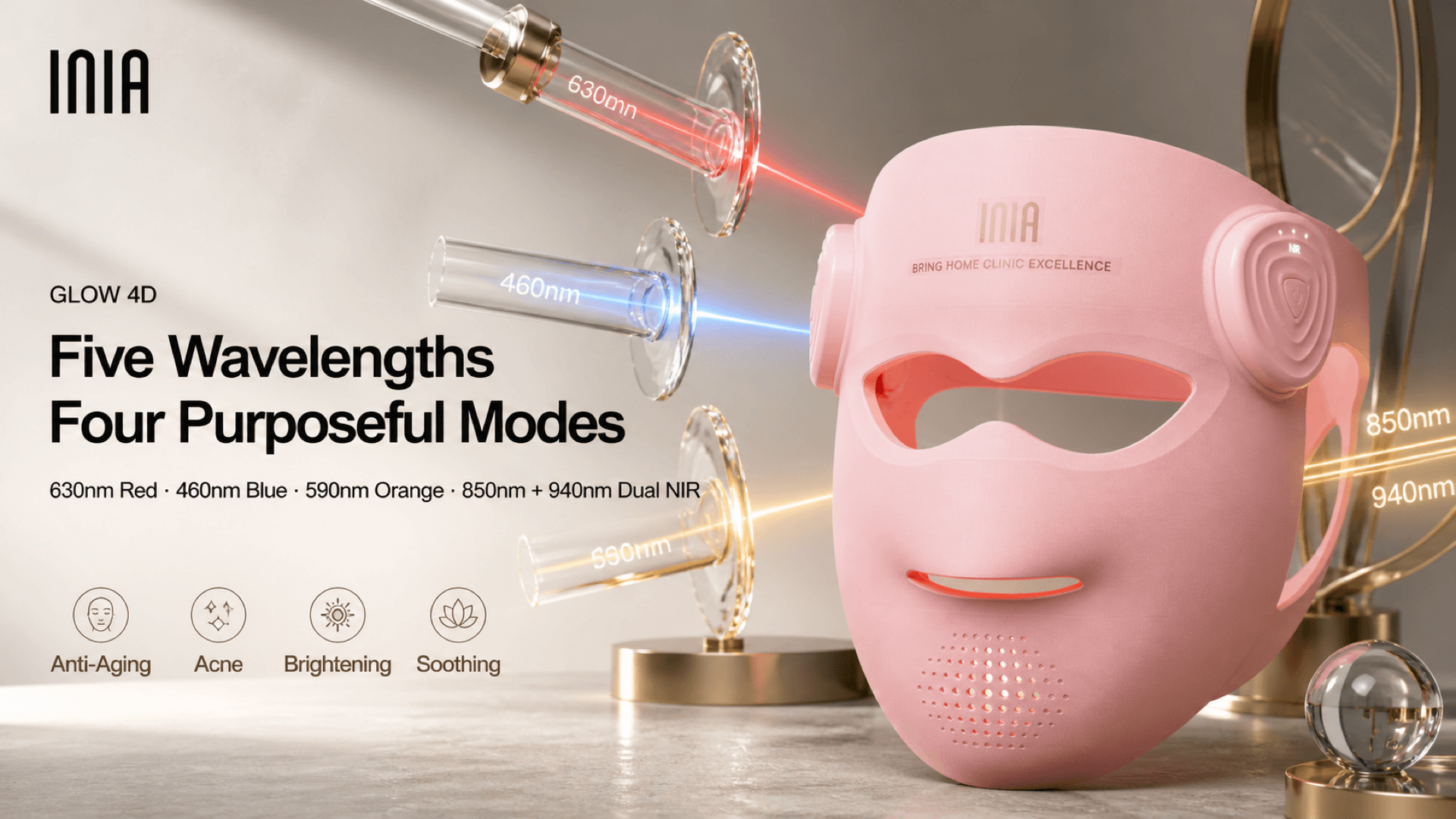
| Your priority today | GLOW 4D mode | Defined wavelengths | Session time |
|---|---|---|---|
| Fine-line appearance, firmer-looking skin, routine anti-aging maintenance | Anti-aging | 630nm red + 850nm/940nm dual NIR | 10–20 minutes |
| Blemish-prone or oily-looking skin | Acne | 460nm blue + 850nm/940nm dual NIR | 5 minutes |
| Visible redness, uneven-looking tone, dark-mark appearance, or dullness | Brightening | 590nm orange + 850nm/940nm dual NIR | 10 minutes |
| Mixed concerns: oiliness, visible blemishes, redness, or a sensitive-feeling day | Soothing | 630nm red + 460nm blue + 850nm/940nm dual NIR | 5–10 minutes |
“More visible colors” is not a complete measure of a mask. Compare exact nanometer values, combinations, NIR inclusion, and mode timing. For the broader discussion, see the 7-color LED light therapy chart guide.
What if Several Skin Concerns Overlap?
Skin does not always fit one category. You may notice fine lines and uneven tone, or oiliness and visible redness, on the same day. Keep the decision simple:
- Choose the concern that is most visible today. Use its matching mode and stated session time.
- Choose Soothing when oiliness, visible blemishes, redness, and a sensitive-feeling state overlap. It combines red and blue with dual NIR in one defined mode.
- Reassess next time. Your next session can follow a different goal if your skin’s visible needs change.
Do not stack several modes or extend a session simply because more than one concern is present. The benefit of a mode system is that you do not have to build a wavelength combination yourself.
Making the Right Choice Easy to Repeat
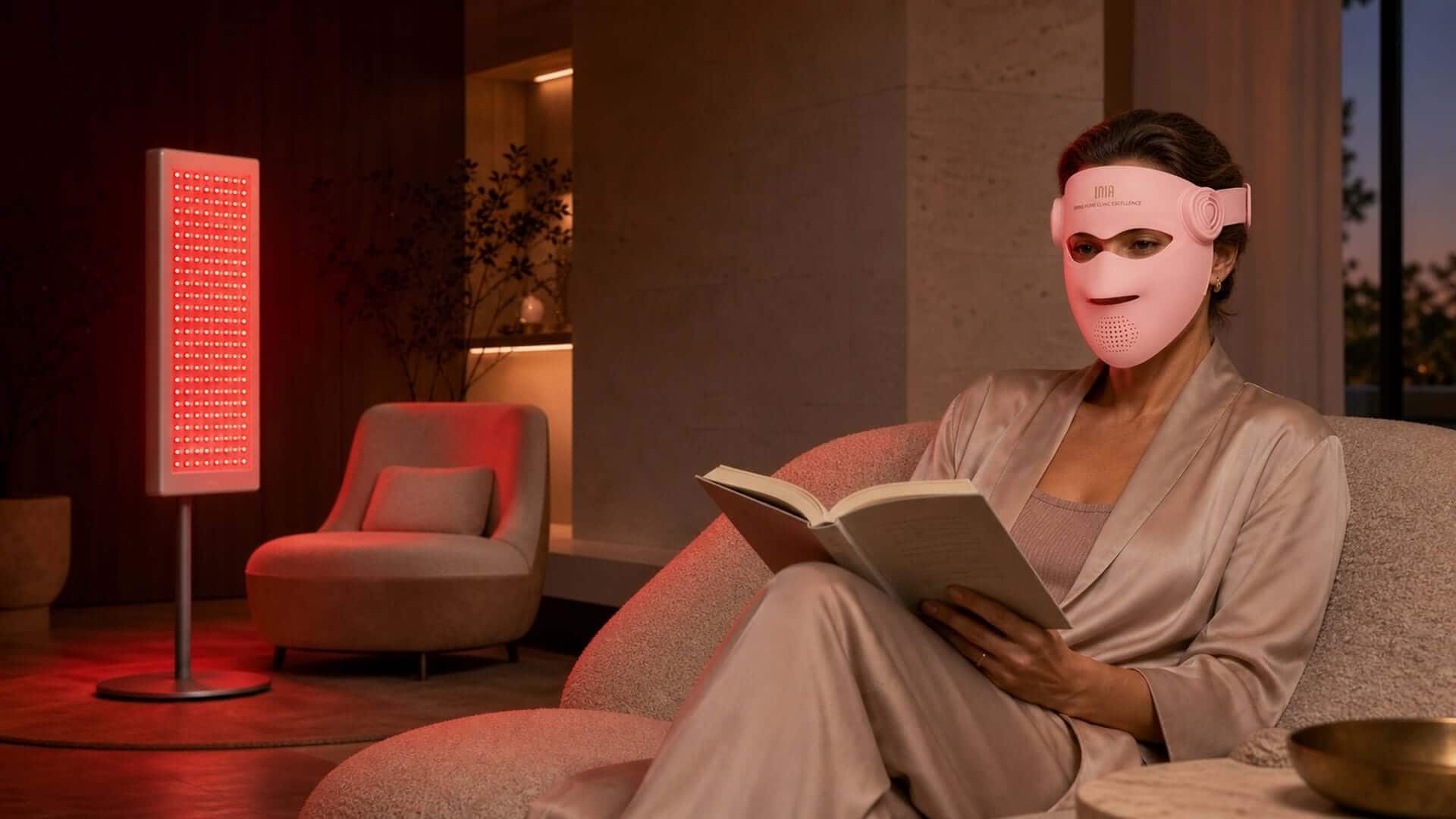
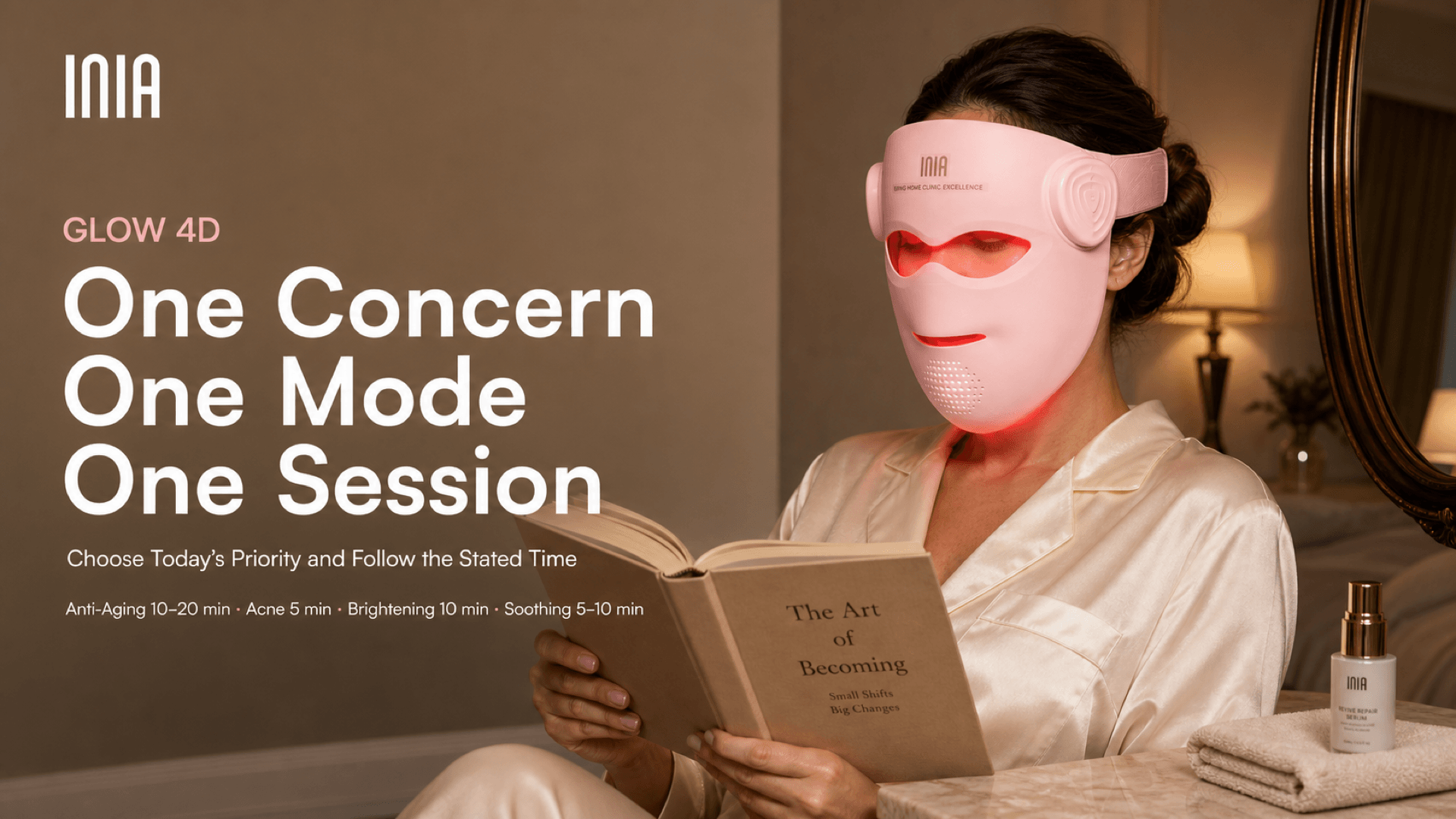
A clear mode is useful only if the mask is practical enough to wear consistently. GLOW 4D uses a soft 4D wraparound design covering the jawline, lower face, and under-chin area, and its 100% wireless operation lets the selected mode fit into an ordinary routine. Refrigerated—not frozen—magnetic CryoCooling attachments can add an optional soothing cooling sensation below the eyes.
How to Use the Mode You Selected
- Begin with clean, dry skin and remove makeup, creams, lotions, and sheet masks.
- Fit the powered-off mask comfortably and align the eye, nose, and mouth openings.
- Select one mode for today’s main priority; near-infrared is on by default.
- Use the stated time for that mode, then power off and continue with serum or moisturizer unless your current instructions say otherwise.
Follow the current instructions for fit, eye comfort, sensitivity testing, and session time, and stop if an unusual reaction occurs. See the step-by-step LED face-mask guide for full setup, safety, and cleaning instructions.
Choose the Goal, Then Choose the Mode
Research explains why different wavelengths serve different skin goals. GLOW 4D turns those roles into four timed modes with 850nm and 940nm dual NIR, so you can choose by today’s most visible concern instead of combining wavelengths yourself.
Frequently Asked Questions
Which LED light therapy color is best for skin?
No single color is best for every goal. Red fits fine-line and firmness goals, blue fits blemish-prone or oily-looking skin, orange fits visible redness and uneven-looking tone, and red plus blue fits mixed concerns.
Does a mask with more visible colors work better?
Visible color count alone cannot answer that. Compare exact wavelengths, combinations, near-infrared inclusion, and the usage guidance for each mode.
Why can’t I see the 850nm and 940nm lights?
They are near-infrared wavelengths outside normal human vision. They can be active without adding another visible color.
References
- Lee SY, et al. Randomized split-face study of LED phototherapy for skin rejuvenation. Journal of Photochemistry and Photobiology B. 2007.
- Papageorgiou P, Katsambas A, Chu A. Clinical trial of blue and red light phototherapy. British Journal of Dermatology. 2000.
- Weiss RA, et al. Prospective study of a 590nm LED array. Lasers in Surgery and Medicine. 2005.
- NASA Science. Infrared Waves.
- American Academy of Dermatology. Is red light therapy right for your skin?