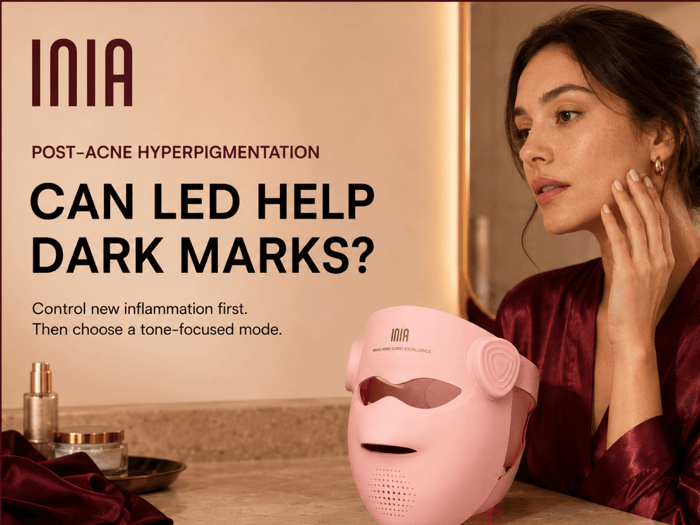

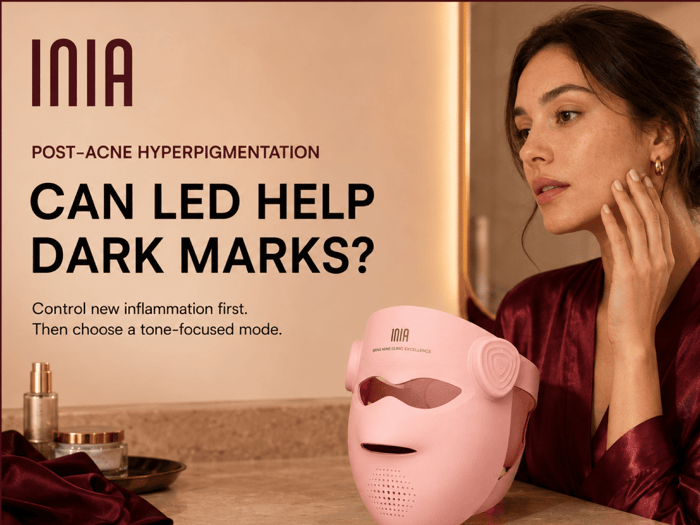
Post-acne dark marks follow inflammation-driven pigment production. In laboratory research, 590nm light reduced a pigment-promoting signal.4 GLOW 4D includes 590nm orange light in its 10-minute Brightening Mode, alongside dual near-infrared light. Keep acne care and daily sunscreen in your routine.
Table of Contents
The Pimple Is Gone. Why Is the Dark Mark Still There?
The raised blemish has settled, but a brown patch remains on your cheek or jawline. That lingering color is often post-inflammatory hyperpigmentation, or PIH. The American Academy of Dermatology distinguishes this flat discoloration from an acne scar, which changes the skin’s texture.1
DermNet explains the mechanism: inflammation stimulates pigment-producing cells to make and distribute more melanin. The pigment can remain after the original inflammation settles. Sun exposure can make the patch darker.2
The bump has healed, but the pigment remains. To understand where light fits, the next question is whether a specific wavelength affects the signals involved in pigment production.
How 590nm Light Affects a Pigment Signal
Pigment-producing cells respond to signals from surrounding skin cells. One such signal is stem cell factor, or SCF, which encourages pigment production.
In a 2022 laboratory study published in Cells, researchers exposed cultured human microvascular endothelial cells to 590nm LED light. They measured lower expression and secretion of SCF.4 In plain language, the exposed cells produced and released less of a pigment-promoting signal.
This finding gives 590nm a specific role in pigmentation research. It establishes a cellular response, not proven clearing of post-acne marks with a home mask.
GLOW 4D Puts 590nm Into One Brightening Mode
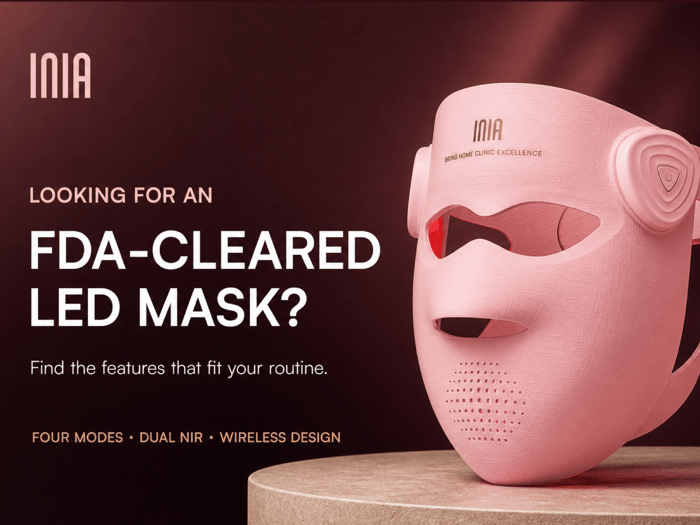
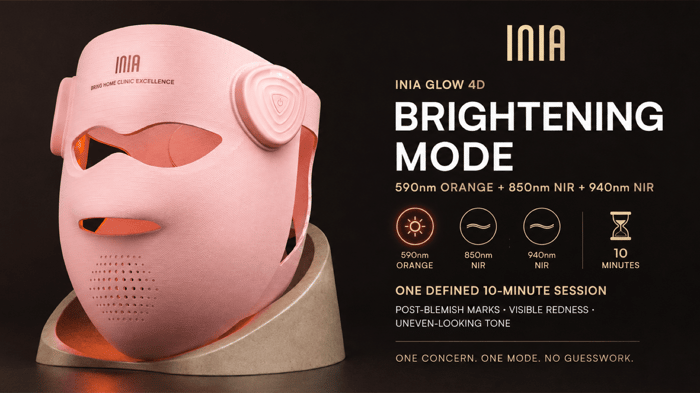
The INIA GLOW 4D Wireless LED Light Therapy Mask brings that wavelength into a defined home LED setting. INIA positions Brightening Mode for post-blemish mark appearance, visible redness, and uneven-looking tone.
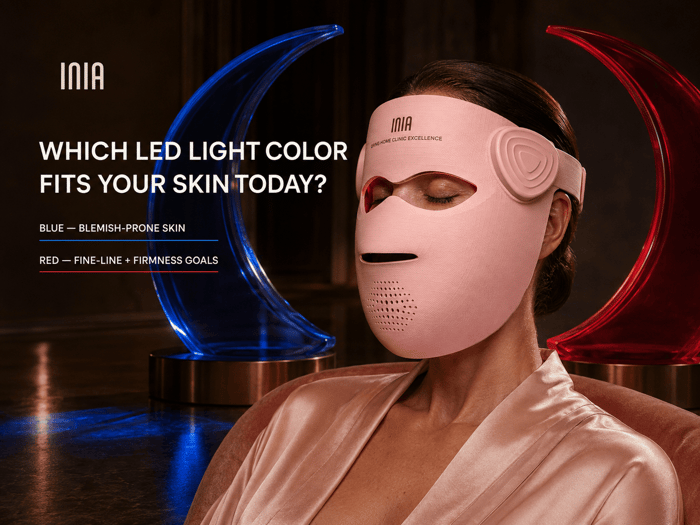
Select 590nm orange light + 850nm and 940nm dual near-infrared light, for 10 minutes, through one named mode. The two NIR wavelengths are invisible; the orange color you see represents only the visible part of the combination.
For marks across the cheeks, chin, or jawline, choosing a device also means checking coverage and how it fits your day:
| Your routine question | GLOW 4D’s design answer |
|---|---|
| Which mode do I select? | Brightening Mode: one defined visible-light and dual-NIR combination |
| How much time do I set aside? | A stated 10-minute session |
| What about my lower face? | 4D wraparound silicone extends coverage along the lower face and jawline |
| Will a cable get in the way? | Wireless use removes the tether during the session |
The practical benefit is a repeatable routine: select the setting, fit the mask, and complete the session without holding a device over each individual mark. Match your expectations to these features rather than treating the wavelength list as a guarantee of pigment removal.
How to Use GLOW 4D Brightening Mode
Keep the device step simple and separate from the rest of your skincare:
- Cleanse and dry your face. Remove makeup and skincare before putting on the mask.
- Fit the mask as instructed. Follow the device’s eye-protection guidance and check that the fit feels comfortable.
- Select Brightening Mode for 10 minutes. Follow your manual’s frequency instructions. Do not add extra sessions to chase faster fading.
- Finish with your usual suitable skincare. Keep any prescribed treatment on its clinician-directed schedule.
Keep the duration fixed instead of increasing it when a mark seems slow to change. For progress photos, use the same lighting, camera angle, and makeup-free skin each time.
Keep Daily Care in Place Alongside LED
Continue appropriate acne care so new breakouts do not keep leaving new marks. Each morning, use broad-spectrum, water-resistant SPF 30 or higher; the AAD recommends tinted sunscreen with iron oxide for dark spots.3 Keep skincare gentle and maintain any clinician-directed pigment treatment instead of replacing it with the mask.
Know When to Get Advice
Stop using the device if you notice burning, persistent irritation, uncomfortable heat, eye pain, or darker-looking marks. Check with your clinician before use if you take photosensitizing medication or have a light-sensitive condition.
Raised or indented marks need a different assessment from flat discoloration. A changing, bleeding, or unfamiliar spot should be checked rather than assumed to be an acne mark.
One Clear Mode for Your LED Step
Address the inflammation behind new marks and keep daily sun protection in place. For your LED step, GLOW 4D Brightening Mode combines 590nm orange with 850nm and 940nm near-infrared in one 10-minute session, with wraparound coverage and wireless convenience.
Frequently Asked Questions
Is a dark acne mark the same as a scar?
A flat patch of color after acne clears is often PIH. A depression or raised area involves a change in skin texture.1
Which GLOW 4D mode is the tone-focused option?
Brightening Mode is INIA’s tone-focused setting. For a comparison with the other settings, see our LED color and mode selection guide.
How long do post-acne dark marks take to fade?
The AAD says a mark a few shades darker than surrounding skin may take 6–12 months to fade after its cause stops; deeper discoloration can last longer. This describes natural fading, not a GLOW 4D results timeline.3
References
- American Academy of Dermatology. Acne scars: Overview.
- DermNet. Postinflammatory hyperpigmentation.
- American Academy of Dermatology. How to fade dark spots in darker skin tones.
- Dai X, et al. 590 nm LED Irradiation Improved Erythema through Inhibiting Angiogenesis of Human Microvascular Endothelial Cells and Ameliorated Pigmentation in Melasma. Cells. 2022;11:3949. The cellular experiment is cited here.