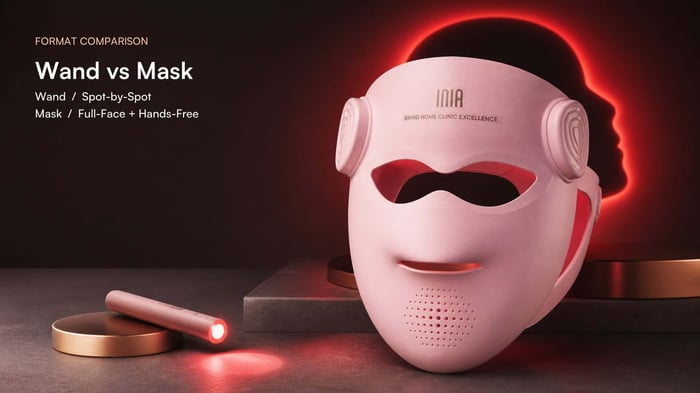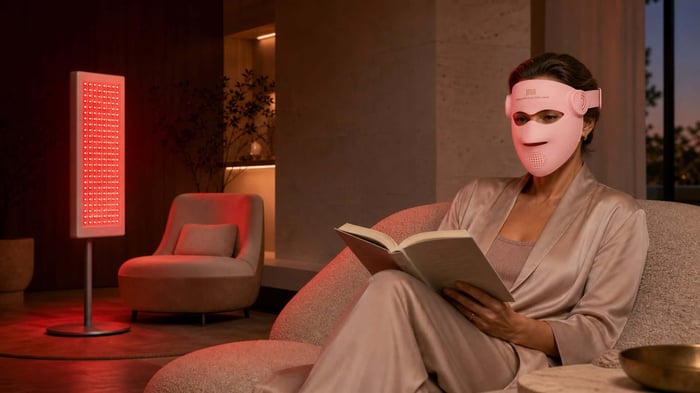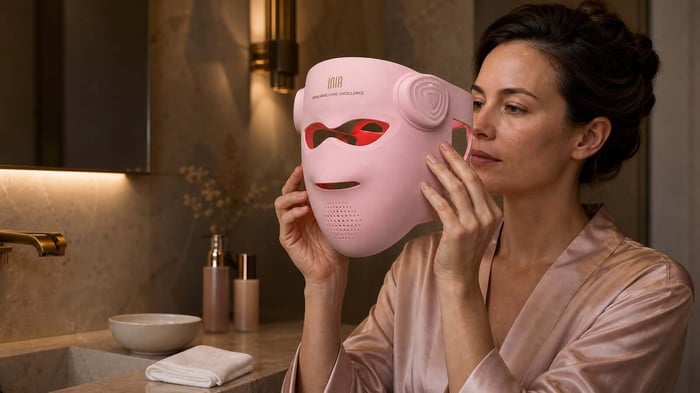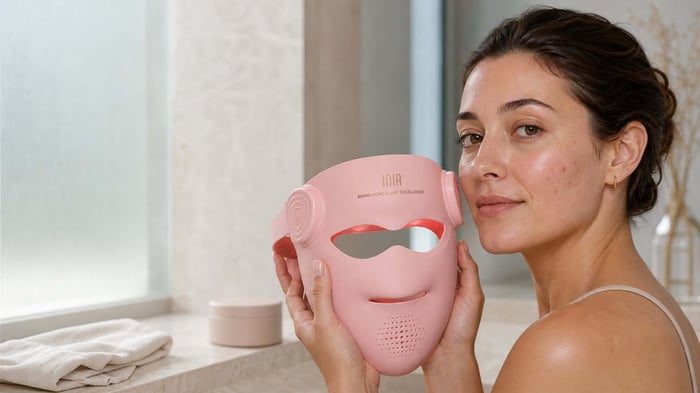

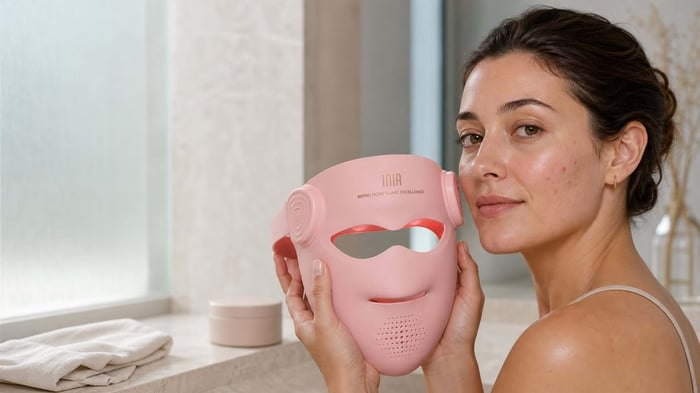
Red and blue LED therapy can help reduce mild-to-moderate inflammatory acne, including red, swollen pimples and small pustules. Blue light addresses acne-related bacterial activity near the skin’s surface, while red light helps calm the inflammation around a breakout.
This is the clearest, best-supported role for at-home acne light therapy: an add-on for inflamed breakouts, not an overnight cure.
Table of Contents
What the studies found
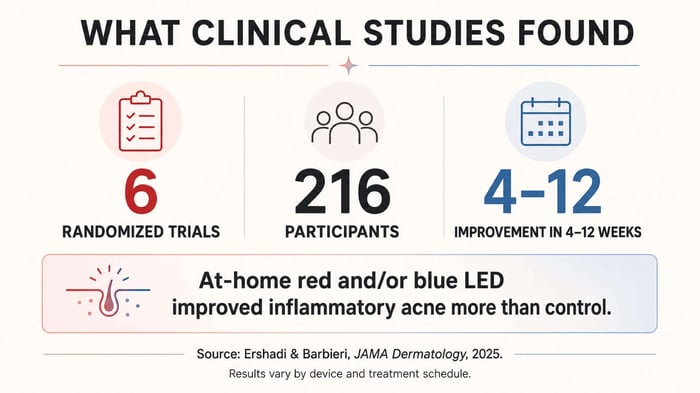
The strongest recent summary is a 2025 JAMA Dermatology systematic review and meta-analysis. It included six randomized trials and 216 people with mild-to-moderate acne. Compared with control groups, at-home red and/or blue LED devices produced greater improvement in inflammatory lesion counts. Combination red-and-blue devices appeared to perform better than single-wavelength devices in the included evidence.1
A double-blind, sham-controlled trial tested a home device using 420 nm blue light followed by 660 nm red light. Thirty-five people with mild-to-moderate acne used the device for four weeks. At the final 12-week visit, inflammatory lesions had fallen by 77% in the treatment group, with no severe adverse reactions reported.2
An earlier randomized study of 107 people reached a similar conclusion. After 12 weeks, the group using 415 nm blue light with 660 nm red light achieved a 76% mean improvement in inflammatory lesions.3 A smaller 2026 randomized trial also found significant reductions in inflammatory lesions after four and eight weeks of daily at-home red-and-blue LED use.4
Why red and blue light work together
Blemish-focused
Blue light interacts with porphyrins produced by Cutibacterium acnes, creating a reaction that helps reduce acne-related bacterial activity near the skin’s surface.
Inflammation support
Red light penetrates more deeply and is used to help calm the inflammatory response that makes a pimple look red, swollen, and feel tender.
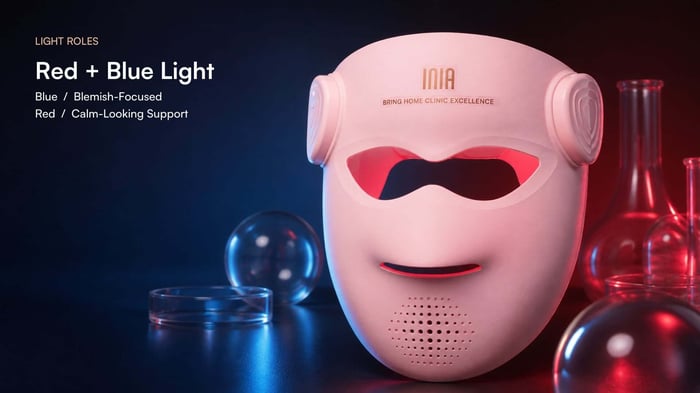
Used together, the two wavelengths address two connected parts of an inflamed breakout. That is why this article focuses specifically on red-and-blue LED therapy for inflammatory acne rather than treating every type of acne concern as the same problem.
How to add LED therapy to your routine
Cleanse and dry
Remove makeup, sunscreen, and heavy skincare before the LED session.
Select the blemish-focused mode
Follow the session time and frequency in the current manual for your exact device.
Apply skincare afterward
A gentle moisturizer can support comfort; use sunscreen as the final step in a daytime routine.
Track one outcome
Look for fewer red, inflamed pimples and a calmer overall appearance in consistent lighting.
For the full order of cleanser, LED, serum, moisturizer, and sunscreen, follow our guide to using red light therapy before or after skincare.
Red and blue LED can help inflamed breakouts
For mild-to-moderate inflammatory acne, red and blue light have complementary roles: blue light addresses acne-related bacterial activity, while red light helps calm inflammation. Clinical studies support using the combination consistently as part of an at-home acne routine.
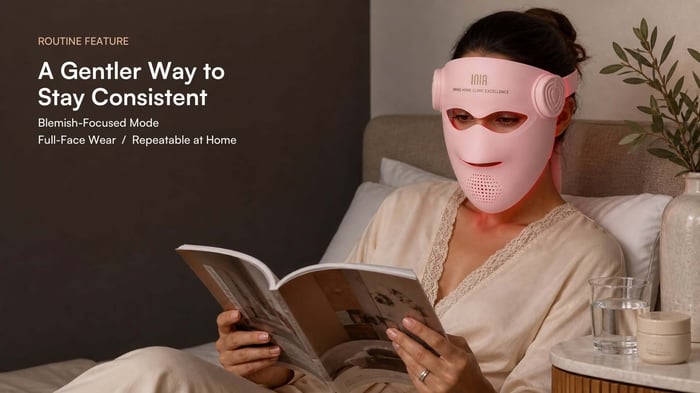
INIA GLOW 4D brings red and blue LED into a wireless, full-face format designed for repeatable home use. Choose the blemish-focused mode and follow the current product manual for session length and frequency.
Explore INIA GLOW 4DFrequently Asked Questions
Does red and blue light therapy help inflammatory acne?
Clinical trials and a 2025 systematic review support at-home red and blue LED therapy as an adjunct for mild-to-moderate inflammatory acne, including red pimples and small pustules. Results depend on the device and treatment protocol.
How long does LED therapy take to improve inflamed acne?
In the studies included in the 2025 review, improvement was generally observed after four to 12 weeks. Use the schedule in your device manual rather than copying the frequency used by a different device.
Should I use LED therapy before or after skincare?
Use it on clean, dry skin before most serums and moisturizers unless your device manual says otherwise. See our complete guide to red light therapy before or after skincare.
References
- Ershadi S, Barbieri JS. At-Home LED Devices for the Treatment of Acne Vulgaris: A Systematic Review and Meta-Analysis. JAMA Dermatology. 2025;161(5):552–555. doi:10.1001/jamadermatol.2025.0019.
- Kwon HH, et al. The clinical and histological effect of home-use, combination blue-red LED phototherapy for mild-to-moderate acne vulgaris in Korean patients. British Journal of Dermatology. 2013;168(5):1088–1094. doi:10.1111/bjd.12186.
- Papageorgiou P, Katsambas A, Chu A. Phototherapy with blue (415 nm) and red (660 nm) light in the treatment of acne vulgaris. British Journal of Dermatology. 2000;142(5):973–978. doi:10.1046/j.1365-2133.2000.03481.x.
- Friedmann DP, et al. Comparing a Red and Blue Light-Emitting Diode Light Device With an Existing Blue Light Device for At-Home Treatment of Inflammatory Acne. Dermatologic Surgery. 2026;52(7):687–691. doi:10.1097/DSS.0000000000005061.
- American Academy of Dermatology. Updated guidelines for the management of acne. 2024.