


Published by INIA. Product information and prices were checked on August 5, 2026.
Omnilux Contour Face is a credible choice for a simple, fixed anti-aging protocol. For most at-home users, however, INIA GLOW 4D offers the more complete value: extended lower-face and under-chin coverage, five wavelengths with 940nm Dual NIR, four selectable modes, cordless use, and a published sale price about 47% lower when checked on August 5, 2026.
Table of Contents
Start with What You Need the Mask to Do
A good red light therapy mask has to fit more than a treatment goal—it has to fit your face and your routine. Before comparing wavelengths or LEDs, decide what you need the mask to do: follow one focused anti-aging protocol, cover the areas that matter to you, adapt to different skin priorities, or fit more easily into daily life.
Omnilux Contour Face and INIA GLOW 4D begin from different ideas. Omnilux is protocol-first: two wavelengths, one 10-minute session format, and a clearly defined course of use. GLOW 4D is face-first and routine-first: its shape extends along the jawline and under the chin, while five wavelengths and four modes give one device more than one role.
Both approaches are valid. They are not equally complete. Omnilux makes one decision exceptionally simple; GLOW 4D solves more of the practical questions that come with owning and using an LED mask at home.
Want a standalone Omnilux review? Read our full Omnilux red light mask review for clinical evidence, user feedback, drawbacks, safety considerations, and overall value.
A Focused Protocol—or a More Complete Platform?
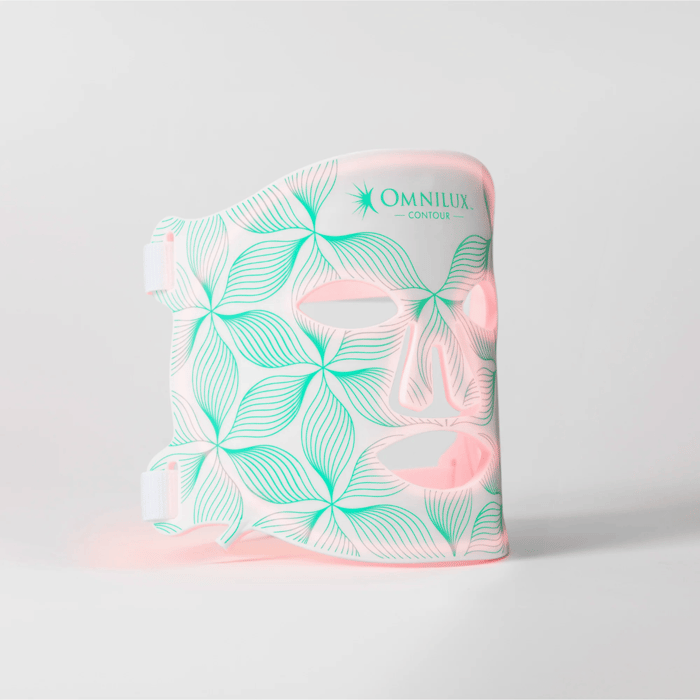
Focused and deliberately simple
633nm red and 830nm near-infrared light, 132 LEDs, and one 10-minute anti-aging session format. Its advantage is clarity: there is almost nothing to configure before starting.
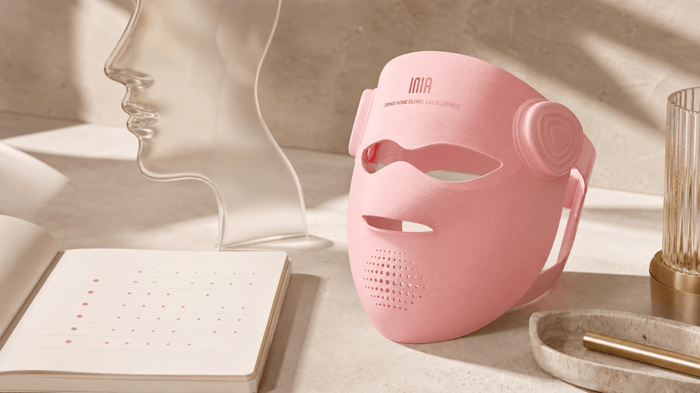
Broader and more adaptable
Five wavelengths, four modes, an extended 4D shape, cordless use, and magnetic under-eye CryoCooling pads make it a more complete platform for changing skin priorities and real-life routines.
What Omnilux Gets Right
Omnilux deserves credit for reducing friction. The flexible silicone mask, adjustable straps, external controller, and fixed 10-minute format support a repeatable routine. The brand recommends three to five sessions per week for four to six weeks, followed by maintenance treatments.
Coverage and Fit Change the Experience
A face mask cannot deliver light to an area it does not reach. That makes product shape more than a cosmetic detail—especially for buyers who care about the jawline and lower face.
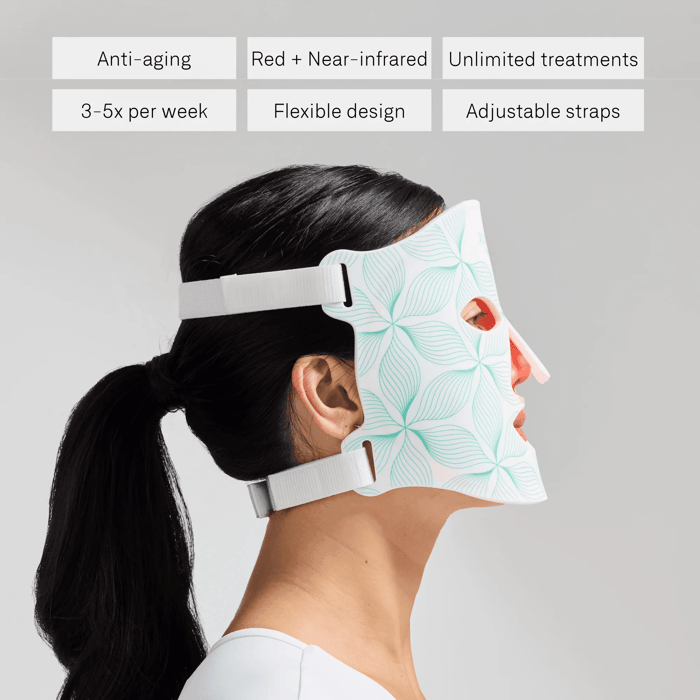
Standard face coverage
The flexible mask contours across the main facial area. Its design stays centered on a conventional face-mask footprint.
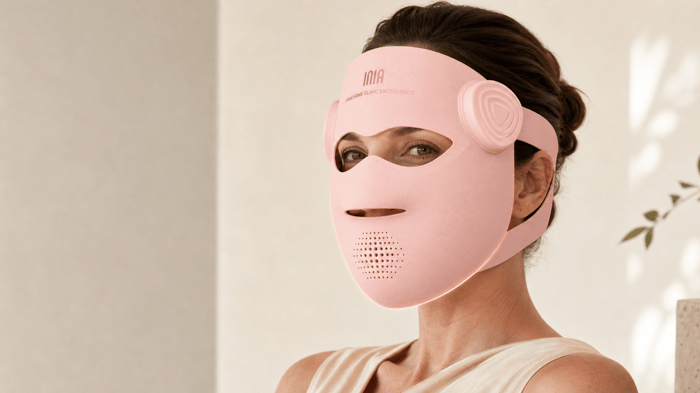
Jawline, lower-face, and under-chin reach
The 4D enveloping shape extends below the conventional facial footprint. A raised nose bridge and widened straps are designed to help the mask sit more securely across different face shapes.
Two Wavelengths—or a Five-Wavelength System?
More wavelengths do not automatically mean better results. They do mean a mask can support more clearly differentiated routines. Omnilux stays with 633nm red and 830nm NIR for its anti-aging protocol. GLOW 4D combines 630nm red, 460nm blue, 590nm orange, and 850nm plus 940nm near-infrared light across four modes.
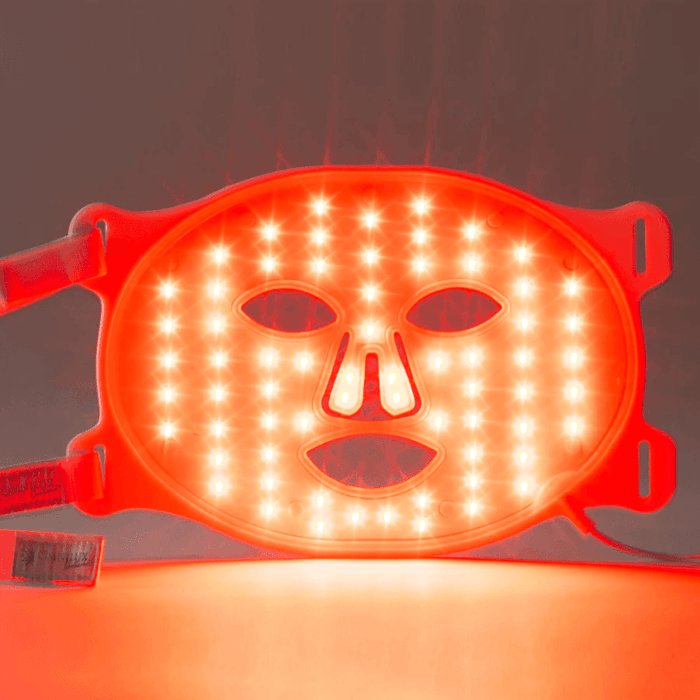
Red + 830nm NIR
A single light combination removes decision-making. That is useful when simplicity is the priority, but it gives the device only one core treatment direction.
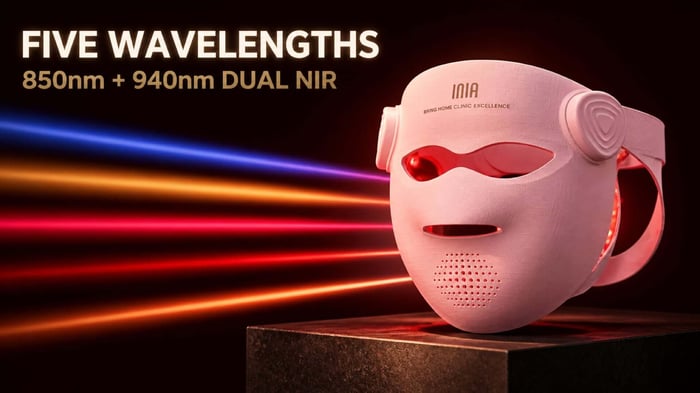
Five wavelengths with 850nm + 940nm Dual NIR
Anti-aging, blemish-focused, brightening, and soothing modes give one mask more flexibility. Mode length and light combination vary, so users should follow the current manual for the selected mode.
| Decision point | Omnilux Contour Face | INIA GLOW 4D |
|---|---|---|
| Core approach | One fixed anti-aging protocol | Face-first, multi-mode platform |
| Wavelengths | 633nm red + 830nm NIR | 630nm red, 460nm blue, 590nm orange + 850nm and 940nm NIR |
| Modes | One treatment format | Four selectable modes |
| Coverage | Standard facial footprint | Jawline, lower face, and under-chin extension |
| Light architecture | 132 LEDs | 80 LEDs / 320 light chips1 |
| Routine mobility | External controller | Cordless use; approximately 120–140 minutes of active runtime |
| Cooling option | Not listed | Magnetic under-eye CryoCooling pads |
| Best fit | Someone who wants the fewest possible treatment decisions | Most users seeking a more complete at-home mask |
- The brands use different counting methods: Omnilux lists LEDs, while GLOW 4D lists 80 LEDs containing 320 light chips. These figures should not be read as a direct output ratio.
See the Masks Compared in Real Use
Creator disclosure: This creator participates in INIA’s commission program and may earn a commission from qualifying sales.
What to Look for in the Comparison
The creator places both masks side by side, showing the difference between Omnilux Contour Face’s wired setup and GLOW 4D’s cordless design, extended lower-face and under-chin coverage, and selectable light modes.
The cable damage and replacement history shown reflect one creator’s personal experience, not every Omnilux device. Individual experiences may vary.
Open the original videoRoutine Fit—and Price—Change the Decision
Omnilux is simpler because there is only one treatment choice. GLOW 4D is easier to integrate in a different way: once charged, it can be worn without staying tethered to a wall outlet. A full charge provides approximately 120–140 minutes of active runtime. The mask cannot be used while charging, so charging still needs a place in the routine.

The magnetic CryoCooling pads add an optional cooling step for comfort and a refreshed, less puffy-looking appearance. They are not the reason to buy the mask on their own, but they reinforce the broader point: GLOW 4D is designed as a more complete at-home experience, not simply a longer wavelength list.
Which Mask Should You Choose?
You want one fixed protocol
- Your priority is a simple red-and-NIR anti-aging routine.
- You prefer a fixed 10-minute format with minimal decisions.
- Broader lower-face coverage and multiple modes are not priorities.
You want the more complete mask
- You want jawline, lower-face, and under-chin reach.
- You want five wavelengths, Dual NIR, and four modes.
- You value cordless movement, cooling comfort, and stronger overall value.
GLOW 4D Is the More Complete Mask—and the Stronger Value
Omnilux Contour Face succeeds at one thing: making a fixed anti-aging protocol simple. GLOW 4D does more of what most people need an at-home mask to do. It covers more of the lower face, offers a broader light system and four modes, supports cordless use, adds cooling comfort, and was listed at a substantially lower price when checked. Prices and promotions may change. Unless the goal is specifically the fewest possible choices, GLOW 4D is the clearer buy.
Frequently Asked Questions
Is Omnilux Contour Face better than INIA GLOW 4D?
Omnilux is better for someone who specifically wants one simple, fixed anti-aging protocol. For most at-home users, GLOW 4D is the more complete choice because it combines broader lower-face coverage, five wavelengths, four modes, CryoCooling comfort, and cordless use at a lower published price when checked. Prices and promotions may change.
Which wavelengths do the two masks use?
Omnilux Contour Face uses 633nm red and 830nm near-infrared light. GLOW 4D uses 630nm red, 460nm blue, 590nm orange, and 850nm plus 940nm near-infrared light across four modes.
Does GLOW 4D cover the neck?
No. Its shape extends around the jawline, lower face, and under the chin, but that is not the same as full neck-and-chest coverage.
Is GLOW 4D wireless?
Yes. GLOW 4D is designed for cordless use once charged, with approximately 120–140 minutes of active runtime per full charge. It cannot be used while charging.
How often should each mask be used?
Omnilux recommends three to five treatments per week for four to six weeks, followed by maintenance treatments. GLOW 4D session length depends on the selected mode; follow the current product manual and mode instructions rather than applying one frequency to every mode.