

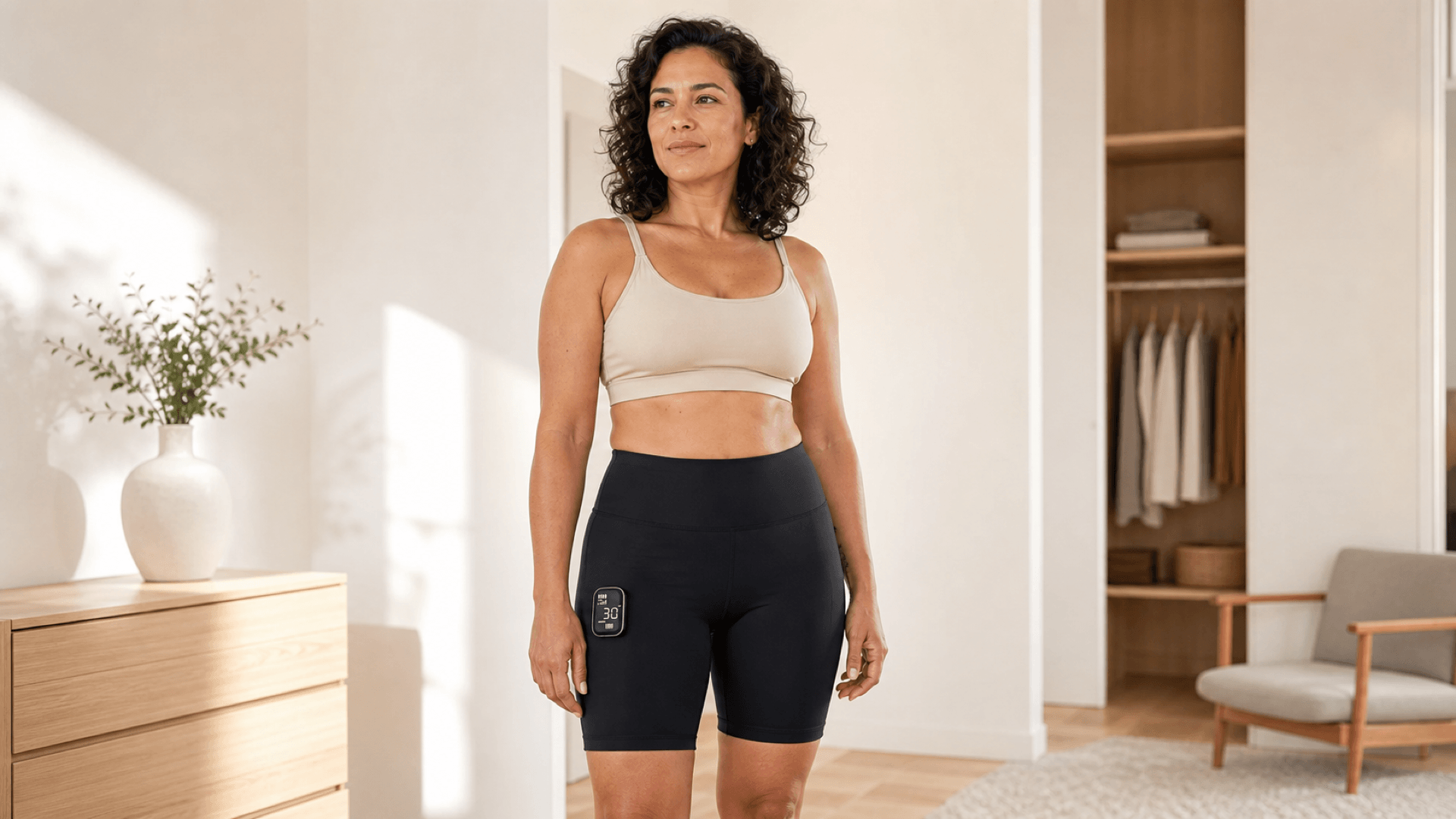

EMS sends electrical pulses through skin-contact electrodes to motor nerves, causing muscles in the targeted area to contract. Applied over the glutes and pelvic-floor area, it creates repeated activation across both zones.
INIA CURVIFY builds those two electrode zones into dual-channel shorts. Its dedicated modes let you focus on the glutes, the pelvic-floor area, or both zones in one wearable 15–20-minute routine.
Table of Contents
What EMS Does to a Muscle
Your nervous system normally sends electrical signals through motor nerves to make muscles contract. EMS follows the same basic pathway from outside the body: timed pulses travel through electrodes on the skin and recruit nearby motor nerves.
The response depends on electrode position, skin contact, intensity, and the programmed pulse pattern. Correct placement and even contact help create a clear, rhythmic contraction across the intended area. Research on muscle motor points also shows that accurate electrode positioning can produce a stronger contraction with less current (Gobbo et al., 2014).
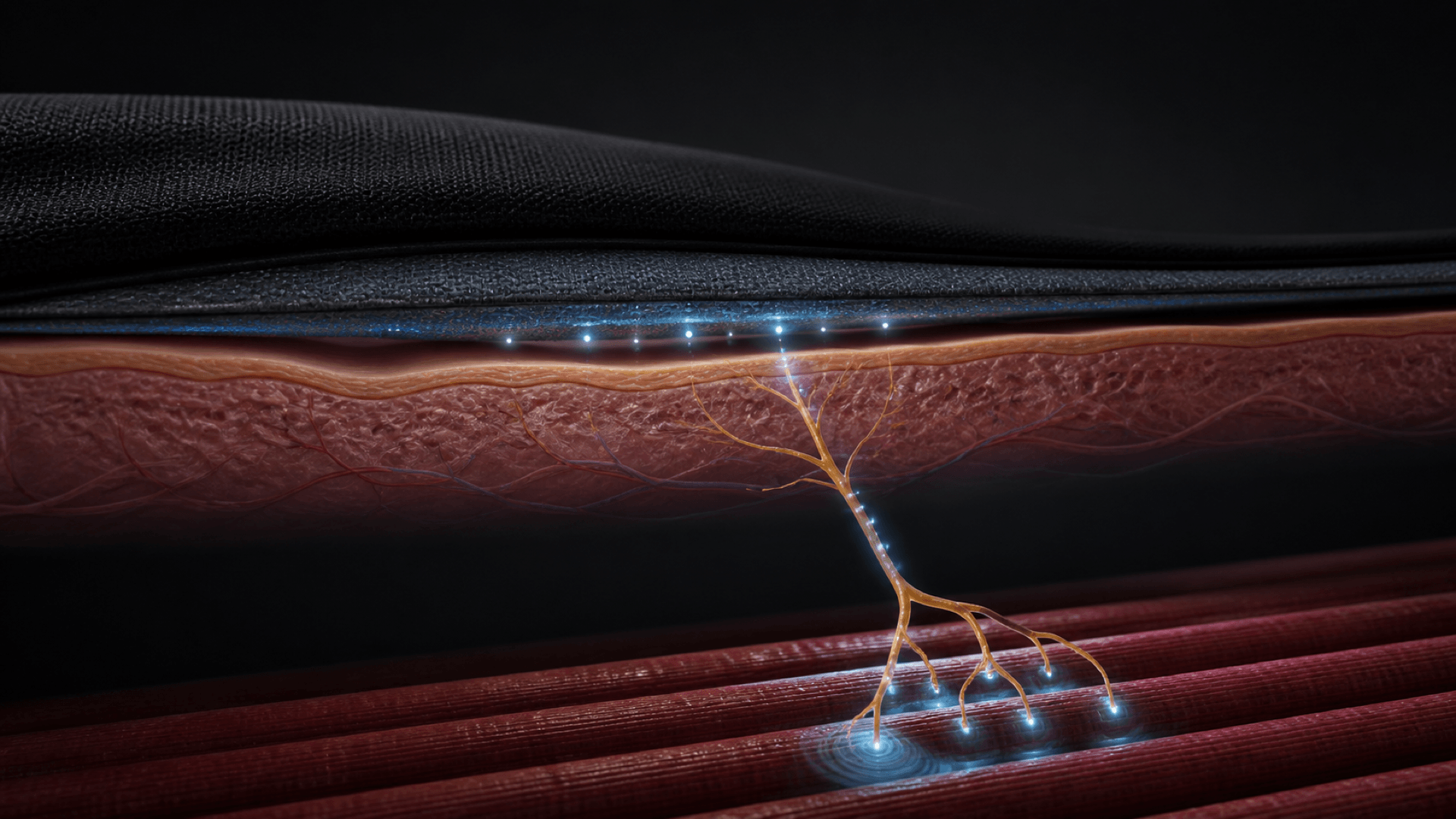
The electrode layout determines where activation occurs. A glute electrode creates one stimulation field. A pelvic-floor-area electrode creates another. Dual-channel EMS gives both zones a defined place in the routine.
What EMS Does to the Glutes
The gluteus maximus is a large skeletal muscle close to the surface. Well-positioned electrodes can create glute contractions that are easy to feel and may also be visible. Repeated pulses give the glutes additional contractile work during the session.
A randomized trial placed EMS over the abdominal, gluteal, and hip-adductor muscles during an eight-week strengthening program. The EMS-plus-exercise group showed greater contracted muscle thickness in most measured muscles (Yoo et al., 2023).
A systematic review of ten studies involving 174 healthy adults found strength gains across all included EMS studies. The protocols varied, and improvements in strength-related functional outcomes were not established (Mukherjee et al., 2023).
What EMS Does Around the Pelvic-Floor Area
The pelvic floor is a group of muscles forming a supportive base inside the pelvis. A pelvic-floor EMS routine needs electrode coverage and a program intended for that region.
When a channel is positioned around the pelvic-floor area, it delivers localized electrical pulses and creates a physical activation cue throughout the session. This gives the user a clear sensation associated with the targeted zone.
Electrical stimulation already appears in pelvic-floor research using intravaginal electrodes, clinician-positioned external electrodes, and targeted nerve stimulation. Reviews report changes in pelvic-floor contraction strength in some studies while also highlighting substantial differences between protocols and the need for stronger evidence (Lunardi et al.; Naidu et al.).
The practical takeaway is simple: the glutes and pelvic-floor area require separate targeting. Dual-channel EMS gives both regions their own electrode coverage.
Watch the Creator Explain CURVIFY EMS
About this video: @addtocartistry shares a promotional explanation of CURVIFY and responds to skepticism about electrical stimulation. The scientific sources in this article provide the evidence for the EMS mechanism.
What This Explanation Adds
Drawing on her experience working in physical therapy, the creator explains that EMS creates muscle contractions and that electrical stimulation can be programmed for different uses. She connects the mechanism to CURVIFY’s electrode placement over the glutes and pelvic-floor area.
Her explanation captures the central idea: EMS contracts muscles in the targeted area, and the electrode layout determines where that activation occurs.
If playback fails, open the original TikTok video.
How CURVIFY Creates a Dual-Zone Routine
INIA CURVIFY integrates glute and pelvic-floor-area electrodes into wearable dual-channel shorts. This keeps the two target zones in consistent positions from one session to the next.
Both zones in one routine
Combined glute and pelvic-floor-area activation.
Glute-focused activation
A dedicated routine for the glute electrode zone.
Pelvic-floor-area positioning
A dedicated routine for the pelvic-floor-area electrode zone.
Lower-body targeting
An inner-thigh and lower-body contour routine.
Five intensity levels let users begin at Level 1 and gradually find a clear, comfortable contraction. The current product routine takes 15–20 minutes a day. The shorts are worn directly against bare skin, and the electrode pads are lightly misted with water before use. Conductive gel is unnecessary.
- Lightly mist the electrode pads with water.
- Wear the shorts directly against bare skin and smooth the electrode areas flat.
- Attach the controller and choose the mode that matches your target.
- Begin at Level 1 and increase gradually until the pulse feels clear and comfortable.
- Complete the 15–20-minute routine.
What the Evidence Supports
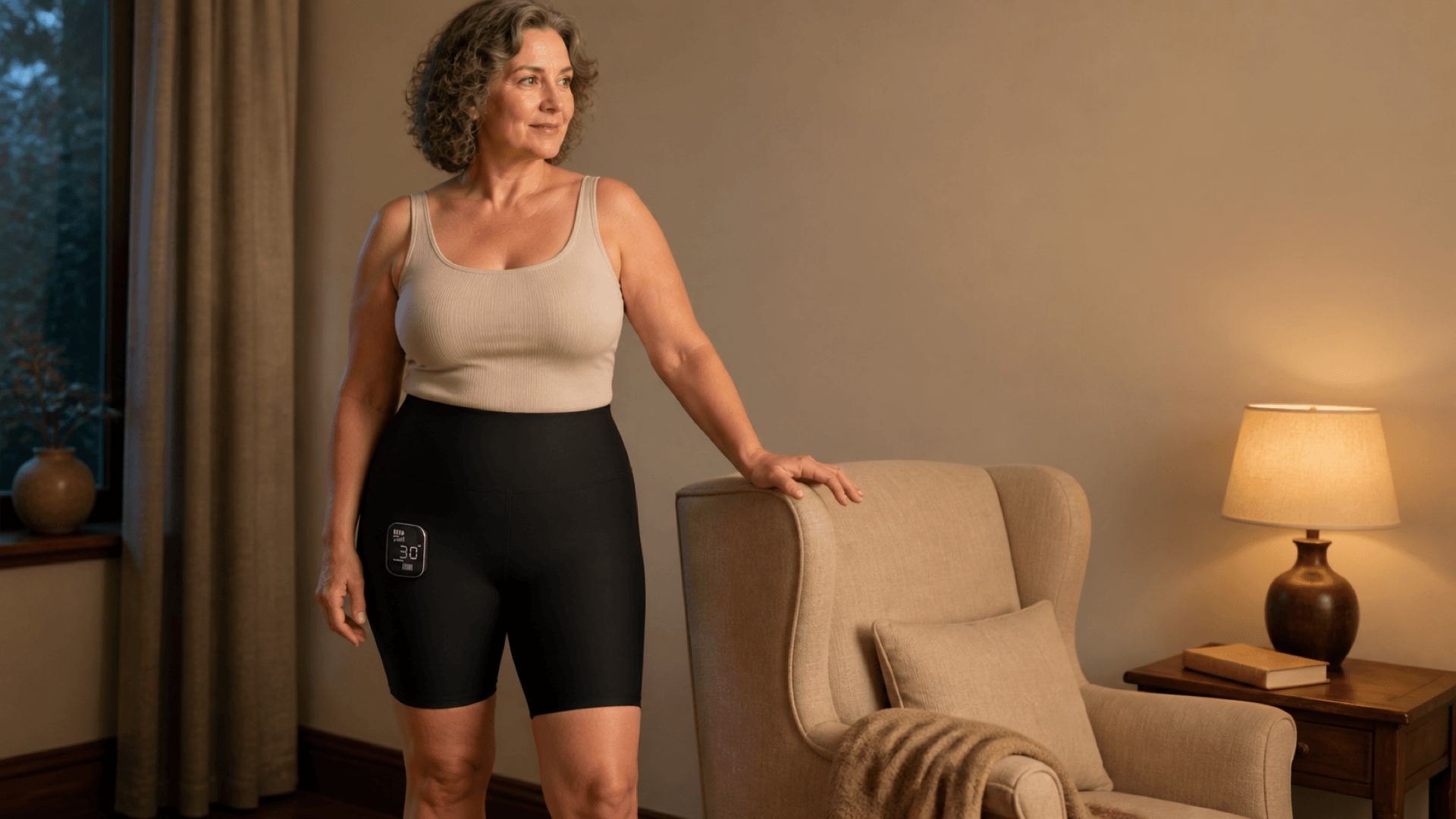
The cited research supports motor-nerve recruitment, muscle contraction, and possible strength-related adaptation under specific EMS protocols. It does not establish a fixed conversion between one session and a certain number of squats or Kegels. Pelvic-floor clinical studies also use specialized protocols and do not establish CURVIFY as treatment for a medical condition.
The FDA states that EMS may temporarily strengthen, tone, or firm a muscle to some extent and advises consumers to combine it with regular exercise and diet when appearance change is the goal (FDA: Electronic Muscle Stimulators).
Two Electrode Zones Create One Repeatable Routine
EMS creates contractions in the muscles covered by its electrode field. CURVIFY uses dual-channel shorts to target the glutes and pelvic-floor area, then organizes both zones into dedicated modes and a repeatable 15–20-minute home routine.
Frequently Asked Questions
Why does CURVIFY use two channels?
The glutes and pelvic-floor area need separate electrode coverage. Two channels give each region a defined stimulation zone and allow FUSION mode to activate both in one session.
Does EMS really make the glutes contract?
Yes. Correctly positioned electrodes can recruit the motor nerves serving the glute muscles and produce clearly felt or visible contractions.
What does pelvic-floor-area EMS feel like?
It feels like rhythmic pulsing or contracting in the area covered by the pelvic-floor channel. Start at Level 1 and increase gradually until the sensation is clear and comfortable.
Does CURVIFY need conductive gel?
No. Lightly mist the electrode pads with water and wear the shorts directly against bare skin for full contact.
How long is a CURVIFY session?
The current CURVIFY routine takes 15–20 minutes a day. Begin at Level 1 and follow the current product instructions.
References
- Gobbo et al.: Motor point identification and NMES
- Yoo et al.: EMS, muscle activation, and physical performance
- Mukherjee et al.: EMS and strength gains in healthy adults
- Lunardi et al.: Electrical stimulation and pelvic-floor muscle training
- Naidu et al.: Intravaginal electrical stimulation systematic review
- FDA: Electronic Muscle Stimulators
- @addtocartistry's promotional CURVIFY explanation
- INIA CURVIFY official product page