

Choosing between a wired vs wireless red light mask comes down to one trade-off: cordless freedom versus the weight of an on-board battery. Wired masks stay light on your face but tether you to an outlet or a controller. Wireless masks let you move around, but the battery adds weight that some users feel pressing on their skin. Neither type is automatically better — the right pick depends on how and where you use it.
Part 1. The Core Difference: Where the Power Lives
The only fundamental difference between the two formats is the power source. Everything else — wavelengths, LED count, irradiance — depends on the specific model, not on whether it has a cord.
- Wired masks draw continuous power from a wall plug or a handheld controller. The mask itself can stay very light because the battery sits off your face.
- Wireless masks carry a rechargeable battery built into the mask or its strap, so you can walk around mid-session.
A common myth is that going cordless means weaker light. In reality, what determines output is LED density, distance to your skin, and wavelength accuracy — not the presence of a cord.
💡 Tip: Don't shop by "wired vs wireless" alone. Check the LED count, listed wavelengths (such as 630nm red or 850nm near-infrared), and irradiance first — those decide whether the mask actually does anything for your skin.
Part 2. Wired vs Wireless: Side-by-Side
Both formats can deliver effective light therapy. They differ mainly in convenience, comfort, and price.
| Factor | Wired Mask | Wireless Mask |
|---|---|---|
| On-face weight | Lighter (battery is off-face) | Heavier (battery on mask) |
| Mobility | Tethered to outlet/controller | Move freely, multitask |
| Mid-session interruptions | None (constant power) | Possible if battery runs low |
| Travel | Bulkier with cords | Easier to pack |
| Typical price | Often lower | Often higher |
| Best for | Stationary, seated routines | Busy, on-the-go routines |
💡 Tip: If you already know you'll use the mask in one spot — at your vanity or in bed — a wired model often gives you the same light for less money and less weight.
Part 3. Does a Heavy Mask Really "Pull Your Face Down"?
This is one of the most common worries with cordless masks, and it deserves a straight answer. Mask weight varies widely — some weigh under 200g (lighter than a phone), while bulkier rigid models can reach around 500g.
A heavier mask can feel like it's dragging on your skin during a session. But a 10-minute session does not cause lasting sagging — the discomfort is real, the long-term "pulling down" is not.
🗣️ Verified INIA buyer review: "Cordless chargeable on the mask itself — it turns out that makes it Very Heavy. It pulls down parts of the face that I'm trying to keep up. I have to hold it up at the chin with one hand."
The real cost of an uncomfortable, heavy mask is consistency: if it's unpleasant, you stop using it, and red light therapy only works with regular sessions.
| Mask weight | How it tends to feel |
|---|---|
| Under 200g | Barely noticeable; easy to wear upright |
| 200–350g | Comfortable for most; soft silicone helps |
| 350–500g+ | Noticeable drag; many users recline or lie down |
⚠️ Important: Don't fix a heavy, sliding mask by overtightening the strap — that just trades drag for pressure marks and headaches. If a mask is so heavy you have to hold it up by hand, it's the wrong fit for you. Use the brand's return window rather than pushing through discomfort.
Part 4. "I Didn't Realize It Wasn't Cordless" — Avoid This Buying Mistake
Product listings can be confusing. "Rechargeable," "portable," and "wireless" are sometimes used loosely, and some kits mix formats — a wireless face mask may still ship with a corded neck or body attachment.
Before you buy, confirm:
- Is the main device battery-powered, or does it need to stay plugged in?
- Does it recharge, or run only while connected to power?
- Do any add-on attachments (neck, chest) have their own cord?
- What's the rated runtime per charge?
🗣️ Verified INIA buyer review: "I didn't realize this wasn't cordless. I thought it was rechargeable, and the cord came off."
💡 Tip: Search the product page for the words "rechargeable battery" and a stated runtime in minutes. If neither appears, assume the device is corded and plan your setup around an outlet.
Part 5. Which Should You Choose?
There's no universal winner — match the format to your routine.
| Choose wired if… | Choose wireless if… |
|---|---|
| You use it in one fixed spot | You want to move around mid-session |
| You want the lightest feel on your face | You travel and need easy packing |
| You're price-sensitive | Hands-free multitasking matters most |
| You forget to recharge devices | You dislike cords and outlets |
For most people building a daily habit, the deciding question is simple: will you actually wear it more often if it's cordless? If yes, the added weight is usually worth it — especially with a soft, well-distributed design.
A Wireless Option Built to Stay Comfortable: INIA GLOW
If you want cordless freedom without the "clunky brick" feel, INIA designs its masks around soft, flexible silicone that contours to your face and spreads weight more evenly than rigid shells.
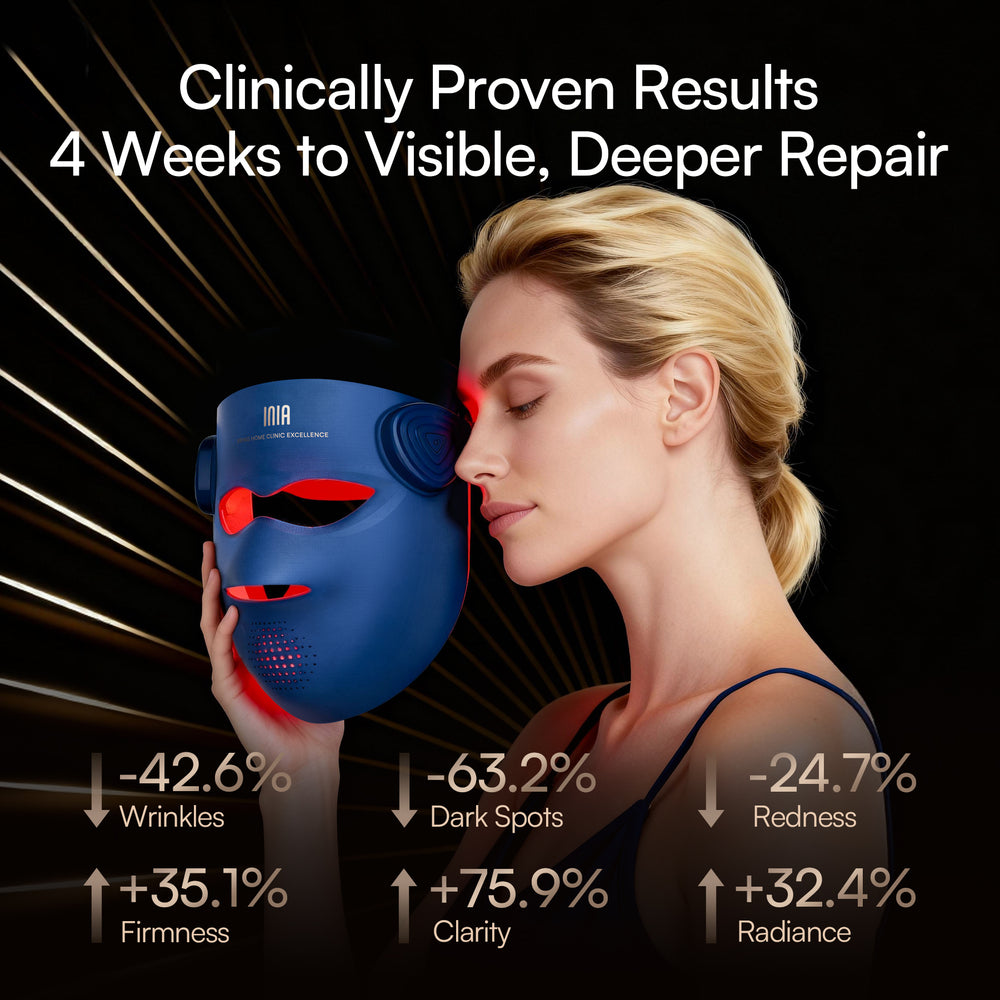
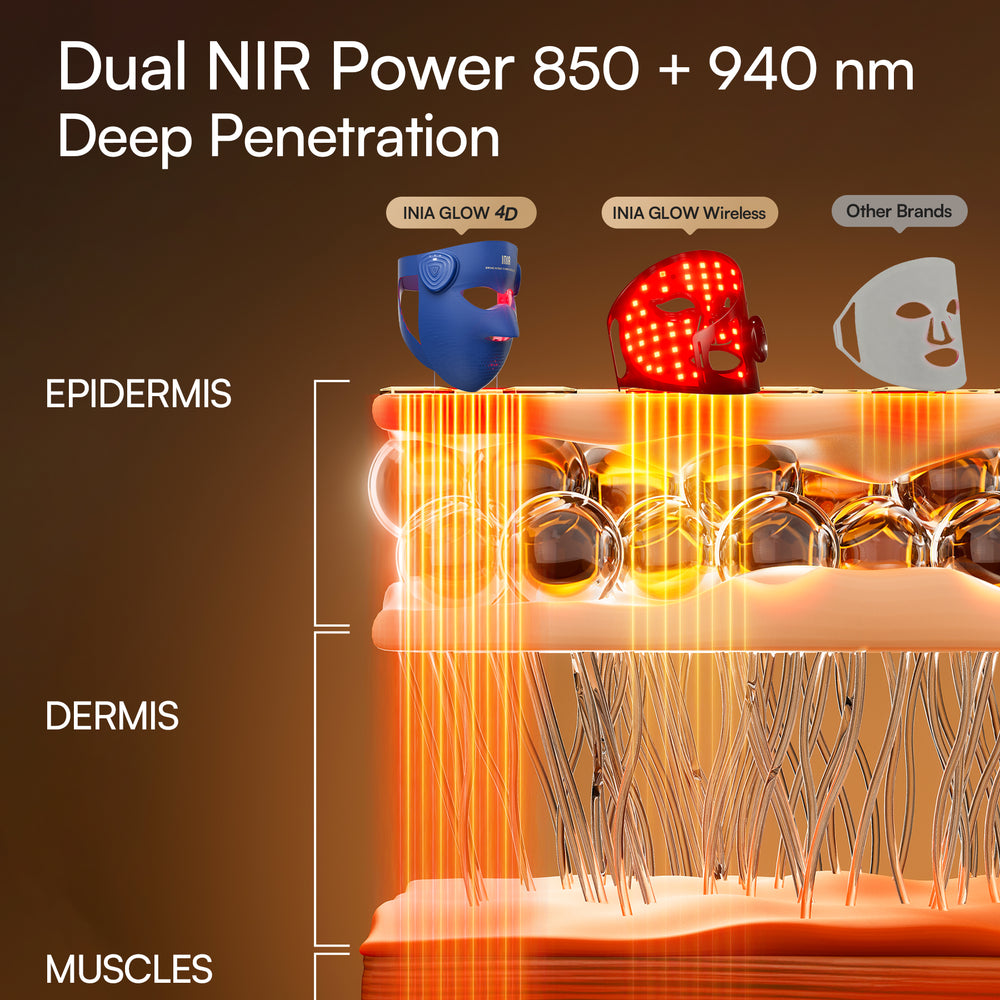
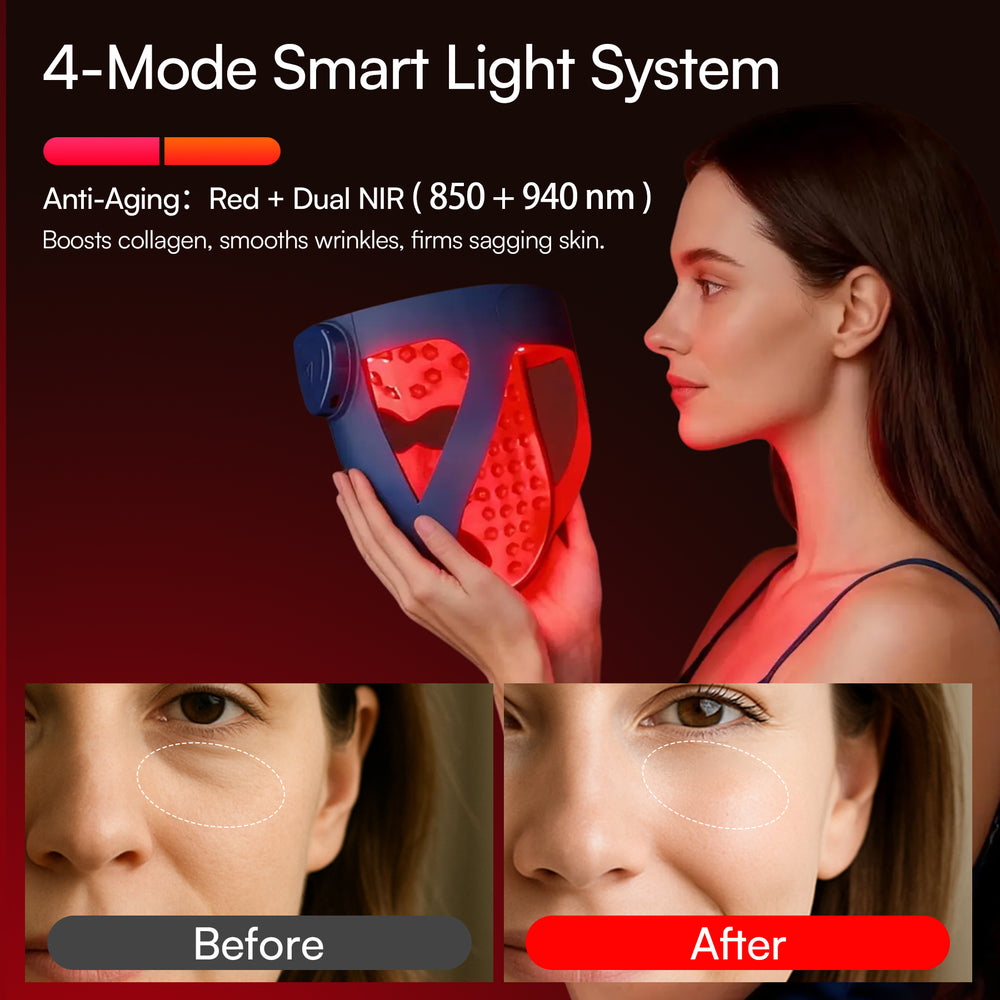
- The INIA GLOW 4D is fully wireless with a flexible silicone body and dual near-infrared wavelengths (850nm + 940nm).
- The INIA GLOW Wireless is a lighter, hands-free entry point for daily red and near-infrared sessions.
Both are wireless, so there's no cord to manage while you move — and both are backed by INIA's money-back guarantee if the fit isn't right for you.
Shop INIA GLOW 4D on theinia.com
Step 1 — Cleanse and dry your skin, then hold the mask to your face to center it before fastening the strap.
Step 2 — Fasten the strap at its loosest comfortable setting, then start your session and move around as needed.
Step 3 — Finish your session, recharge the mask, and apply your serum or moisturizer.
Frequently Asked Questions
Are wireless red light masks as effective as wired ones?
They can be. Effectiveness depends on LED density, wavelength accuracy, and how close the LEDs sit to your skin — not on whether the mask has a cord. A well-designed wireless mask and a well-designed wired mask can deliver comparable light.
Does a heavy LED mask cause your face to sag?
There's no evidence that wearing a mask for a typical 10-minute session causes lasting sagging. A heavy mask can feel uncomfortable and may discourage consistent use, which is the more practical downside.
How much should a red light mask weigh?
Lighter masks often sit under 200g, while bulkier rigid models can reach around 500g. If you plan to wear it upright while multitasking, a lighter, soft-silicone design tends to be more comfortable.
Can I use a wireless mask while it's charging?
It depends on the model — some allow use while charging, others don't. Check the manual, since charging during use can affect battery lifespan on some devices.
Why does my wireless mask need recharging so often?
Frequent recharging usually reflects a smaller battery or higher LED output. If runtime drops sharply over time, the battery may be aging. Charging fully between sessions and avoiding extreme heat can help.
Is a corded neck or body attachment normal?
Yes — some red light kits pair a wireless face mask with a corded neck, chest, or body attachment. Always check whether each piece is independently wireless before buying.