

Microcurrent is generally considered safe for sensitive skin, because it doesn't rely on heat, harsh exfoliation, or chemicals. But reactive skin can still sting, flush, or feel sore if the intensity is too high, the gel layer is too thin, or sessions are too frequent. Most reactions come down to how the device is used — not whether your skin can handle it. If you have rosacea, broken capillaries, or active breakouts, check with a dermatologist before you start.
Part 1. Why Microcurrent Can Irritate Sensitive Skin
Microcurrent sends a very low-level electrical current through the skin to stimulate facial muscles. On its own it's gentle, but a few factors can turn "gentle" into "stinging" for sensitive skin.
- Intensity set too high — the most common cause of zapping and discomfort.
- Not enough conductive gel — dry patches make the current feel sharp and uneven.
- Overuse — too-frequent sessions can leave skin red, sore, or swollen.
- A compromised barrier — already-irritated or over-exfoliated skin reacts more.
Used correctly, microcurrent is one of the lower-risk at-home treatments for reactive skin, since there's no heat or abrasion involved.
💡 Tip: If you feel any muscle twitching or a sharp tingle, that's your signal to turn the intensity down, not push through it. Stronger is not better with microcurrent.
Part 2. The Settings That Prevent Stinging
For sensitive skin, the settings matter more than the device. Dial everything back at the start and build up slowly.
| Setting | Sensitive-skin approach |
|---|---|
| Intensity | Start at the lowest level; raise only if fully comfortable |
| Conductive gel | Generous, even layer; reapply if it dries |
| Session length | Shorter than the default; stop if skin feels hot |
| Frequency | Begin once or twice a week, not daily |
| Skin state | Skip sessions when skin is flaring or broken |
🗣️ Verified INIA buyer review: "It's a little strong for my sensitive skin. I could only use it about once a week. I don't recommend this for people with sensitive skin — you have to be consistent."
This user's experience is actually a reasonable sensitive-skin routine: lower frequency, kept up consistently. Once a week can be a fine starting cadence while your skin adjusts.
💡 Tip: Patch-test on your jaw or neck for one short session before doing your full face. If there's no lasting redness after 24 hours, you're clear to continue at that intensity.
Part 3. How Much Gel You Actually Need
Conductive gel isn't optional for sensitive skin — it's the buffer between the current and your face. Too little gel is the fastest way to get an uneven, stinging sensation.
- Use a soothing, hypoallergenic conductive gel; formulas with aloe are a bonus.
- Apply more than you think you need, and keep the area damp.
- Re-glide over the same area only while it's still slick — dry zones zap.
💡 Tip: If your gel dries out halfway through a session, stop and reapply rather than continuing on bare skin. A dry electrode is the number-one cause of that sudden "shock" feeling.
Part 4. A Gentle Break-In Schedule
Sensitive skin does best when you ramp up gradually instead of going full-intensity on day one.
| Phase | Frequency | Intensity |
|---|---|---|
| Week 1–2 | 1x per week | Lowest setting |
| Week 3–4 | 2x per week | Low, if comfortable |
| Week 5+ | 2–3x per week | Adjust to comfort, never to "strong" |
🗣️ Verified INIA buyer review: "This product made my face turn red and rash so bad it took 3 days for the rash to go away."
A reaction like this is a signal to pause, not necessarily to give up — but a rash lasting days means you should stop and let your barrier recover before trying again at a much lower intensity, ideally after a dermatologist's input.
Part 5. When Redness Is Normal vs a Red Flag
A little warmth or brief pinkness right after a session is common and usually fades within an hour. Some reactions, though, are your skin telling you to stop.
⚠️ Important: Stop using the device and consult a dermatologist if you develop a rash that lasts more than a day, blistering, swelling, lasting pain, or spreading redness. These are not normal "results" — they signal irritation or a reaction that needs to settle before any further use. Never use microcurrent over broken or actively inflamed skin.
If you're unsure whether your skin's response is normal, it's always reasonable to pause and ask a professional.
A Gentler Path for Reactive Skin: INIA GLACE
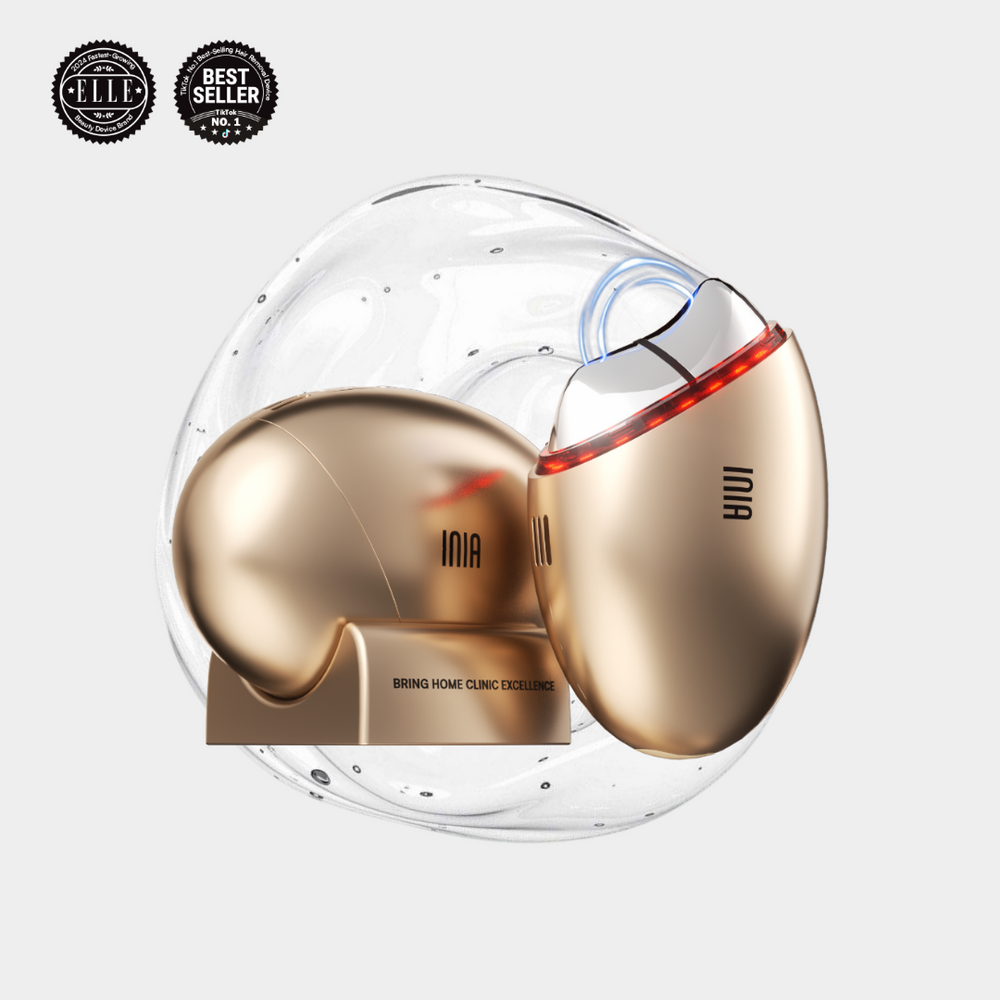
For sensitive, redness-prone skin, INIA built the INIA GLACE with a soothing mode that pairs rapid cryo cooling (down to about 16°C), 470nm blue light, and gentle vibration — designed with post-sun and post-treatment skin in mind.
The approach is the same as any sensitive-skin routine: start the microcurrent at its lowest level, use plenty of conductive gel, and keep early sessions short.
Shop INIA GLACE on theinia.com
Step 1 — Cleanse, then apply a generous, even layer of soothing conductive gel.
Step 2 — Start microcurrent at the lowest intensity and glide slowly while the skin stays slick.

Step 3 — Finish with the cooling mode to calm the skin, then apply a gentle moisturizer.
Frequently Asked Questions
Is microcurrent safe for sensitive skin?
For most people, yes — it doesn't use heat, abrasion, or strong chemicals. The key is starting at low intensity, using plenty of conductive gel, and not overdoing the frequency. If you have a diagnosed skin condition, check with a dermatologist first.
Can microcurrent cause redness?
Brief warmth or mild pinkness can happen and usually fades within an hour. A rash or redness that lasts for days is a sign you used too much intensity or did sessions too often, and you should pause.
Is microcurrent okay for rosacea?
Some dermatologists allow it and find it may help calm redness, but rosacea-prone skin reacts unpredictably, especially during a flare. Always get individual guidance from a dermatologist before using it on rosacea.
Why does my microcurrent device sting?
The two usual causes are intensity set too high and not enough conductive gel. Lower the level and reapply a thick, even gel layer — the stinging typically stops.
How often should sensitive skin use microcurrent?
Start at once a week and increase slowly only if your skin stays calm. Daily use is rarely necessary and raises the risk of irritation for reactive skin.
Should I patch-test a microcurrent device?
Yes, especially with sensitive skin. Do one short, low-intensity pass on your jaw or neck and wait 24 hours to confirm there's no lasting redness before treating your full face.