

EMS (electrical muscle stimulation) can train your glutes, your pelvic floor, or both — but those are different jobs that rely on different electrode placement. Glute EMS targets the large muscles you sit on; pelvic floor EMS targets the deep sling of muscles that support your bladder and core. A device set up for one isn't automatically set up for the other. Knowing the difference helps you pick the right tool and avoid disappointment.
Part 1. Two Different Muscle Groups
The glutes and the pelvic floor are anatomically separate, and stimulating one doesn't automatically train the other.
- Glutes — the gluteus maximus, medius, and minimus: the large surface muscles that shape and lift your seat.
- Pelvic floor — the levator ani group (including the pubococcygeus), a deep hammock of muscles that supports the bladder, bowel, and core.
Because they sit at different depths and locations, each needs its current delivered to a different spot to actually contract.
💡 Tip: If your main goal is bladder support or postpartum recovery, you specifically want pelvic floor stimulation — glute toning alone won't address it, even though both live in the same region.
Part 2. Electrode Placement Is the Real Difference
What a device actually trains comes down to where the electrodes sit. This is the detail most buyers overlook.
| Goal | Electrode placement | Muscles targeted |
|---|---|---|
| Glute toning | External pads over the glutes, hip, and upper thighs | Gluteus maximus, medius, minimus |
| Pelvic floor | Near the pelvis/perineum, or an internal probe | Levator ani (pubococcygeus, etc.) |
Glute systems use a broad pattern of external pads. Traditional pelvic floor trainers often use an internal probe or pads placed close to the pelvis to reach those deeper muscles.
🗣️ Verified INIA buyer review: "It does not have 2 sets of electrodes. One set for glutes and one set for kegel exercises. It has glutes only."
💡 Tip: Before buying, find the product's electrode map or placement diagram. If it only shows pads on the glutes and thighs, assume it's a glute device — not a pelvic floor trainer — unless it explicitly states otherwise.
Part 3. Can One Device Do Both?
Yes — some wearable EMS shorts are designed to engage both the glutes and the pelvic floor, depending on how their panels are arranged. The appeal is that they're non-invasive, with no gel, water, or insertion required.
| Type | Targets | Invasive? |
|---|---|---|
| Glute EMS pads/shorts | Glutes, thighs | No |
| Pelvic floor probe trainer | Pelvic floor (internal) | Yes (internal probe) |
| EMS toning shorts | Glutes + pelvic floor (by design) | No |
Brands like Kegel8 focus on dedicated pelvic floor training, while EMS toning shorts aim to combine body toning with pelvic floor support in one wearable.
💡 Tip: A wearable that targets both is convenient, but check that the pelvic floor support is a stated design feature — not just implied by the fact that the shorts cover that area.
Part 4. What to Check Before You Buy
A few questions save you from the "it only does glutes" surprise.
- Does the listing explicitly name pelvic floor support, or only glutes?
- Is there an electrode placement map?
- Are there separate modes for different muscle goals?
- Is it non-invasive, and does that match your comfort level?
⚠️ Important: Pelvic floor health is a medical area. If you're postpartum, managing incontinence, or have any pelvic organ prolapse, talk to a doctor or pelvic floor physiotherapist before starting EMS. A consumer toning device is designed to support muscle activation, not to diagnose or treat a medical condition.
🗣️ Verified INIA buyer review: "Doesn't have enough power to stimulate the muscles."
If stimulation feels weak, it's often a placement or contact issue rather than a power problem — the pads may not be sitting over the target muscle.
INIA CURVIFY: Built for Glutes and Pelvic Floor
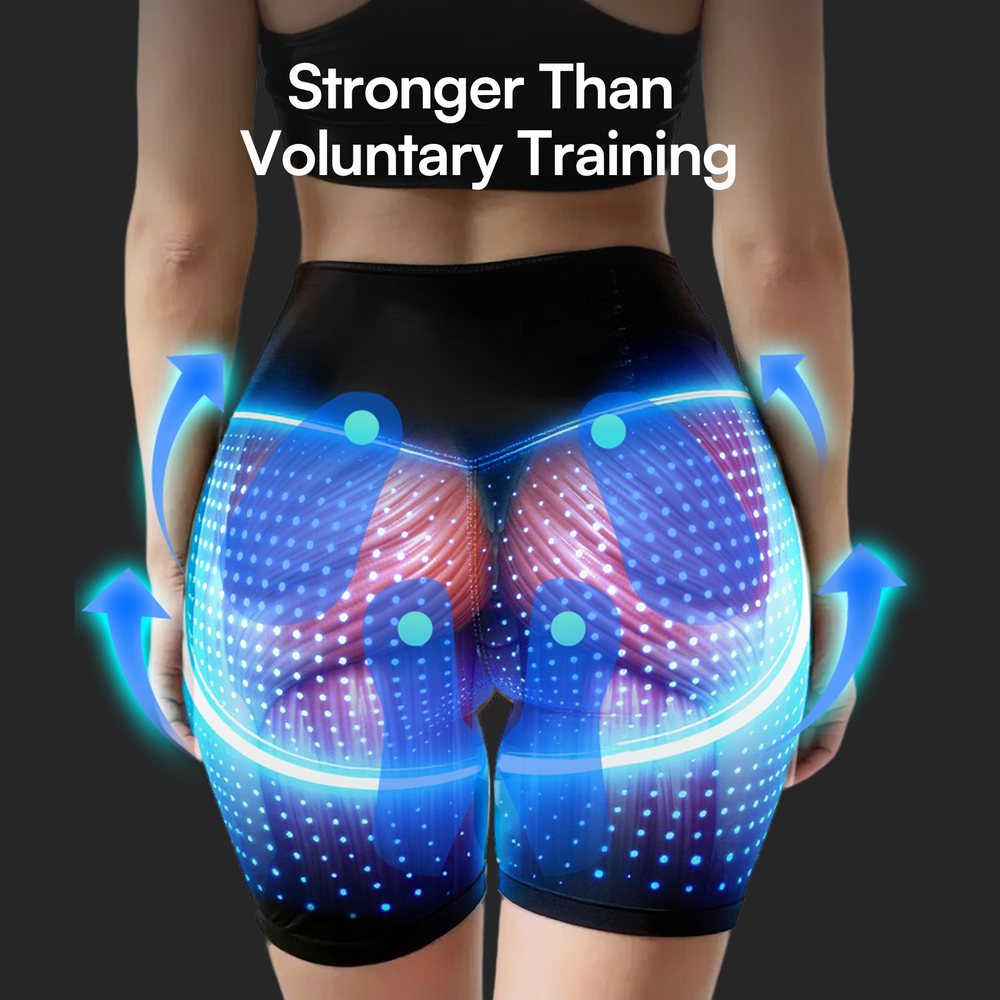
INIA designed the INIA CURVIFY as a wearable EMS device that targets more than one goal: deep glute activation, pelvic floor support that mimics natural Kegel contractions, and inner-thigh toning. It's non-invasive — no gel, water, or insertion.
That makes it a fit for people who want body toning and pelvic floor support together, including those in postpartum or perimenopausal stages who prefer a hands-off approach to Kegels.
Shop INIA CURVIFY on theinia.com
Step 1 — Put on the device so the panels sit flush over the glutes and target areas on clean skin.
Step 2 — Start at the lowest intensity and raise it to a comfortable, clearly felt contraction.

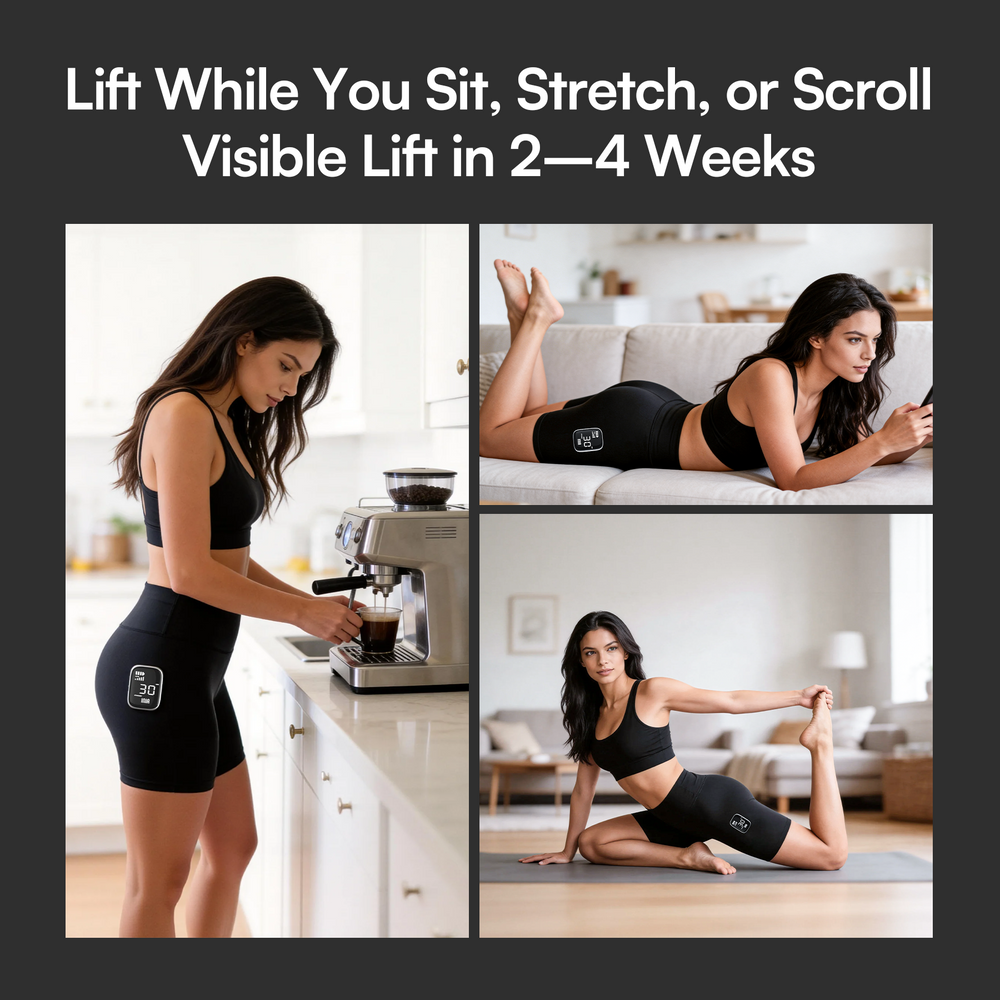
Step 3 — Complete the recommended session time while relaxing, then remove the device.
Frequently Asked Questions
What's the difference between glute EMS and pelvic floor EMS?
Glute EMS uses external pads over the buttocks and thighs to target the large gluteal muscles. Pelvic floor EMS places electrodes near the pelvis or uses an internal probe to reach the deeper levator ani muscles — different placement for different muscles.
Do EMS shorts actually work the pelvic floor?
Some are designed to, and some only target the glutes. Whether they engage the pelvic floor depends on electrode placement, so check that the product specifically lists pelvic floor support.
Can one EMS device do both glutes and pelvic floor?
Yes, certain wearable EMS shorts are built to engage both areas without an internal probe. Confirm that dual targeting is a stated design feature before buying.
Is pelvic floor EMS the same as doing Kegels?
It aims to support similar muscle activation without you consciously contracting. Many people use it alongside, not instead of, guidance from a pelvic floor professional.
Why does my EMS device feel too weak?
Weak sensation is often a contact or placement issue — the pads may not be over the target muscle, or skin contact is poor. Re-seat the device and make sure the area is clean before assuming it lacks power.
Is EMS safe for postpartum recovery?
Many people use EMS for postpartum toning, but timing and suitability vary by individual. Check with your doctor or a pelvic floor physiotherapist before starting, especially soon after birth.